Trump Threatens To Wipe Out Iran, Sets Deadline To Reopen Strait Of Hormuz
Key Takeaways
- Trump threatened to wipe out a whole civilization in Iran.
- Hormuz tensions escalate; Iran mines strait; talks possible within 36-72 hours.
- Democrats call to end Iran war; MTG criticizes Trump's rhetoric.
Threats, strikes, and deadlines
The Iran crisis described across multiple reports intensified after President Donald Trump threatened to wipe out “a whole civilization” in Iran and set an 8 p.m. deadline tied to reopening the Strait of Hormuz.
“In his latest round of rhetoric, Donald Trump has once again raised the spectre of overwhelming force—language that edges, as it often does, toward the unthinkable escalation”
Time Magazine says that in the hours after Trump’s Tuesday threat, Congressional Democrats demanded Republican leaders end their spring recess and bring lawmakers back to Washington to vote to end the Iran war, with House Democratic leadership calling Trump “completely unhinged.”

Time reports that Trump’s rhetoric was accompanied by military action, stating that his Tuesday actions expanded to include “more than 90 U.S. strikes on Iran’s main oil export hub at Kharg Island.”
Time also quotes Trump warning that “a whole civilization will die tonight” if Iran failed to meet his deadline to reach a deal that includes reopening the Strait of Hormuz.
The same report says Trump suggested U.S. forces could wipe out all bridges and power plants in Iran in a matter of hours, and it notes that some Republicans warned targeting civilian infrastructure could constitute a war crime under international law.
In parallel, the Independent reports Marjorie Taylor Greene saying Trump has “gone insane” in his rhetoric toward Iran, and it repeats that Trump’s social media posts included an April 7 threat that “a whole civilization will die tonight” unless Iran agreed to end the war and open the Strait of Hormuz.
Together, the accounts place the immediate escalation in a tight window around Tuesday’s threats and strikes, with the Strait of Hormuz and Kharg Island repeatedly named as focal points.
Ceasefire extension and conditions
After Tuesday’s threats and strikes, the reporting shifts to a ceasefire extension and competing conditions for restarting negotiations.
The Economic Times says Trump announced the extension of a two-week ceasefire with Iran, describing it as requested by Pakistan’s leadership to give a “seriously fractured” Iranian government time to present a unified proposal.

It adds that Trump’s optimism was delivered via a text message to The New York Post, quoting Trump’s response: “It’s possible! President DJT.”
The Economic Times also says Trump directed the U.S. military to remain on alert while maintaining a blockade until further diplomatic progress is made, and it quotes Trump’s Truth Social post: “I have therefore directed our Military to continue the Blockade and, in all other respects, remain ready and able, and will therefore extend the Ceasefire until such time as their proposal is submitted, and discussions are concluded, one way or the other.”
Iranian conditions for talks appear in the same report through the remarks of Iranian Ambassador to the United Nations Amir Saeid Iravani, who said Tehran is willing to resume talks only after the United States ends its naval blockade of Iranian ports.
The Economic Times quotes Iravani saying, “The naval blockade of the United States, it is a violation of the ceasefire,” and it also includes his statement that “as soon as they break this blockade, I think that the next round of the negotiation will take place in Istanbul.”
The skysnews عربية report adds Trump’s characterization of Iran’s internal leadership, saying Trump told MC News that Iran is in a state of “confusion and chaos” and that “They have no idea who their leader is at the moment.”
Mines, blockade, and naval escalation
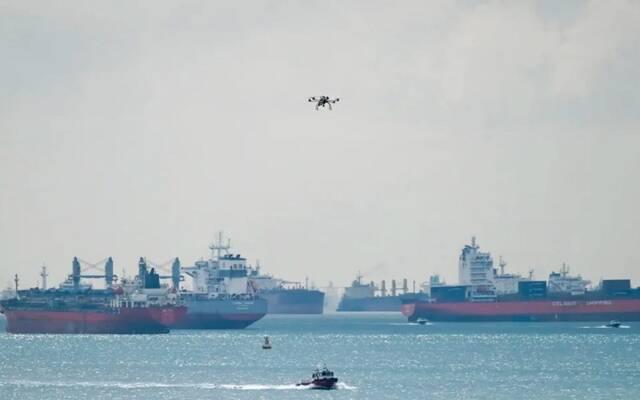
Another strand of the reporting focuses on maritime escalation in the Strait of Hormuz, including mine-laying and U.S. orders to respond.
“The President's optimism, delivered via a text message to The New York Post, follows his decision to extend a two-week ceasefire, a move he claims was requested by Pakistan's leadership to give a "seriously fractured" Iranian government time to present a unified proposal”
The معلومات مباشر report says that American sources told it on Thursday that the naval forces of Iran’s Islamic Revolutionary Guard Corps have planted more mines in the Strait of Hormuz during the current week, describing it as reflecting “a dangerous escalation” in the military confrontation with the United States, according to Axios.
It states that the strait is “the world’s most important route for global oil transit,” and it cites the International Energy Agency saying current disruptions are the largest in the history of global oil supplies, exceeding even the oil shocks of the 1970s.
The report also gives traffic figures, saying that about 20% of seaborne oil trade normally transits the strait, but that ship traffic has currently fallen to fewer than 10 ships per day, compared with more than 100 ships per day before the outbreak of war.
In the same account, it says U.S. President Donald Trump issued direct orders to the U.S. Navy to open fire and destroy any Iranian boats that plant mines without hesitation, citing his post on Truth Social.
The report further says this marks the second time Iran has resorted to mine-laying since the start of the war, while it remains unclear whether all mines from the first round have been detected and removed.
It also describes U.S. operational steps, saying the USS George H.W. Bush arrived in the U.S. Central Command area of operations, becoming the third U.S. aircraft carrier in the region, and that CENTCOM announced it has rerouted 33 ships since the blockade began.
Competing narratives of control
While the operational reports emphasize mines and blockade enforcement, Mehr News Agency frames the confrontation as a strategic contest over the Strait of Hormuz and the politics of threat.
Mehr says Iran has shifted “the war’s centre of gravity to the Strait of Hormuz,” calling it “the narrow maritime artery through which the lifeblood of the global economy continues to flow.”

It argues that Iran’s approach is not a full blockade, saying “Iran does not need to close it. It only needs to remind the world that it can,” and it contrasts “credible disruption” with “a full blockade” that would invite “immediate and overwhelming retaliation.”
Mehr also describes the Islamic Revolutionary Guard Corps as central to this strategy, stating that its naval doctrine “rejects symmetry altogether” and instead uses “Fast attack craft. Coastal missile batteries. Drones. Electronic warfare.”
It further claims that the objective is “uncertainty” rather than destruction, describing “swarm tactics” as “the clearest expression of this doctrine.”
This strategic framing intersects with the political reporting from Time Magazine, which quotes Democrats demanding action to stop what they call a “reckless war of choice in the Middle East” and warns that Trump’s threats could plunge the country into “World War III.”
It also intersects with the ceasefire reporting from The Economic Times, where Trump extends a ceasefire while continuing a blockade and where Iravani says the blockade violates the ceasefire.
Politics, accountability, and possible talks
The political and legal debate in the U.S. runs alongside the military and diplomatic developments, with multiple reports describing demands for oversight and potential changes to how the war is authorized.
“Stay up to date with notifications from The Independent Notifications can be managed in browser preferences”
Time Magazine says House Democratic leadership pressed Speaker Mike Johnson to reconvene the House, noting that the House is “not scheduled to return until April 14,” and it quotes the leaders’ demand that “The House must come back into session immediately and vote to end this reckless war of choice in the Middle East before Donald Trump plunges our country into World War III.”

Time also reports that Democrats focused on reclaiming constitutional authority over war-making through a renewed push for a war powers resolution requiring congressional authorization for continued U.S. military action against Iran, while noting that such efforts have repeatedly failed in the Republican-controlled House and Senate.
It includes a warning from Republican Sen. Lisa Murkowski of Alaska, writing that Trump’s threat that “a whole civilization will die tonight” cannot be excused as leverage and calling it “an affront to the ideals our nation has sought to uphold and promote around the world for nearly 250 years.”
The Independent adds that Marjorie Taylor Greene told Newsnight that Trump has “gone insane” regarding his rhetoric toward Iran, and it repeats Trump’s April 5 message ordering Iran to “open the F*in’ Strait” or face living in “Hell,” ending with “Praise be to Allah.”
The Economic Times, meanwhile, reports that Trump signaled “possible” Iran talks within 36-72 hours, linking the optimism to the ceasefire extension and to appeals from Pakistan’s leadership for time to produce a unified proposal.
It also says Iranian Ambassador to the United Nations Amir Saeid Iravani told Rudlaw News Network at the UN HQ that Tehran is willing to resume talks only after the United States ends its naval blockade of Iranian ports, and it quotes Iravani’s claim that “We have not initiated the military aggression. They initiated the war against us and we are ready.”
More on Iran

King Charles III and Queen Camilla Begin Four-Day US State Visit With Trump Tea
10 sources compared

Oil Prices Rise as US-Iran Peace Talks Stall and Strait of Hormuz Remains Constrained
14 sources compared
Abbas Araghchi Arrives in Russia for Talks With Vladimir Putin to End U.S.-Israel War on Iran
33 sources compared

Abbas Araghchi Meets Vladimir Putin in Russia as US-Iran Talks Stall
20 sources compared