Full Analysis Summary
Trump's Threat Over Nigeria Violence
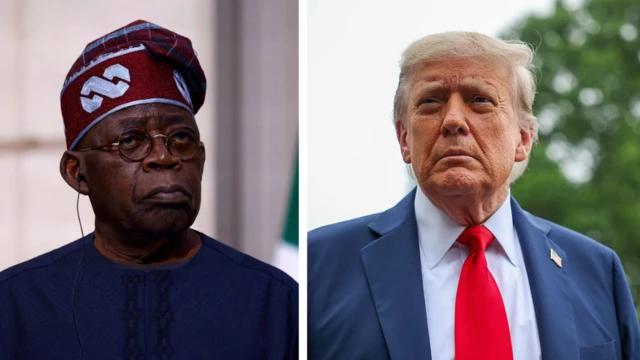
Former U.S. President Donald Trump threatened to deploy the U.S. military to Nigeria over what he labeled the persecution and mass killings of Christians.
He said in a Truth Social video that Washington could halt aid and respond “swiftly and forcefully.”
Multiple outlets report he instructed the Pentagon to prepare contingency plans.
One report describes U.S. Africa Command staff being recalled for discussions.
Others highlight his vow to go “guns a blazing” and describe potential action as “fast, vicious and sweet.”
Coverage agrees the threat centers on Nigeria’s alleged failure to protect Christians from extremist militants.
However, descriptions of the scope and motive vary across reports.
Coverage Differences
tone
PBS News (Western Mainstream) reports the threat in restrained terms, simply noting Trump “recently threatened to deploy the U.S. military.” NJ (Local Western) amplifies Trump’s rhetoric, quoting him calling for action that could be “fast, vicious and sweet” and highlighting Defense Secretary Pete Hegseth’s support. Black Information Network (Other) emphasizes bellicose phrasing, reporting Trump warned the U.S. might act “guns a blazing.” These differences show escalating intensity from neutral summary to vivid, combative language.
missed information
SSBCrack News (Other) reports specific operational steps—DoD contingency planning and U.S. Africa Command personnel being recalled—plus political context like a Fox News segment preceding the remarks. PBS News (Western Mainstream) and NJ (Local Western) do not mention the AFRICOM recall or the media spark, focusing instead on the threat and rhetoric.
narrative/specificity
mronline.org (Other) details policy levers—halting aid and possible troop deployment or air strikes—framing an ordered Pentagon planning process. PBS News (Western Mainstream) does not enumerate these options. Business Insider Africa (Other) underscores that violence in Nigeria is widespread but “mostly not religiously motivated,” adding context that complicates Trump’s framing of a singularly Christian-targeted crisis.
Nigeria's Response to Violence Claims
Nigeria’s government forcefully rejects the allegation of a state-orchestrated Christian genocide.
It emphasizes its secular constitution, religious diversity, and security operations against terrorists and criminals without bias.
Officials cite figures since 2023, including thousands of terrorists neutralized, suspects arrested, and abductees and hostages rescued.
They criticize external labels that portray Nigeria as religiously intolerant.
The government urges dialogue, cooperation, and respect for sovereignty.
It asserts that violence affects all communities and that leadership roles are shared by Christians and Muslims.

Coverage Differences
contradiction
Arise News (African) and THISDAYLIVE (Other) deny state-sponsored persecution, calling genocide claims “unfounded,” whereas Trump—reported across outlets—alleges persecution of Christians and threatens intervention. Sahara Reporters (African) underscores Nigeria’s constitutional protections and rejects a targeted genocide narrative, contrasting directly with Trump’s charge.
missed information
Arise News (African) provides extensive operational metrics—13,500 terrorists neutralized, 17,000 arrests, 9,800 rescues—absent in PBS News (Western Mainstream) and Business Insider Africa (Other), which summarize the standoff without granular statistics.
narrative
Sahara Reporters (African) highlights international backing—China and the EU oppose interference and stress sovereignty—while THISDAYLIVE (Other) and allAfrica (African) focus on Nigeria’s internal pluralism and democratic safeguards. The emphasis on external diplomatic support versus domestic constitutional guarantees reflects differing narrative priorities.
Overview of Nigeria's Conflict
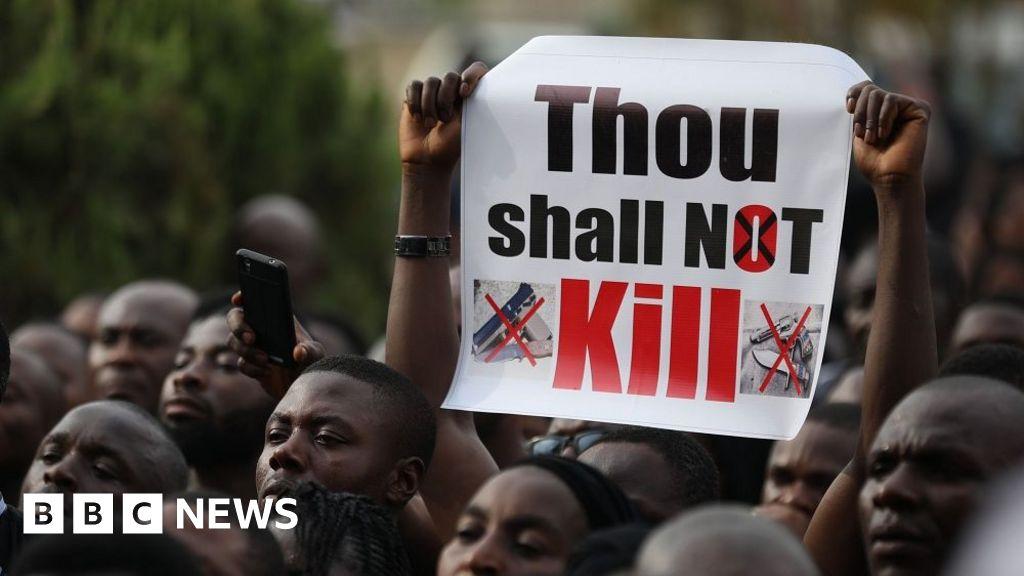
Several outlets stress that Nigeria’s bloodshed is complex—driven by terrorist groups, banditry, and farmer–herder conflicts—not solely by religion.
Analyses note Amnesty International’s criticism of authorities for failing to protect civilians and argue that centralized, military-era governance enables corruption and poor security, prompting calls for a new constitution.
Some reports add scale—over 20,000 deaths since 2020—and emphasize that both Muslims and Christians suffer, complicating claims of a singularly anti-Christian campaign.
Coverage Differences
narrative
The Conversation (Western Alternative) foregrounds systemic governance flaws and constitutional reform, citing Amnesty International and suggesting a new, democratically drafted constitution. Business Insider Africa (Other) quantifies violence and stresses it is “mostly not religiously motivated.” SSBCrack News (Other) highlights that both Muslims and Christians suffer and that ethnic and resource tensions are factors. PBS News (Western Mainstream) keeps a concise overview of multiple conflict drivers.
tone
The Conversation (Western Alternative) signals hope that increased U.S. involvement could protect rural victims, whereas Business Insider Africa (Other) maintains a neutral descriptive tone about cooperation and context, and SSBCrack News (Other) presents a mix of alarm over threats with acknowledgment of conflict complexity.
US-Nigeria Political Developments
Inside the U.S., reporting points to political and bureaucratic momentum behind Trump’s stance.
A Nigerian user publicized 31 U.S. lawmakers backing potential action.
Trump and allies pressed the Pentagon for plans.
Officials used combative language about targeting extremist groups.
Another outlet says the State Department signaled readiness to act.
Nigerian commentators urged President Tinubu to speak directly to the nation to manage the diplomatic fallout.
Social media chatter—from a purported U.S. soldier hinting at deployment to a Nigerian peacekeeper’s message to Trump—fueled speculation and anxiety.
Coverage Differences
unique/off-topic
Legit.ng (African) centers on online mobilization—publishing a list of 31 lawmakers, sharing screenshots, and highlighting viral videos—topics not covered by PBS News (Western Mainstream). NJ (Local Western) focuses on U.S. defense posture and Trump’s rhetoric, including the “fast, vicious and sweet” line, while SSBCrack News (Other) uniquely mentions AFRICOM personnel being recalled.
narrative
Black Information Network (Other) reports that the U.S. State Department affirmed readiness to act and notes the “country of particular concern” designation. Daily Post Nigeria (African) urges presidential communication and diplomatic appointments to protect Nigeria’s image, highlighting domestic political management rather than U.S. military mechanics. SSBCrack News (Other) adds that Trump’s remarks came amid recent GOP electoral setbacks, injecting U.S. partisan context absent from the other two.
Diplomatic Responses to Nigerian Crisis
The standoff is already reverberating diplomatically.
Nigerian leaders insist on sovereignty and partnership, pledging to fight terrorism without foreign coercion while welcoming assistance that respects national control.
Some international actors back Nigeria’s position against interference.
Reports say China opposed threats of sanctions or force, and the EU reiterated respect for sovereignty.
Yet one analysis expresses hope that more U.S. involvement could aid rural victims, underscoring a split between sovereignty-first views and interventionist arguments.
Coverage Differences
contradiction
African outlets emphasize sovereignty and resistance to outside pressure: Grassroot Reporters (Other) quotes Tinubu as undeterred by “external pressure,” and Sahara Reporters (African) notes China and the EU rejecting interference. In contrast, The Conversation (Western Alternative) expresses hope that increased U.S. involvement will protect rural victims, signaling an intervention-friendly viewpoint.
narrative
mronline.org (Other) reports Nigeria would accept U.S. help against armed groups if sovereignty is respected—bridging sovereignty concerns and practical cooperation. Business Insider Africa (Other) likewise highlights Tinubu’s willingness to cooperate internationally while rejecting accusations of religious intolerance, a more pragmatic middle ground than outright rejection or advocacy of intervention.