Protests14 January, 20262 min read
Trump Threatens 'Very Strong Action' If Iran Executes 26-Year-Old Protester Today
This article is an automated aggregation of coverage from news outlets. Our editorials offer in-depth analysis curated by the NewsCord team.
Erfan Soltani, 26, is accused of 'waging war against God' and faces imminent execution President Trump warns the U.S. will take very strong action if Iran executes protesters
19 outlets told this the same way.
Outlets did split on France Suspends Police Stun Grenades at High School Protests After 15-Year-Old Loses Hand →
Iran protester execution threat
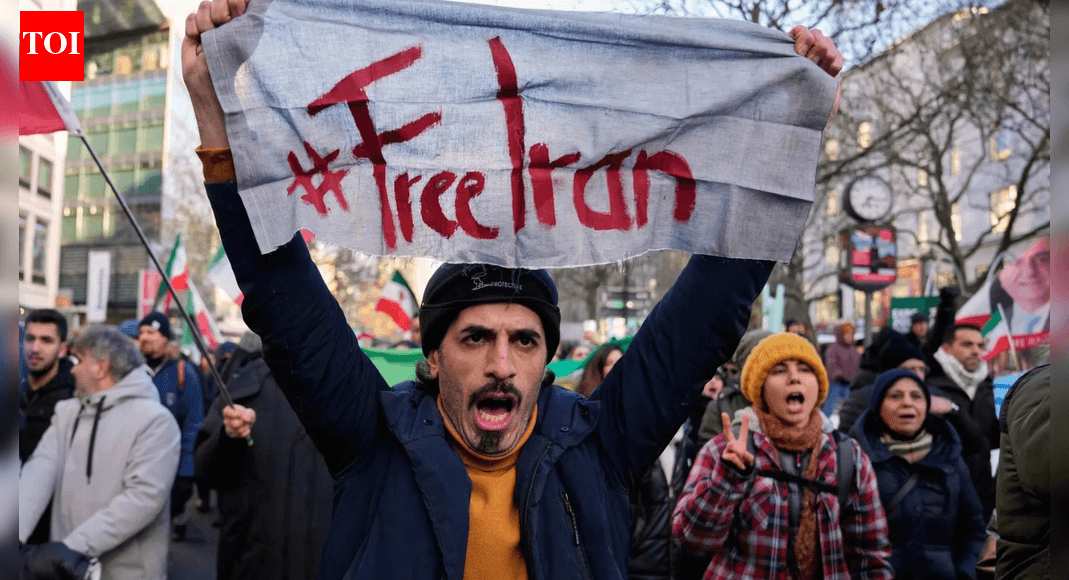
US President Donald Trump warned the United States would take "very strong action" if Iran proceeds to execute 26‑year‑old protester Erfan Soltani. Rights organizations and relatives say Soltani was detained during anti‑government demonstrations and faced a rapid, non‑transparent trial that could lead to his execution as soon as today.
“US President Donald Trump warned of ‘very strong action’ if Iran proceeds to execute protesters, prompting Iran's UN ambassador Saeid Iravani to write to the UN secretary‑general accusing Trump of ‘inciting’ violence...”
Reporting has been hampered by near‑total internet blackouts and information restrictions that make independent verification difficult. The case has become a flashpoint in a wider crackdown that rights groups and monitors say has already left thousands dead and many more detained.

Allegations in Soltani case
Multiple rights groups, relatives and local reporting say Soltani’s case was fast-tracked: NGOs report he was denied access to legal counsel, given only a brief family visit, and tried in what they describe as an opaque process. Human-rights monitors, including Hengaw and Amnesty, described the proceedings as summary trials used to silence dissent, and some outlets report Soltani was charged with the capital offence of waging war against God. Relatives and activists warn that the death penalty is being used to intimidate demonstrators across the country.
Casualty estimates and disputes
Estimates of the human cost of the crackdown vary across sources and are disputed by Iranian officials. Independent monitors cited by some outlets verify thousands killed. HRANA and HRANA-linked counts and IHR figures appear in different reports (BBC, The Guardian, Sky News, Asianet), with HRANA and The Guardian citing a verified 2,571 deaths including protesters, security personnel and children.
“The U.S.-based rights group HRANA said it had verified 2,571 deaths in the protests — 2,403 protesters, 147 government-affiliated individuals, 12 children and nine other civilians...”
Other monitoring groups report 2,403 protesters killed plus additional government-affiliated deaths. Iranian officials have disputed some tallies and blamed "terrorists" or foreign interference for many killings, producing lower government-linked totals in some reports.
International reactions and responses
The international reaction is mixed and reflects geopolitical alignments. The U.S. has signalled punitive options and held National Security Council consultations. European officials have publicly condemned the crackdown and discussed sanctions.
China has publicly urged stability and criticised some U.S. measures. Iran has formally protested to the UN, with its UN ambassador accusing President Trump of 'inciting' violence and destabilising behaviour.

Some outlets report contacts between U.S. officials and exiled opposition figures. They also mention U.S. actions such as new tariffs intended to punish countries doing business with Iran.
Soltani case and unrest
Observers warn Soltani's fate could become a powerful symbol. Rights groups say the use of capital punishment in such high-profile cases is intended to intimidate demonstrators. Commentators warn an execution could further inflame protests and international confrontation.
“NGOs warn the death penalty is being used to suppress protests.”
The unrest is widely reported as rooted in economic collapse, soaring living costs and political grievances. Some outlets describe it as the biggest internal challenge to Iran's rulers in years. The heavy security response, combined with communications blackouts, raises fears of further escalation and a narrowing of available independent information.
