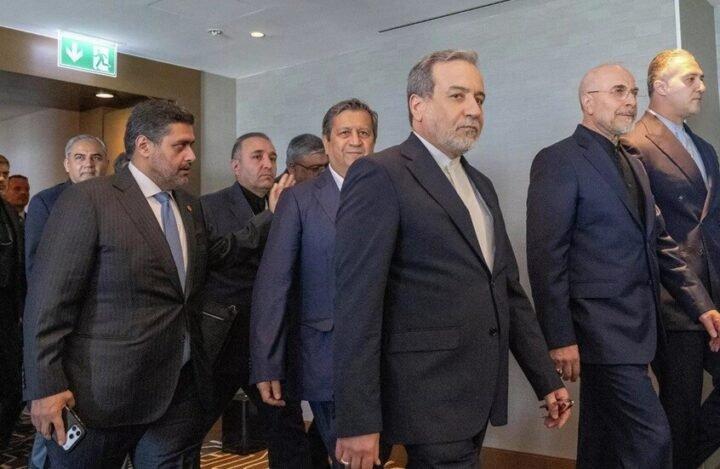
Trump Threats Roil US-Iran Talks in Switzerland as JD Vance Meets Iranian Officials
Key Takeaways
- Trump threats disrupted US-Iran talks in Switzerland, including threats to strike and Hormuz closure.
- Iranian negotiators walked out of talks in protest of Trump threats.
- US delegation led by Vice President JD Vance; Iran's delegation led by Speaker Bagher Qalibaf.
Talks in Switzerland, threats
Vice President JD Vance met Iranian officials in Switzerland as the U.S. and Iran tried to work out technical details of a memorandum of understanding signed last week, with Steve Witkoff and Jared Kushner joining the U.S. side and mediators from Qatar and Pakistan also present.
“Talks between the US and Iran are under way in Switzerland, even as fissures emerge over President Donald Trump’s threats and Israel’s refusal to cease hostilities in Lebanon”
Trump’s threats from afar continued to roil the negotiations, including a warning that if Iran closes the Strait of Hormuz, the U.S. will “blow the s--- out of them,” as reported by Fox News’ Trey Yingst.

Iran protested Trump’s recent comments through Iran’s semiofficial Tasnim news agency, saying “any form of threat is considered a serious violation of the agreement.”
The talks were also shadowed by Lebanon fighting, with the U.S. and Iran pressing for an end to hostilities even as Israel and Hezbollah accused each other of violating a ceasefire in southern Lebanon.
Iran said Saturday that it has once again closed the Strait of Hormuz, while the U.S. military denied Iran’s claim to control the strait and the Islamic Revolutionary Guard Corps’ navy warned ships not to approach the waterway.
Walkout and competing claims
Iranian negotiators suspended high-stakes talks in Switzerland in protest at a stream of threats issued by Donald Trump, with The Guardian reporting the walkout occurred before leaving the face-to-face talks in Bürgenstock.
The Guardian said Iran reached a draft agreement over how the U.S. will issue a waiver lifting sanctions on Iranian oil exports, while Iranian officials claimed the waivers would be issued soon and progress had been made on unfreezing Iranian assets in overseas bank accounts.

Iran’s chief negotiator Mohammad Bagher Ghalibaf rejected the premise that threats could change the negotiating posture, saying: “We don’t take the Americans’ threats into account at all.”
In parallel, AP reported that an official with knowledge of the talks said the Iranian delegation remained engaged in the talks and has not indicated to mediators any intention to leave.
AP also said the U.S. team is led by Vice President JD Vance and includes Jared Kushner and Steve Witkoff, while the Iranian negotiators are led by Parliament Speaker Mohammad Bagher Qalibaf and Foreign Minister Abbas Araghchi, with Pakistan and Qatar mediating.
What’s at risk next
The interim framework is tied to a 60-day window for talks on Iran’s civil nuclear programme, and the NBC News report said Trump described the U.S.-Iran memorandum of understanding as “just an option,” adding “I can do whatever I want after that option.”
The Guardian said the memorandum signed last week was designed to lift the blockade on the strait of Hormuz, but Iran claimed it had remounted its blockade in protest at continued Israeli attacks in Lebanon and said Trump was allowing Israel to breach the memorandum.
AP reported that Trump threatened to impose American tolls in the strait if a final deal with Iran isn’t reached in 60 days, while Iran said talks must first address Israel’s attacks in Lebanon and that the interim deal is meant to stop fighting on all fronts, including Lebanon.
The stakes also include the nuclear track, with AP listing the “heart of tensions: Iran’s nuclear program,” and NBC News reporting that Iran said it will maintain its right to enrich uranium as Trump warned “he better watch his mouth.”
Beyond diplomacy, the sources tied the negotiations to shipping and energy flows, with NBC News saying the Strait of Hormuz is a vital waterway through which 20% of the world’s oil passes, while The Guardian and AP described competing claims about whether the strait is open and how many ships transited.
More on Iran

Trump Threatens Tehran as JD Vance Meets Mohammad Bagher Qalibaf in Switzerland Talks
18 sources compared
JD Vance Holds US-Iran Talks in Switzerland as Trump Threatens Strikes Over Hormuz
12 sources compared

Iran’s Qalibaf Urges US To Be Cautious After Trump Threats
10 sources compared
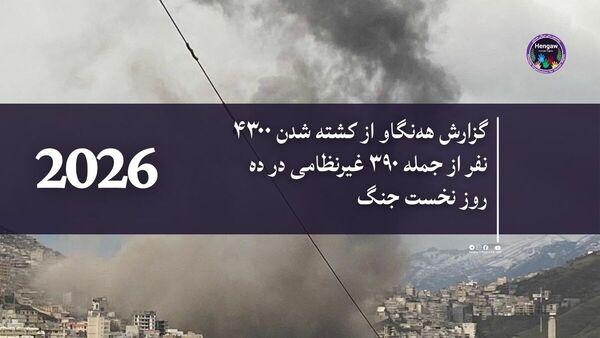
U.S. and Israel Attack Iran, Killing 1,394 Civilians, Human Rights Groups Say
15 sources compared