Trump Triggers Backlash Over Cutting U.S. Troops From Germany, Lawmakers Warn Putin
Key Takeaways
- Pentagon announced withdrawal of about 5,000 U.S. troops from Germany.
- Trump says he will cut far beyond the 5,000 already planned.
- Two top Republican lawmakers warn withdrawal would undermine deterrence and signal Russia.
Troop pullout sparks alarm
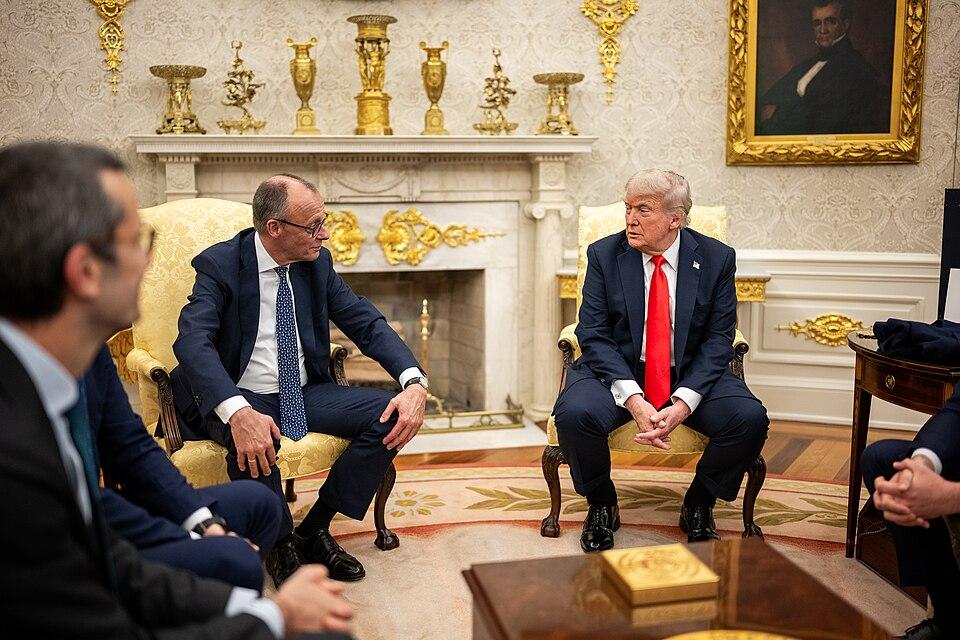
A planned reduction of U.S. troops from Germany has triggered sharp backlash in Washington and concern across NATO as President Donald Trump said the number of troops cut would be “a lot further” than the roughly 5,000 figure announced by the Pentagon.
“(AGENPARL) -Roma, 30 Aprile 2026 -Non si placa il duello a distanza tra la Casa Bianca e Berlino”
The Hill reported that the chairmen of the House and Senate Armed Service committees said they were “very concerned” about “the withdrawal of5,000 U.S. troopsfrom Germany,” and quoted Sen. Roger Wicker and Rep. Mike Rogers warning that “prematurely reducing” the U.S. military presence in Europe “sends the wrong signal” to Russian President Vladimir Putin.
DW similarly reported Trump’s line that “We're going to cut way down and we're cutting a lot further than 5,000,” and said the Defense Department withdrawal would be completed in the next six to 12 months.
France 24 said Trump “doubled down” on the decision and again told reporters, “we're going to cut way down, and we're cutting a lot further than 5,000,” while Pentagon spokesman Sean Parnell said the withdrawal was expected “to be completed over the next six to twelve months.”
The Hill also tied the decision to Trump’s feud with German Chancellor Friedrich Merz, noting Trump had announced he was reviewing a possible reduction of U.S. troops in Germany after criticizing Merz.
In parallel, Modern Ghana carried a BBC video segment in which German Defence Minister Boris Pistorius said, “the presence of American soldiers in Europe, and particularly in Germany, is in our interest and in the interest of the US.”
How the dispute escalated
The troop decision unfolded against a wider dispute involving the Middle East war and German-U.S. tensions, with multiple outlets linking the pullback to Trump’s criticism of German Chancellor Friedrich Merz.
The Hill said Trump on Wednesday announced he was reviewing a possible reduction of U.S. troops in Germany, and it described the context as Trump’s feud with Merz, including Trump’s claim that Merz miscalculated the threat of a nuclear Iran.

It also reported that Trump criticized Merz and other NATO allies for not stepping up to work with the U.S. in carrying out “Operation Epic Fury” in Iran, and it quoted Merz telling German students that the U.S. “clearly” has no “strategic plan” with the war in Iran.
DW said the announcement came after a public spat between Merz and Trump earlier in the week, with Merz questioning Washington’s exit strategy in the Middle East and saying Iran was “humiliating” the U.S. at the negotiating table, prompting an angry response from Trump.
National Herald added that the Pentagon announced on Friday it would begin withdrawing 5,000 troops from Germany, described as the largest American military base in Europe, and said the move was expected to be completed over the next six to 12 months.
France 24 similarly said the move followed the spat between Trump and Merz and cited Pentagon spokesman Sean Parnell’s timeline, while also reporting that NATO said it was “working with the US to understand the details of their decision on force posture in Germany.”
Voices from both sides
Republican lawmakers and German officials framed the troop pullback as a deterrence and alliance-management issue, while NATO sought clarification and Trump defended the move as part of a broader pressure campaign.
The Hill quoted Sen. Roger Wicker and Rep. Mike Rogers saying, “We are very concerned by the decision to withdraw a U.S. brigade from Germany,” and it reported they argued that “prematurely reducing” the U.S. military presence in Europe “sends the wrong signal” to Vladimir Putin.
Newsweek echoed the same warning, quoting the joint statement that “Prematurely reducing America’s forward presence in Europe before those capabilities are fully realized risks undermining deterrence and sending the wrong signal to Vladimir Putin.”
On the German side, DW reported that Defence Minister Boris Pistorius said Europe needed to take on more responsibility for its own security and added, “Germany is on the right track” by seeking to expand its armed forces, speed up military procurement and build more infrastructure.
Modern Ghana’s BBC segment carried Pistorius’s argument that “the presence of American soldiers in Europe, and particularly in Germany, is in our interest and in the interest of the US,” while France 24 reported Pistorius said the U.S. troop withdrawal “from Europe and also from Germany was to be expected.”
NATO’s response was to request details: France 24 said NATO was “working with the US to understand the details of their decision on force posture in Germany,” and the South China Morning Post reported a NATO spokesperson said the alliance is looking for details and that Washington’s move underscores the need for Europe to continue to invest more in its own defence.
Different framings across outlets
While the core facts of a 5,000-troop reduction and a timeline of six to 12 months were repeated, outlets diverged in how they framed Trump’s intent and the scale of the change.
The Hill emphasized congressional oversight and deterrence messaging, reporting that Wicker and Rogers said “significant” changes to the U.S.’s posture in Europe demand “a deliberate review process,” and it quoted their expectation that “the Department to engage with its oversight committees in the days and weeks ahead.”
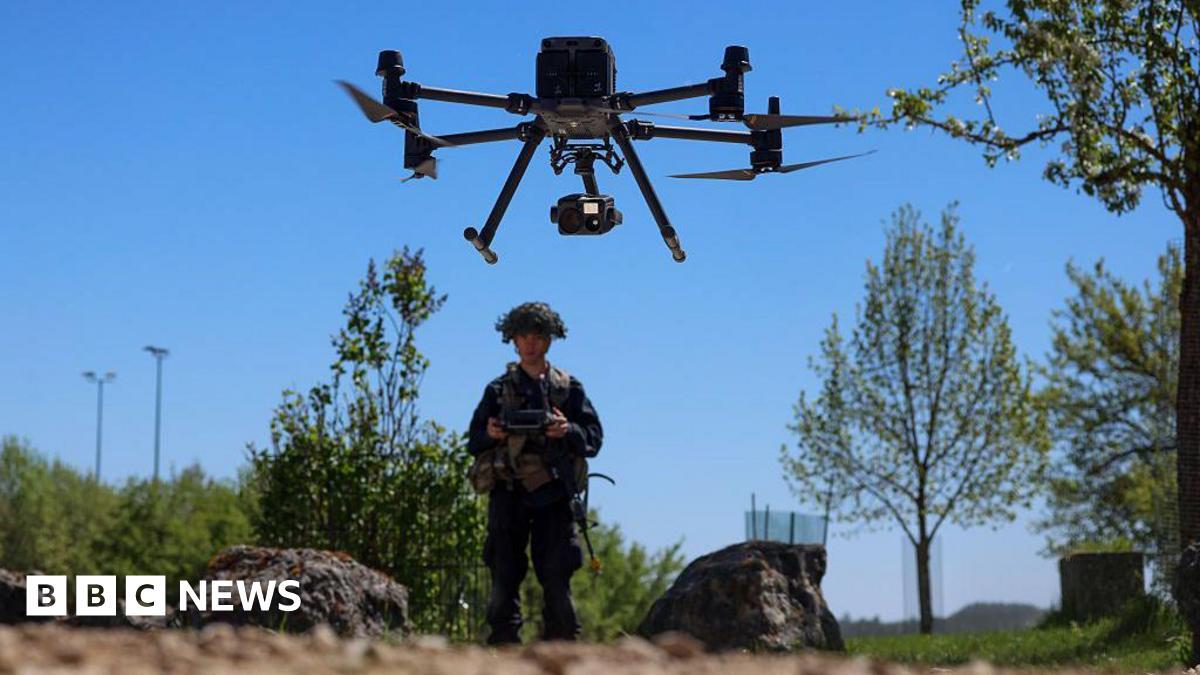
DW foregrounded Trump’s rhetoric and the scrapping of a Biden-era missile plan, stating that “As part of the decision, a Biden-era plan to deploy a US battalion with long-range Tomahawk missiles to Germany has also been scrapped,” and it also described the current troop presence as “more than 50,000 US service members stationed in Germany.”
National Herald, by contrast, stressed Germany’s call for Europe to rearm and said the planned withdrawal should serve as a “wake-up call,” while also reporting Trump’s claim that the reduction could go “far beyond the initial figure announced by the Pentagon.”
France 24 framed the decision as part of a deepening rift over the Middle East war and added a trade component, saying Trump announced tariffs on cars and trucks from the European Union would jump from 15 percent to 25 percent next week.
Even within the same general narrative, parismatch reported Trump’s reduction as “well over 5,000” and claimed it “could be linked to a phone call between Vladimir Putin and his American counterpart,” while also describing Trump’s “fumed on Truth Social” response.
What happens next
The immediate next steps described by the sources center on congressional engagement, NATO’s request for details, and the possibility that the troop reduction could extend beyond the initial 5,000 figure.
“by Lowell Here are a few international, national and Virginia news headlines, political and otherwise, for Sunday, May 3”
The Hill said Wicker and Rogers expected the Department to engage with oversight committees “in the days and weeks ahead on this decision and its implications for U.S. deterrence and transatlantic security,” and it said the statement concluded with that expectation.
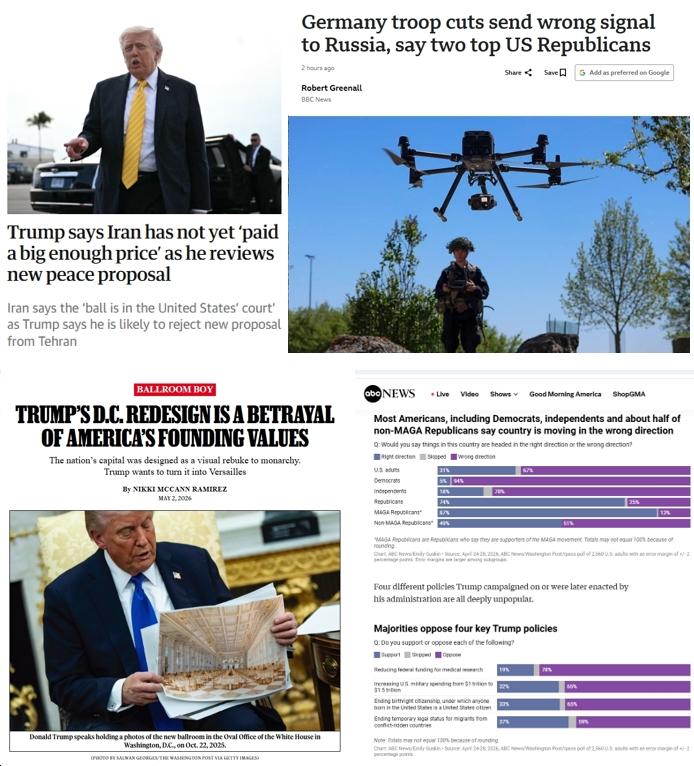
Newsweek similarly said the lawmakers concluded that “any significant change to U.S. force posture in Europe warrants a deliberate review process and close coordination with Congress and our allies,” and it reported that the Pentagon expected the withdrawal to be completed over the next six to 12 months.
France 24 reported NATO was “working with the US to understand the details of their decision on force posture in Germany,” and the South China Morning Post said the alliance is looking for details on the U.S. effort announced on Friday.
At the same time, multiple outlets reported Trump’s indication that the reduction could go beyond 5,000, with DW quoting “We're going to cut way down and we're cutting a lot further than 5,000,” and National Herald quoting Trump: “We're going to cut way down and we're cutting a lot further than 5,000,” while also saying the move ended the Biden-era Tomahawk battalion plan.
Looking further, The Hill said the chairmen suggested that rather than removing troops out of Europe entirely, they should be forwarded to the east, and it said they insisted that “significant” changes demand a “deliberate review process,” leaving the future posture contingent on further decisions and coordination.
More on USA
Trump Threatens To Take Control Of Cuba With USS Abraham Lincoln After Iran Operations
15 sources compared

Former Employee Drives Explosives-Filled Car Into Multnomah Athletic Club, Kills Driver in Portland
11 sources compared

Donald Trump Reviews Iran’s 14-Point Peace Proposal as Israel Strikes Southern Lebanon
84 sources compared

Pentagon Orders Withdrawal Of 5,000 U.S. Troops From Germany
22 sources compared