Full Analysis Summary
US security strategy analysis
El País presents the newly unveiled U.S. security strategy under Donald Trump as a direct and blunt reassertion of American priorities meant to reclaim global power by reframing threats as internal failures of the post–Cold War order.
The paper says the text portrays previous U.S. commitments — from foreign aid to democracy promotion — as burdensome, arguing that elite choices left the United States overcommitted economically and militarily.
Thus the strategy functions as a self-presentation to justify efforts to maintain or recover power that the administration views as threatened.
The article warns that these strategy documents mix policy, intention and propaganda and must be tested against external realities.
Coverage Differences
Missing cross-source comparison
Only El País (Western Mainstream) is provided. No other sources were made available to compare how other outlets or source types frame Trump's strategy. Therefore, cross-source differences (e.g., between Western Mainstream, Western Alternative, or West Asian outlets) cannot be identified from the supplied materials.
Comparing US and Russian policies
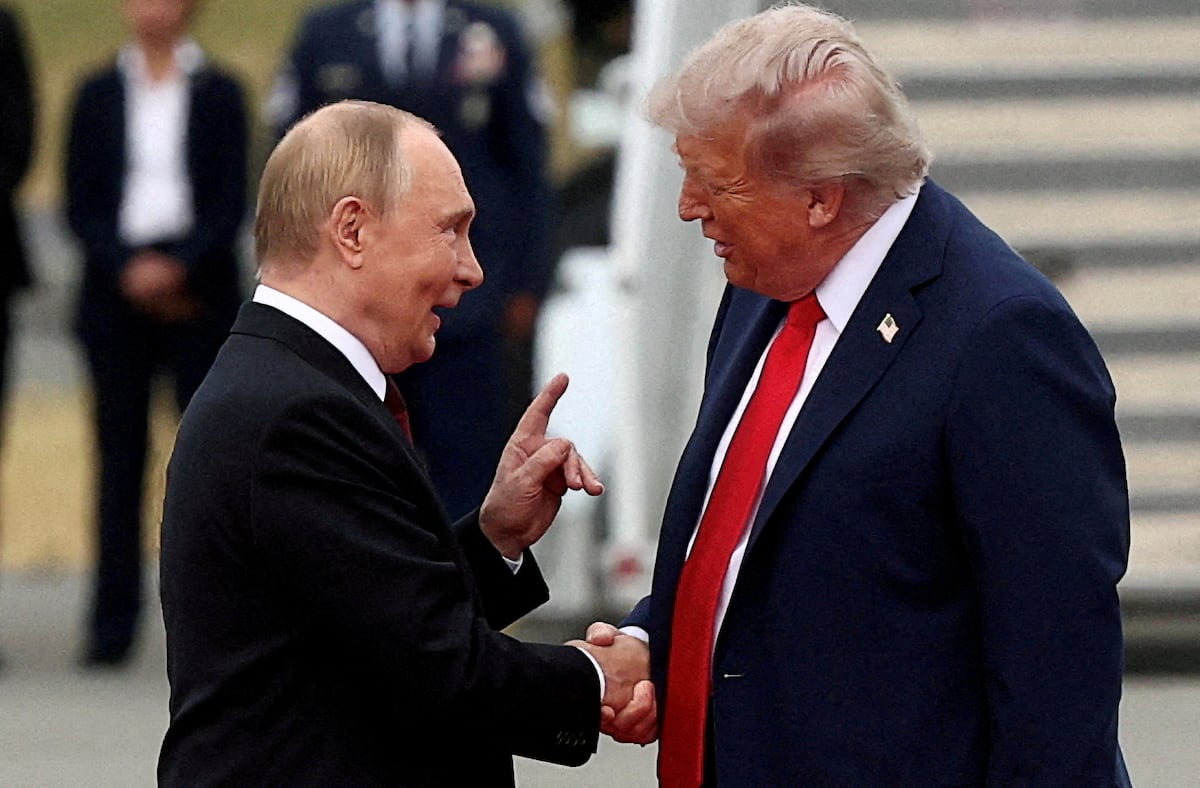
El País contrasts Trump's approach with Vladimir Putin's security and foreign policy documents.
The paper describes the Russian texts as convoluted and hypocritical.
They formally present Russia as pursuing a peaceful policy while blaming Western states for undermining Moscow's security.
The texts use Russia’s actions regarding Ukraine as a pretext for alleging a new "hybrid war."
El País notes that Moscow’s 2021 and 2023 documents recast international relations to justify preventive measures and accuse the West of defending an old, unjust, colonial order.
Coverage Differences
Narrative and tone difference within single-source comparison
Within El País's account, Trump's tone is 'direct and blunt' and inward-looking, while Putin's texts are labeled 'convoluted and hypocritical' and outward-accusatory. Because only El País is available, this observation reflects that source's framing choices rather than a cross-source contrast.
Annexation and geopolitical framing
El País highlights concrete policy and legal concerns, noting that Russia’s annexation of Ukrainian territory violates multiple agreements and treaties.
It adds that since 2022 Moscow has categorized foreign governments and organizations as "constructive", "neutral", or "hostile", listing 47 countries, including the U.S. and NATO members, in the hostile group.
The analysis suggests these categorizations and territorial changes are central to understanding why Russia frames its posture as defensive and why Western responses matter in assessing both powers’ strategies.
Coverage Differences
Missing alternative-source corroboration
El País reports on legal violations and Moscow's hostile categorization, but without additional sources provided it is not possible to show how other outlets treat the legal framing or whether alternative perspectives (e.g., Russian state sources or non-Western media) present different legal or factual claims.
El País on security narratives
El País frames both leaders' security strategies as self-presentations aimed at justifying the retention or recovery of power: Trump's is a blunt inward critique of past U.S. choices, while Putin's is a preventive, accusatory narrative that masks aggression with claims of peaceful intent.
The paper cautions readers to compare these texts with external realities, implying they mix policy and propaganda and should not be accepted uncritically, and it warns that definitive claims about intentions require independent corroboration.
Coverage Differences
Source-limited synthesis
This synthesis reflects only El País’s interpretation. Without other source types provided, differences in tone, narrative, or factual emphasis across Western Alternative or West Asian outlets cannot be identified; the reader should note that broader comparative claims require more sources.