
President Trump calls on allies to send warships to keep Strait of Hormuz open
Key Takeaways
- Trump called on allied nations to deploy warships to keep the Strait of Hormuz open
- The Strait remains effectively closed as Iran threatens retaliation amid US-Israel strikes
- China, UK, France, Japan and South Korea considering participation
Trump's Coalition Call
President Donald Trump issued an urgent call for international allies to deploy naval forces to secure the Strait of Hormuz.
In multiple posts on Truth Social, Trump asserted that 'many countries, especially those who are affected by Iran's attempted closure of the Hormuz Strait, will be sending War Ships, in conjunction with the United States of America, to keep the Strait open and safe.'

He specifically named China, France, Japan, South Korea, and the United Kingdom as nations he hoped would participate in the naval coalition.
Trump described the disruption as an 'artificial constraint' on global energy markets that required international cooperation to resolve.
Iran's Response
Iran immediately rejected Trump's assertions about the strait's status, with the Islamic Revolutionary Guard Corps (IRGC) asserting control over the vital waterway.
Alireza Tangsiri, the naval chief of the IRGC, stated that 'The Strait of Hormuz has not yet been militarily closed and is merely under control,' while dismissing Trump's claims as misinformation.

Iranian Foreign Minister Abbas Araghchi clarified that the strait was only closed to 'tankers and ships of enemies and their allies,' not all international shipping.
Tehran emphasized that it maintained strategic control over the passage despite Trump's claims that the US had 'destroyed 100 percent of Iran's Military capability.'
Strategic Importance
The Strait of Hormuz stands as one of the world's most strategically important maritime chokepoints.
“United States President Donald Trump has said “many countries” will dispatch warships to keep the Strait of Hormuz open, without offering details about which states are on board”
Approximately 20 million barrels of crude oil and petroleum products pass through the narrow waterway daily, representing roughly 20 percent of global oil consumption.
Sources emphasize that disruptions to this critical energy corridor are raising fears of economic and food supply shocks worldwide.
The waterway's significance extends beyond oil to include liquefied natural gas shipments, making any disruption potentially catastrophic for global energy supplies and economic stability.
International Reactions
Responses from the countries named by Trump have been cautious and measured, with several nations indicating they are carefully considering the request but have not committed to deployment.
South Korean officials stated they were 'closely monitoring' Trump's remarks and would 'carefully consider the matter in close consultation with the United States.'

Japanese policy advisor Takayuki Kobayashi described the threshold for sending warships as 'extremely high' under existing Japanese laws.
The UK's defense ministry indicated it was 'currently discussing with our allies and partners a range of options to ensure the security of shipping in the region,' without confirming warship deployments.
China's embassy in Washington called for an 'immediate cessation of hostilities' rather than military involvement, reflecting the complex diplomatic calculus facing potential participants.
Military Escalation
Trump's call for international naval support came amid escalating military rhetoric and actions in the region.
The US President threatened further strikes on Iran's energy infrastructure in particularly aggressive posts.

Trump stated that 'In the meantime, the United States will be bombing the hell out of the shoreline, and continually shooting Iranian Boats and Ships out of the water.'
He also warned that he might 'hit it a few more times just for fun' in reference to Kharg Island, Iran's primary oil export terminal.
The Pentagon has already confirmed striking over 90 targets on Kharg Island, even as Iran warned US-linked oil firms would be 'turned into a pile of ashes' if targeted.
Economic Impact
The conflict's economic impact has been severe and far-reaching, with oil prices surging by approximately 40 percent since the US and Israel launched their air war on Iran two weeks ago.
The disruption of the Strait of Hormuz has sent shockwaves through global energy markets, leading to rising gasoline prices in the United States, where average costs have reached $3.63 per gallon.
Global food security is also at risk, as the strait serves as a critical conduit for liquefied natural gas, the primary feedstock for fertilizers vital to global food production.
UN humanitarian chief Tom Fletcher has warned that 'Millions of people are at risk' if humanitarian cargo cannot pass safely through the strait, highlighting broader humanitarian dimensions of the maritime blockade.
More on USA

Pentagon Identifies Six U.S. Airmen Killed in KC-135 Refueling Crash in Iraq
138 sources compared

FCC chair Brendan Carr Threatens Broadcasters' Licenses Over Iran War Coverage
18 sources compared

Cuba's Díaz-Canel Acknowledges Talks with U.S. as Energy Crisis Worsens
25 sources compared
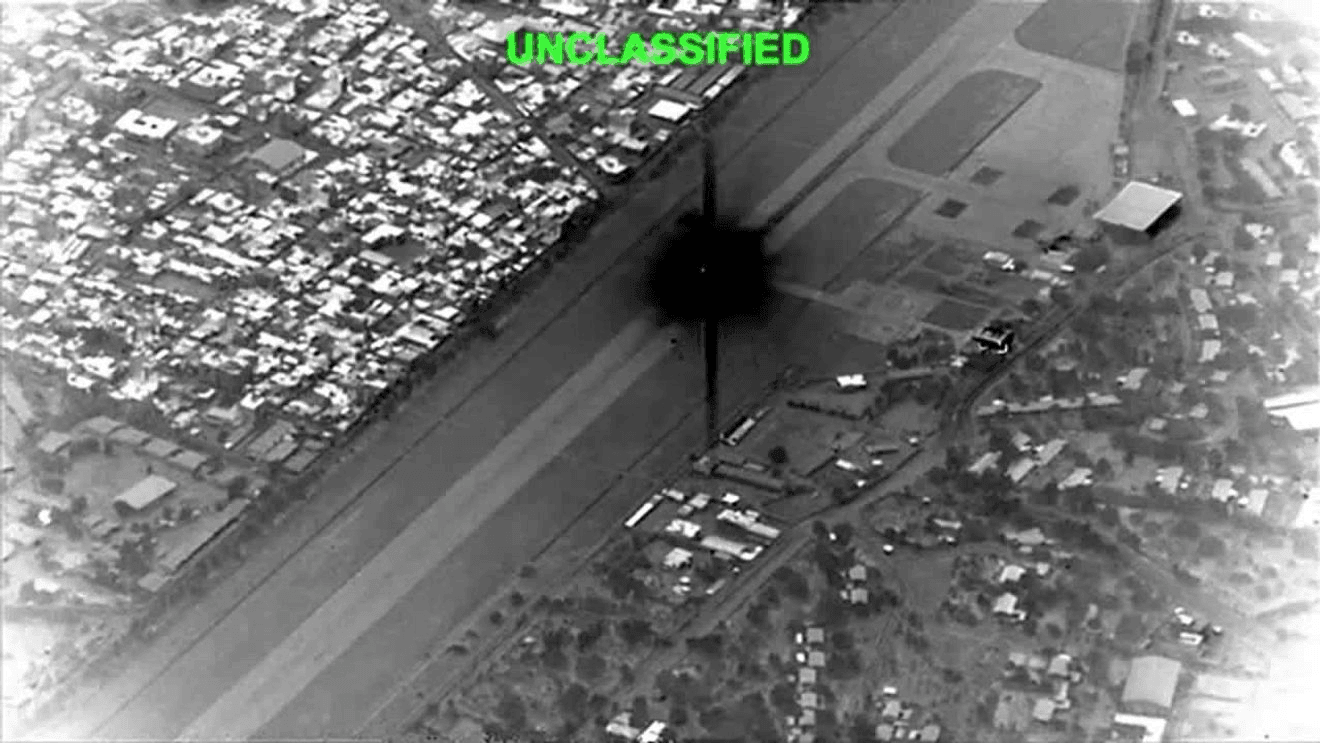
United States launches large-scale strike on Iran's Kharg Island, CENTCOM confirms.
14 sources compared