Full Analysis Summary
Possible U.S. armada to Iran
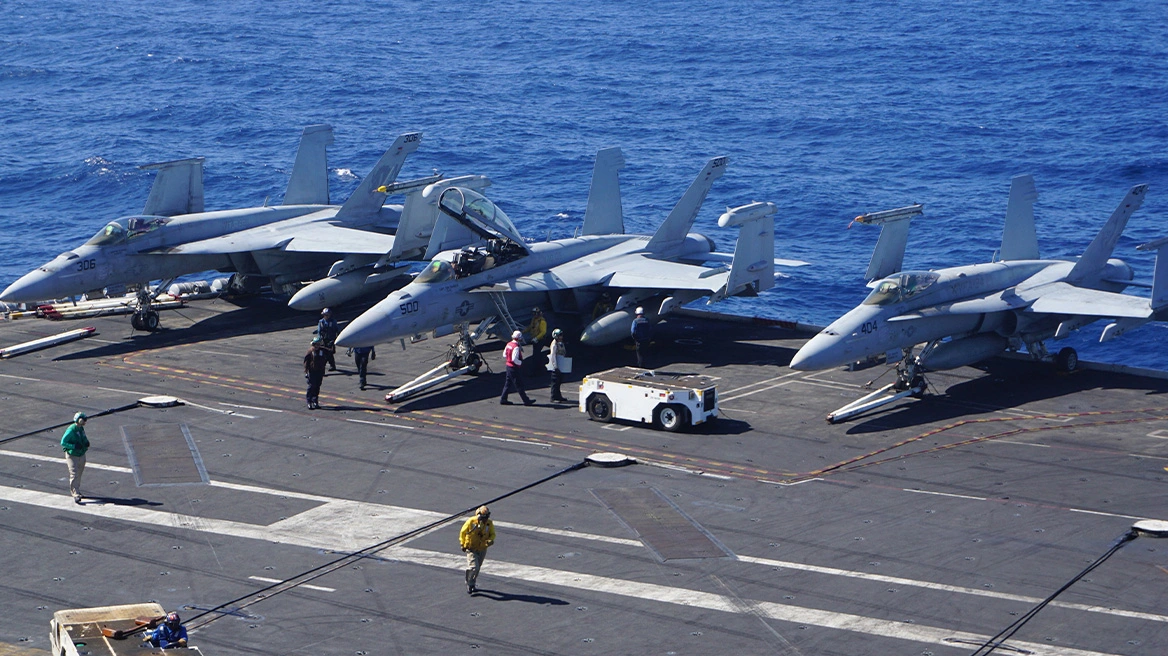
President Trump has publicly signalled a possible U.S. naval "armada" aimed at Iran and compared the potential operation to the January seizure of Venezuela’s Nicolás Maduro.
He said it could act "quickly, with speed and violence."
Experts cited in coverage warn that Iran presents far greater military, geographic and political complications than Venezuela, and that a strike could draw the United States into a prolonged conflict rather than a clean, rapid operation.
Reporting notes President Trump has framed the goal in terms of preventing a nuclear Iran and has described regime change as "the best thing," while analysts say no clear, limited objectives have been specified.
Note: only two source articles were provided for this summary.
Coverage Differences
Tone
ProtoThema English (Western Mainstream) foregrounds Trump’s rhetoric—reporting he likened an Iran operation to the Maduro arrest and quoting his phrase that it could act “quickly, with speed and violence,” while warning experts that Iran would be far more complicated. Caspian Post (Other), republishing a New York Times analysis, focuses on a technical, analytic breakdown of risks—missile inventories, proxies, and economic fallout—emphasizing systemic obstacles rather than presidential rhetoric.
Iran's military capabilities
Analysts emphasize Iran's layered military capabilities as a central reason a quick raid is unlikely.
Coverage notes Iran holds one of the region's largest and most varied missile and drone inventories (including medium-range ballistic missiles), plus anti-ship weapons.
Those weapons give Tehran the ability to strike U.S. bases and regional partners, unlike Venezuela, whose airspace was comparatively unprotected during the Maduro operation.
Reports also stress uncertainty about the current size of Iran's stockpile after recent fighting with Israel, complicating planners' estimates of how much retaliation the U.S. might face.
Coverage Differences
Narrative Framing
Caspian Post (Other) republishes a New York Times analysis detailing technical military capabilities—missiles, drones, anti-ship weapons—and explicitly compares those inventories to Venezuela’s limited defenses. ProtoThema English (Western Mainstream) reports the same expert caution but leans more on the contrast with Venezuela’s unprotected airspace and the political message of Trump’s comparison.
Regional escalation risk
Both sources stress the risk of regional escalation through Iran's proxy networks and the strategic complications of geography and entrenched leadership.
The Caspian Post highlights the "axis of resistance" (Hezbollah, Houthis, Iran-aligned Iraqi militias) as capable of opening multiple fronts, threatening U.S. forces and allies, and attacking shipping, and notes Tehran's inland position (roughly 400 miles from the Gulf) would complicate any leader-capture operation.
ProtoThema English likewise warns of Iran's robust defenses and proxies that could sustain resistance, underscoring that a limited strike could still draw the U.S. into a prolonged conflict.
Coverage Differences
Unique Coverage
Caspian Post (Other) provides a point-by-point, technical list—proxies, geography, and specific actor examples (Hezbollah, Houthis, Iraqi militias)—and explicitly warns about attacks on shipping and multiple fronts. ProtoThema English (Western Mainstream) reports expert caution and emphasizes how Iran’s defenses and proxy networks make a clean, quick operation unlikely, but gives more space to Trump’s statements and the political frame.
Geopolitical and economic risks
Coverage flags political and allied risks: Gulf states hosting U.S. bases are reported to worry about blowback, and some have reportedly declined U.S. airspace for strikes; Israel could face major missile attacks with strained interceptor supplies.
Analysts warn the economic fallout could be severe if Tehran threatened or closed the Strait of Hormuz, which would disrupt roughly one-fifth of global oil and LNG shipments and sharply raise energy prices.
Commentators and quoted experts repeatedly caution there is "no low-cost, easy and 'clean' military option" for Iran, a factor observers say will weigh heavily in Washington's decision calculus.
Coverage Differences
Missed Information
Caspian Post (Other) explicitly lists allied responses (Saudi Arabia, UAE declining airspace) and economic consequences (Strait of Hormuz impact), while ProtoThema English (Western Mainstream) mentions allied concern and the risk to American lives and political cost in an election year but gives less detailed enumeration of specific Gulf-state refusals and economic figures.