Iran19 March, 20264 min read
Tulsi Gabbard says Iran not rebuilding nuclear enrichment, undermining Trump's war rationale.
US intelligence assesses Iran not rebuilding nuclear enrichment after last year's strikes. Findings undercut Trump's justification for war by alleging no imminent threat.
Nuclear Assessment Contradiction
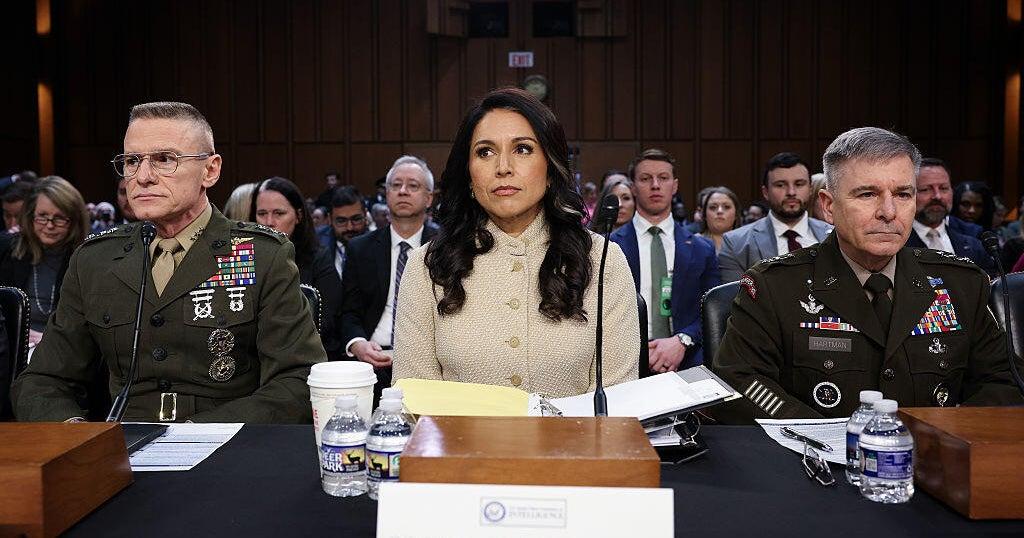
US Director of National Intelligence Tulsi Gabbard delivered testimony to the Senate Intelligence Committee that directly undermined one of President Trump's key justifications for the ongoing war with Iran. According to her written testimony submitted to the committee, Gabbard stated that US intelligence had assessed that Iran's nuclear enrichment program was 'obliterated' following 'Operation Midnight Hammer' - the June 2025 US and Israeli strikes on Iranian nuclear facilities. She further asserted that 'there have been no efforts since then to try to rebuild their enrichment capability,' a conclusion that significantly challenges the administration's narrative about Iran's nuclear ambitions as an immediate threat requiring military intervention.
“'As a result of Operation Midnight Hammer,' Gabbard said in written testimony to the Senate intelligence committee, referencing the June 2025 US strikes on Iran's nuclear facilities, 'Iran's nuclear enrichment program was obliterated'. 'There have been no efforts since then to try to rebuild their enrichment capability,' Gabbard said in the written testimony.'”
War Rationale Undermined
Gabbard's assessment sharply contradicts President Trump's repeated claims that Iran posed an 'imminent nuclear threat' that necessitated urgent military action. Trump has maintained that Iran was weeks away from developing a nuclear weapon and that the administration's Operation Epic Fury was launched to eliminate this immediate danger.
However, Gabbard's testimony reveals that US intelligence had concluded Iran's nuclear program was effectively destroyed nearly a year ago and remained non-operational, suggesting the administration's justification for war was based on flawed or misrepresented intelligence. This discrepancy has intensified scrutiny over the shifting rationales provided by the White House, which has also cited Iran's ballistic capabilities, threats to US forces, and historical actions since the 1979 revolution as additional justifications for military intervention.

Testimony Omission Controversy
A significant controversy erupted when Gabbard omitted the crucial assessment about Iran's nuclear program from her oral testimony before the televised Senate hearing. While the assessment was included in her written remarks submitted to the committee, she did not read that portion aloud during her public appearance. When pressed by Senator Mark Warner about why she omitted this key finding, Gabbard attributed the omission to 'time constraints,' though she did not dispute the validity of her written assessment.
“Notably, Gabbard did not read that portion of her testimony, which was provided to members of the committee, during her publicly televised oral testimony. When pressed on why she omitted the portion, Gabbard said simply that she did not have enough time. She did not deny the assessment.”
Senator Warner suggested the omission appeared intentional, highlighting the inconsistency with Trump's narrative. Similarly, Senator Jon Ossoff confronted Gabbard with her own written words, asking if the intelligence community had assessed that Iran posed an 'imminent nuclear threat,' to which Gabbard deflected by stating that only the president can determine what constitutes an imminent threat.
Political Fallout and Dissent
The testimony comes amid growing political fallout from the Iran war, marked by the resignation of National Counterterrorism Center Director Joe Kent, who reported directly to Gabbard. Kent resigned in protest, stating he 'cannot in good conscience support the ongoing war in Iran' and declaring that 'Iran posed no imminent threat to our nation, and it is clear that we started this war due to pressure from Israel and its powerful lobby.' This resignation highlights internal dissent within the administration over the war's justification.
Gabbard herself has faced criticism for her political trajectory, having previously been a Democratic congresswoman who opposed military action against Iran but later aligned herself with Trump. Her careful wording during the hearing, emphasizing that she was conveying 'the intelligence community's assessment' rather than her personal views, suggests she is attempting to navigate between her intelligence responsibilities and her political alignment with the president.
International Diplomatic Context
International perspectives and diplomatic context further challenge the administration's war rationale. Iranian officials have consistently denied seeking nuclear weapons, and independent monitors have maintained that even if such ambitions existed, they did not pose an immediate danger. Diplomatic sources reveal that negotiations with Iran were progressing prior to the outbreak of war, with the foreign minister of Oman—who had mediated the latest round of US-Iran indirect nuclear talks—refuting Trump officials' claims that the most recent negotiations were not yielding any progress.
“Iranian officials have consistently denied intentions to pursue nuclear weapons, and arms monitors have suggested that even if such ambitions existed, they do not currently pose a short- or medium-term threat. In a contrasting move, the foreign minister of Oman, who played a crucial role in facilitating U.S.-Iran negotiations prior to military escalation, dismissed claims from U.S. officials that talks had stalled without progress.”
The British national security adviser, Jonathan Powell, also indicated that Iran's position in negotiations warranted caution and did not justify an immediate rush to military action. These international perspectives suggest that diplomatic options were available and that the administration's decision to abandon them for military action may have been premature or politically motivated rather than based on genuine intelligence assessments of imminent threats.

Military Capability Assessment
Gabbard's broader assessment of Iran's current military capabilities presents a complex picture that further complicates the administration's narrative. While she stated that 'Iran's conventional military power projection capabilities have largely been destroyed, leaving limited options,' she also acknowledged that 'the regime appears to be intact but largely degraded' and that 'Iran and its proxies remain capable of and continue to attack U.S. and allied interests in the Middle East.' She warned that 'if a hostile regime survives, it will seek to begin a years-long effort to rebuild its missiles and UAV forces.'
This nuanced assessment suggests that while the US military campaign has significantly degraded Iran's capabilities, the regime remains functional and retains the ability to retaliate, potentially explaining why the administration continues to frame Iran as an ongoing threat despite the intelligence assessment that its nuclear program was obliterated. The testimony has sparked broader questions about the credibility of US intelligence assessments and whether they are being politicized to support predetermined policy decisions.