Full Analysis Summary
UAE Gaza reconstruction plan
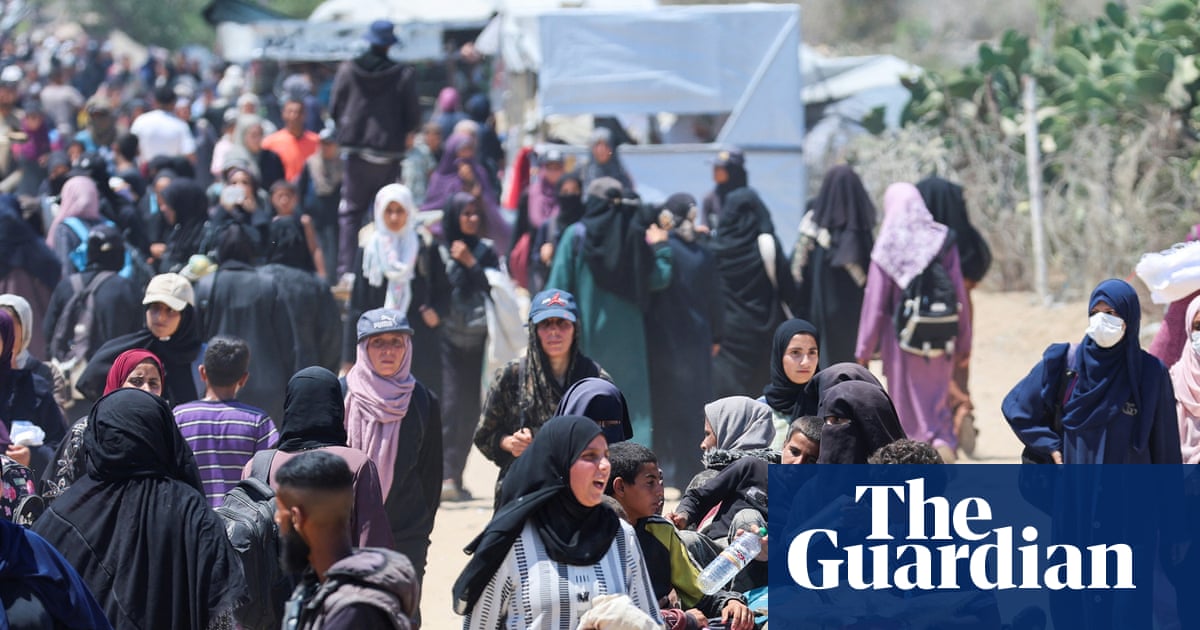
The UAE plans to finance what its planning documents call "Gaza's first planned community" on the ruined outskirts of Rafah, according to an unclassified slide deck and officials involved in US-led Civil Military Coordination Center talks, the Guardian reports.
Blueprints obtained by the Guardian describe a "case study" community where Palestinian residents would receive services such as education, healthcare, and running water.
Entry and access would require biometric data submission and security vetting.
The project would be the UAE's first postwar reconstruction investment in the part of Gaza currently held by Israel.
The UAE has provided more than 1.8 billion dollars in humanitarian aid to Gaza since 7 October 2023, and its role as planned financier had not previously been reported.
Coverage Differences
missed information / single-source perspective
Only The Guardian's reporting is available in the provided material. That means I cannot compare how different outlets frame the plan, nor can I show differing terms, emphasis, or reported quotes from other governments, Palestinian groups, Israeli authorities, or the UAE. The Guardian presents the plan as a documented proposal with biometric and security conditions, but without additional sources I cannot confirm how other media or stakeholders characterise the project or whether they describe it as coercive, humanitarian, strategic, or otherwise.
Biometric-gated service model
The Guardian’s materials say the blueprint ties the delivery of essential services—education, healthcare and running water—to a gated, vetted community model that conditions entry on biometric registration.
According to the slide deck described in the report, combining service provision with mandatory biometric vetting would create tight control over who may live in and move through the planned enclave.
The reporting highlights a possible shift from humanitarian aid alone toward reconstruction projects that incorporate surveillance and access controls.
Coverage Differences
missed information / lack of counter-voices
Because only The Guardian material is available, I cannot show contrasting viewpoints from Palestinian residents, Israeli authorities, the UAE government, or humanitarian groups. The Guardian reports the biometric and vetting requirement; without other sources I cannot attribute either a defence (for security reasons) or a condemnation (for rights or coercion reasons) directly to those actors—only the Guardian’s phrasing and evidence are available.
Biometric access and rights
Requiring biometric registration and security vetting for access to a rebuilt community raises immediate human-rights and sovereignty concerns.
Biometric data can be used to monitor, restrict, and control movement, and vetting can exclude entire families or political groups.
The Guardian's slide-deck description shows the plan links access to rebuilt housing to submitting biometric data.
That forces residents to choose between displacement and a surveillance-heavy registration system, with severe implications for Palestinians.
Without additional reporting, the scale, enforcement mechanisms, and legal safeguards for that biometric system remain unclear.
Coverage Differences
narrative / interpretation not available
The Guardian reports the biometric requirement but does not provide interviews with affected Palestinians, legal analysis, or statements from UAE or Israeli authorities in the provided snippet. That gap means I cannot present other outlets’ framing—such as rights-based condemnations, security-based justifications, or alternative descriptions like 'rehabilitation' versus 'surveillance ghetto'—because the other sources are not provided.
UAE role in Gaza reconstruction
The Guardian says this would be the UAE’s first reconstruction investment in the Israeli-held part of Gaza and raises questions about who will control access, who will enforce vetting, and how reconstruction links to wider military and political control.
Reporting cites planning documents and coordination at a US-led Civil Military Coordination Center in Israel, suggesting international military and diplomatic actors are involved in discussions even though the Guardian excerpt does not quote them directly.
Coverage Differences
omission / context
The Guardian notes involvement at a US-led Civil Military Coordination Center in Israel and cites planning documents, but the provided excerpt does not include perspectives from the US, Israeli military or government, the UAE government, or Palestinians. Therefore I cannot supply how those actors respond or whether they characterise the plan as reconstruction, security-driven, or problematic for rights.
Biometrics and human-rights concerns
The Guardian’s reporting raises urgent human-rights questions that require verification and further reporting.
Will Palestinians be forced to register biometrics to return or live there?
Who decides the vetting criteria?
Which actors will operate and hold the data?
The provided material does not answer these questions.
Only The Guardian’s account is available here, and independent confirmation is absent.
Responses from the UAE, Israeli authorities, Palestinian residents, or rights organisations are not present in the excerpt.
Such confirmation and responses would be necessary to fully assess the plan's legality and human-rights impacts.
Coverage Differences
uncertainty / need for further sources
The Guardian supplies documentation details and the novel claim about UAE financing, but the snippet lacks responses from other stakeholders and further investigative corroboration. Absent those other sources, I must flag uncertainty rather than claim additional facts about enforcement, coercion, or outcomes.