Full Analysis Summary
Refugee trauma from sounds
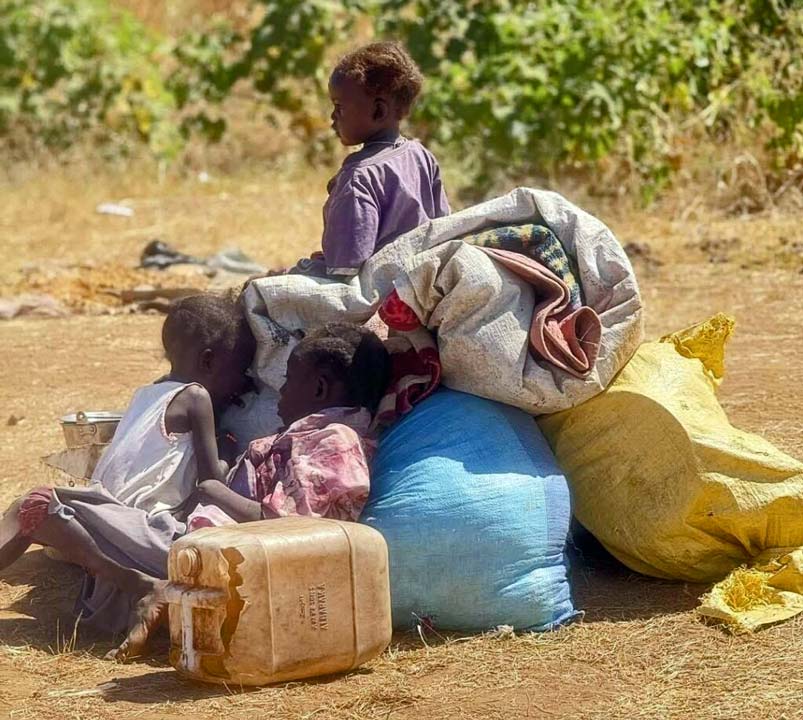
During Uganda's recent general elections, the sound of security aircraft over Kampala re-triggered war trauma among Sudanese refugees who had fled El Fasher and other conflict zones, with children and women most affected.
Radio Dabanga reports that over three days of frequent overflights many children ran for cover and women panicked, reliving bombings they had fled in Sudan.
The outlet gives the example of Mohammed Yassin's children, who were thrown back into the shock they experienced during aerial attacks on Nyala in South Darfur.
Dabanga Radio TV Online recounts a similar episode in Cairo where motorbike noises resembling gunfire caused two children to cry out that the Rapid Support Forces had come, collapse in panic and cling to their mother, showing how airborne and ground noises can both trigger flashbacks among displaced Sudanese.
Both sources frame these sensory triggers as immediate re-inscriptions of past bombardment into refugees' present safety, emphasising that place of refuge in Uganda or Egypt does not automatically remove wartime fear.
Coverage Differences
Narrative focus
Radio Dabanga (Other) focuses on an incident in Kampala during Uganda’s elections and uses the example of Mohammed Yassin’s children and a woman from Omdurman to illustrate how airplane overflights revive wartime memories. Dabanga Radio TV Online (Other) reports a separate Cairo incident involving motorbike sounds and cites psychologist Ibtisam Mahmoud Ahmed to frame the reactions clinically as PTSD. The former foregrounds the event and lived reactions in Kampala, while the latter foregrounds clinical interpretation and a Cairo anecdote.
Children's trauma after violence
Both reports say sudden noises act as conditioned stimuli that can trigger flashbacks and panic in children who witnessed extreme violence in Sudan.
Dabanga Radio TV Online quotes psychology consultant Ibtisam Mahmoud Ahmed saying the children’s reaction, screaming that the Rapid Support Forces had arrived and collapsing, is consistent with post-traumatic stress disorder (PTSD), in which sudden noises or similar stimuli can trigger flashbacks and panic through classical conditioning.
Radio Dabanga describes parents' frantic protective actions and notes that some children continued playing while other family members were thrust back into acute fear, showing varied individual responses to the same trigger.
Together, the sources show a range of conditioned responses rooted in prior exposure to bombardment and killings.
Coverage Differences
Tone and framing
Dabanga Radio TV Online (Other) explicitly uses clinical language—citing PTSD and classical conditioning via a named psychology consultant—thus framing the episodes as medical/psychological problems. Radio Dabanga (Other) reports vivid behavioural detail (children running for cover, parents panicking) and personal examples without the same clinical framing, emphasising lived experience rather than diagnostic terminology.
Trauma triggers and evidence
Both sources provide concrete personal details that underscore how severe the triggers are.
Radio Dabanga names specific locations and scenes of prior bombardment, including Nyala in South Darfur and Omdurman, to connect present fear to past attacks.
Dabanga Radio TV Online reports that the Cairo family had arrived about a month earlier and that the children had witnessed their grandfather's killing in Al-Jazirah State.
These links between past violence and present distress strengthen the report's claim that auditory cues like airplane engines or motorbike sounds can revive deep psychological wounds rather than merely causing temporary startle reactions.
Coverage Differences
Detail and specificity
Radio Dabanga (Other) supplies place-based context (Nyala, South Darfur; Omdurman) and eyewitness-style description of reactions in Kampala; Dabanga Radio TV Online (Other) supplies a family timeline and an explicit lethal incident (the grandfather’s killing in Al‑Jazirah State). The sources therefore complement each other: one anchors trauma in locations and collective experiences, the other in a discrete family history and recent displacement timeline.
Post-conflict mental health needs
Both reports stress that professional mental-health assessment and treatment are frequently lacking after conflicts, and that survivors often need sustained services to recover.
Dabanga Radio TV Online quotes Ahmed saying war produces severe, varied psychological damage and that many survivors need professional assessment and treatment, services that are often unavailable after conflicts.
Radio Dabanga's account of families reliving bombardment in places they had hoped would be safe underscores the ongoing need for protection and psychosocial support in host countries such as Uganda and Egypt.
Coverage Differences
Explicit policy implication vs. implicit suggestion
Dabanga Radio TV Online (Other) explicitly conveys a professional recommendation—Ahmed’s emphasis on the need for assessment and treatment and the lack of services—whereas Radio Dabanga (Other) implies need through descriptive reporting of fear and re‑traumatisation in refugee settings, without quoting a health professional calling for services.
Displaced children and trauma
Radio Dabanga and Dabanga Radio TV Online together build a consistent picture: displaced children from El Fasher and other Sudanese conflict areas remain highly vulnerable to sensory triggers in host countries, with examples from Kampala and Cairo showing both immediate panic reactions and clinical patterns of post-traumatic stress.
The two sources differ in emphasis—Radio Dabanga highlights location and eyewitness description, while Dabanga Radio TV Online stresses clinical interpretation and explicit calls for services—so a fuller response by host governments and humanitarian actors should combine situational protection measures (for example, public-space warnings during overflights) with access to child-centred mental-health care, which the reports imply but do not detail.
Both sources report similar core facts, and there is no contradiction between them, only complementary emphases and scope.
Coverage Differences
Complementary emphasis (no contradiction)
Radio Dabanga (Other) reports eyewitness reactions and site‑specific accounts in Kampala, while Dabanga Radio TV Online (Other) supplies professional interpretation and a Cairo family example—these are complementary rather than contradictory, with Radio Dabanga emphasising immediate behavioural scenes and Dabanga Radio TV Online emphasising clinical diagnosis and service gaps.