Full Analysis Summary
UK long-range missiles to Ukraine
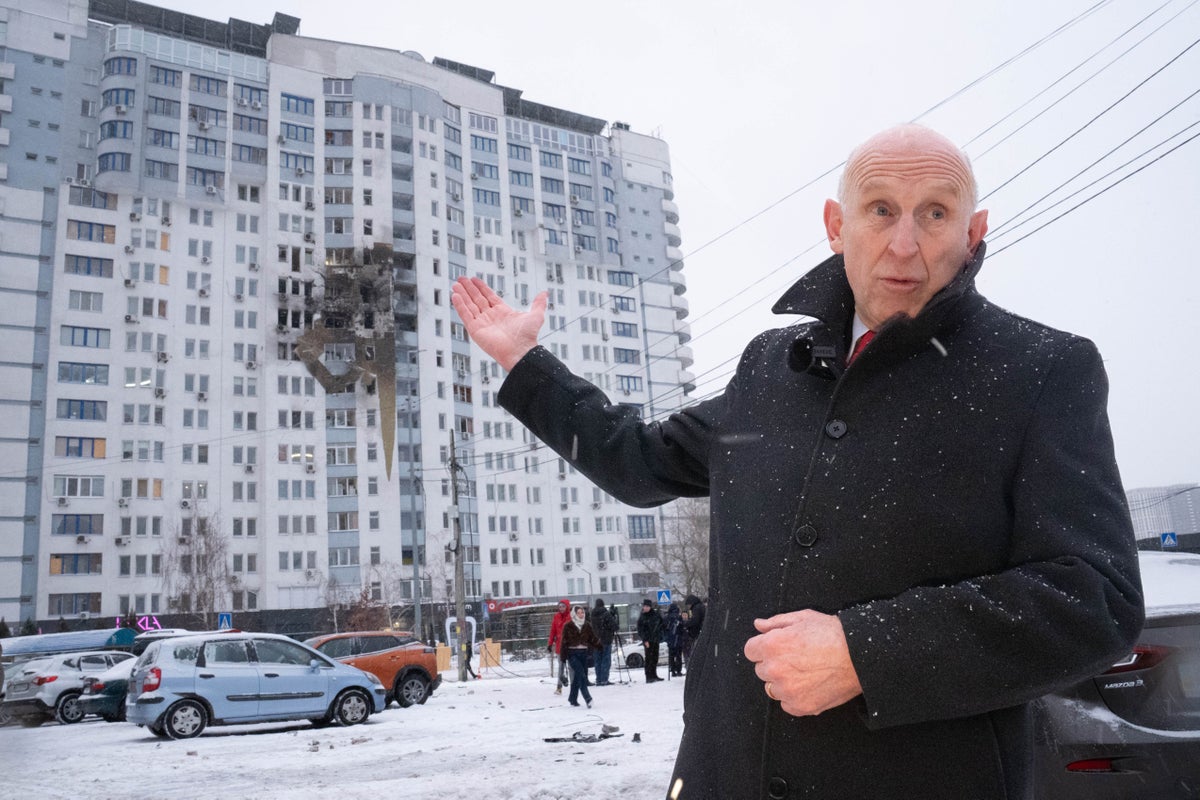
The UK has launched Project Nightfall, a programme to provide Ukraine with longer-range tactical ballistic missiles, according to The Independent.
Defence Secretary John Healey described the project as intended to give Ukraine advanced weapons to resist Putin's invasion.
The plan reportedly centers on conventional 200 kg warheads with an estimated 500 km range capable of striking deep into Russian territory.
The announcement followed Moscow's Oreshnik hypersonic missile strike near Lviv, an attack Healey reportedly heard while in Kyiv.
It comes amid a UN Security Council emergency meeting about the use of the hypersonic weapon close to NATO territory.
Coverage Differences
Emphasis/Tone
The Independent (Western Mainstream) highlights the UK initiative as a deliberate effort to arm Ukraine with long‑range tactical ballistic missiles and frames the announcement with direct quotes and program specifics, while DIE WELT (Western Mainstream) does not report Project Nightfall at all in its snippet and instead concentrates on ongoing strikes, power outages and a broader catalogue of cross‑border incidents. This reflects a difference in topic focus and emphasis rather than a direct factual contradiction.
Coverage of Russian strikes
The Independent framed the timing and context of the announcement around an escalation in Russian long-range strikes and growing international concern.
It linked Project Nightfall to a recent Russian Oreshnik hypersonic missile strike near Lviv, which Russia said was retaliation for an alleged Ukrainian drone attack on a Putin residence that Kyiv denies.
The outlet noted the incident is to be discussed at an emergency UN Security Council meeting because it occurred about 60 miles from NATO member Poland.
DIE WELT's reporting in the same period emphasized repeated Russian air attacks on Ukrainian cities, resulting power outages, and Kyiv's accusations that Moscow is using massed drones, glide bombs, and missiles as deliberate terror.
Coverage Differences
Narrative/Attribution
The Independent (Western Mainstream) connects the UK’s missile project directly to a single, high‑profile hypersonic strike and international diplomatic repercussions (UN Security Council), quoting both the UK framing and Russia’s stated rationale. DIE WELT (Western Mainstream) emphasizes ongoing patterns of strikes and Zelensky’s language calling them deliberate terror, and stresses that damage and casualty claims from both sides could not be independently verified. The two sources therefore differ in narrative framing — The Independent frames a policy response to a specific event, while DIE WELT frames a broader campaign of attacks and verification limits.
Reports of long-range strikes
The Independent’s snippet emphasizes the missiles’ characteristics and intended effect: conventional 200 kg warheads and an estimated 500 km range described as able to strike deep into Russian territory.
That technical framing underlines why the announcement is sensitive, because long-range strikes raise questions about escalation and targeting.
DIE WELT’s coverage highlights the reciprocal nature of strikes and reported Ukrainian cross-border actions, such as alleged damage to three Lukoil oil platforms in the Caspian Sea, which Kyiv attributed to long-range drones without technical detail.
It also cites Russian reports of civilian casualties from Ukrainian drone attacks in Voronezh and elsewhere and notes that specific damage and casualty claims from both sides could not be independently verified.
Coverage Differences
Missed information/Focus
The Independent (Western Mainstream) supplies explicit technical parameters for the UK’s Project Nightfall missiles and frames them as a UK policy decision; DIE WELT (Western Mainstream) does not include those technical details in its snippet and instead reports on a wider array of cross‑border incidents and the difficulty of verifying damage claims. This shows The Independent focuses on the weapon system’s specifications and policy rationale, while DIE WELT emphasizes the fog of war and reciprocal strikes.
Reporting on recent strikes
The Independent places the UK decision in the context of immediate humanitarian and infrastructure impacts from recent strikes.
It reports overnight Russian strikes on energy infrastructure in the Odesa region caused blackouts that left about 33,500 families without electricity.
The Independent also relays an intelligence claim that Chechen leader Ramzan Kadyrov is undergoing dialysis in a private hospital.
DIE WELT similarly emphasizes civilian impacts from the wider campaign, citing a Russian Fab‑250 guided bomb that wounded seven civilians in Sloviansk and power outages in Zaporizhzhia that were largely restored.
It repeatedly cautions about independent verification and says there has been far heavier destruction and casualties in Ukraine overall.
Coverage Differences
Tone/Severity
Both sources report civilian and infrastructure harm, but The Independent (Western Mainstream) links specific UK policy action to humanitarian impacts in Ukraine (Odesa blackouts) and includes intelligence‑style reports (Kadyrov dialysis). DIE WELT (Western Mainstream) emphasizes the overall scale of destruction and repeatedly cautions that many claims "could not be independently verified," giving its coverage a more cautious tone on casualty figures while stressing severity.
Media perspectives on UK arms
Taken together, the two outlets reflect both an immediate policy response from a NATO state and the broader, contested battlefield environment that complicates reporting and escalation management.
The Independent foregrounds a specific UK initiative, emphasizing technical details and diplomatic framing.
DIE WELT highlights the ongoing pattern of strikes, reciprocal cross-border incidents, and the verification challenges that follow.
Both sources therefore offer complementary but differently focused perspectives on why the UK might arm Ukraine with longer-range tactical missiles and on the risks that choice raises for escalation and civilian harm.
Coverage Differences
Synthesis/Overall narrative
The Independent (Western Mainstream) frames the story as a UK policy decision responding to a high‑profile Russian escalation (hypersonic strike near Lviv) and provides technical specifics; DIE WELT (Western Mainstream) offers a broader view of continuous strikes, reciprocal incidents, and verification challenges. The differing emphases — policy specifics versus operational context and caution about unverified claims — illustrate how source selection shapes the reader’s understanding of risk, motive and scale.