Britain17 December, 20251 min read
UK Government Detains Palestine Action Activists as Doctors Warn Hunger Strikers Face Imminent Death
Palestine Action detainees are on prolonged hunger strike; several critically ill after about 46–47 days Hundreds of health professionals warn of imminent deaths and demand urgent medical intervention

11 outlets told this the same way.
Outlets did split on UK Police Charge Teddy Young With Spying For Foreign Power, Royal Navy Member →
BBC was read line by line by the Watchdog: 3.2. See the score →
Palestine Action hunger strike
Eight people held on remand linked to the activist group Palestine Action have engaged in coordinated hunger strikes while awaiting trial. Reports place some strikers in their mid-40s and record durations of up to 47 days without food. Sources say the detainees are challenging charges of break-ins and criminal damage and are demanding immediate bail, an end to the government's ban on Palestine Action, and other concessions.
Families and lawyers say the defendants deny the offences they are accused of. Coverage across outlets records repeated hospitalisations and long-running refusals to eat as the central fact of the dispute.

Health risks for strikers
Medical warnings and hospital admissions have highlighted immediate physical risks to the strikers. An emergency physician and campaigners say strikers face an acute risk of death or critical illness. At least one striker has been described as having lost a significant proportion of body weight and needing repeated hospital care.
Experts and relatives cited in coverage report symptoms including chest pain, breathlessness and abdominal pain. Doctors and MPs have urged urgent medical attention and ongoing monitoring.

Mixed political responses
Political responses are mixed: hundreds of healthcare workers and 51 MPs and peers have petitioned ministers and Justice Secretary David Lammy to intervene or meet lawyers, while Prime Minister Keir Starmer and other officials say existing rules and procedures are being followed.
Coverage also records calls from opposition figures and campaigning politicians for greater engagement and concern over how remand and protest bans are being handled.
Protests and hunger-strike grievances
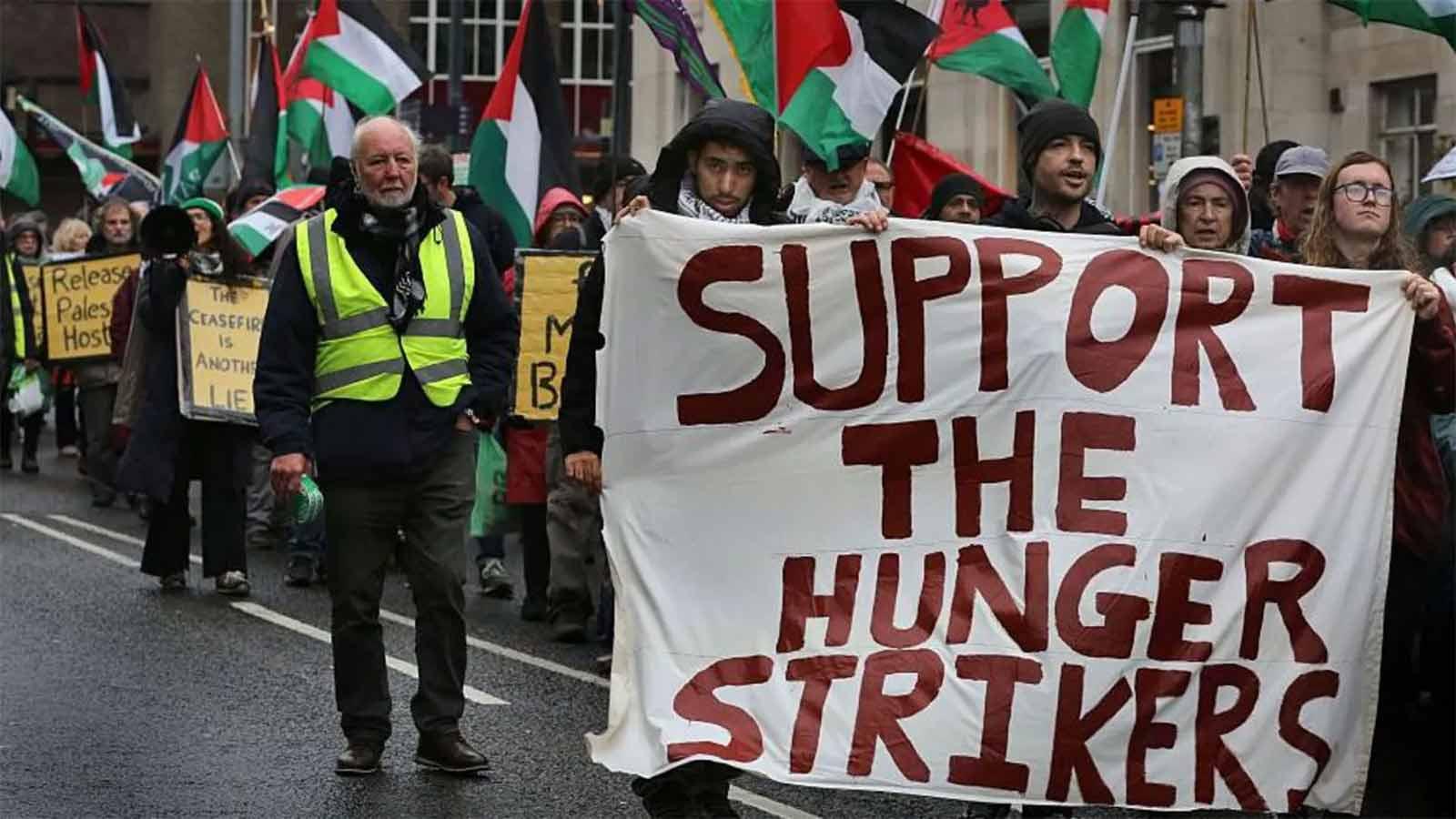
Public actions and protests have accompanied the strikes. These included demonstrations outside HMP Bronzefield, interventions by MPs, and at least one arrest during a protest.
Campaigners and relatives compared the hunger strikes to past political hunger protests. Prisoners' supporters said the government ban on Palestine Action and extended pre-trial remand were central grievances.