Full Analysis Summary
UK very deep poverty
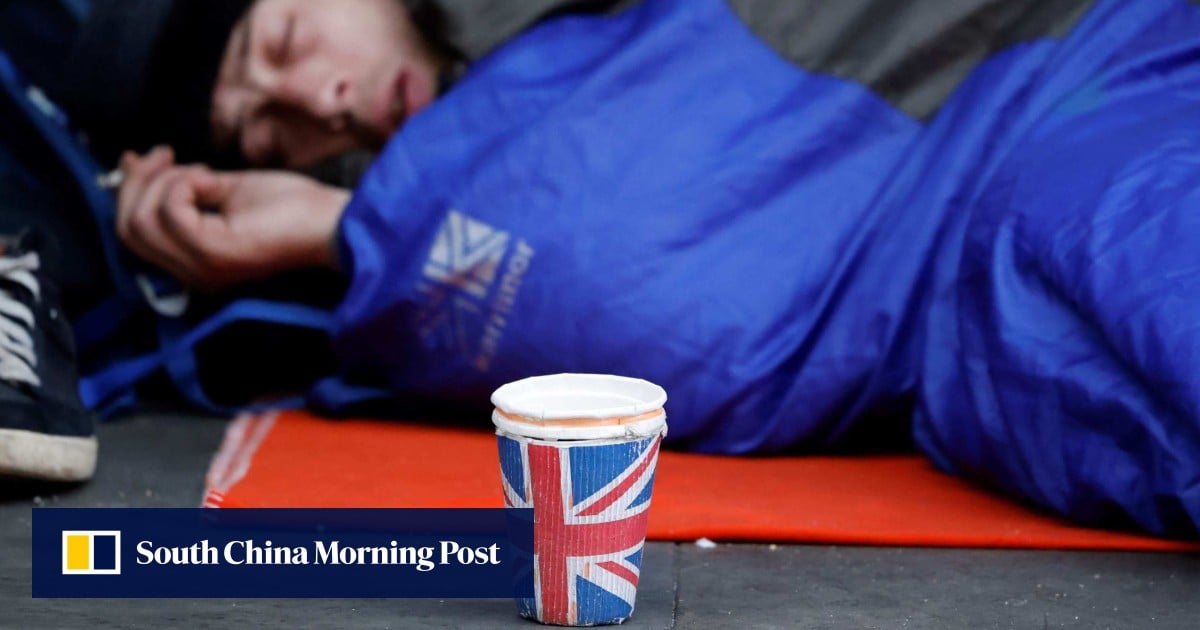
A new Joseph Rowntree Foundation analysis, reported by the South China Morning Post, says about 6.8 million people in Britain are now in "very deep poverty," the highest level in around 30 years.
The report defines "very deep poverty" as after-housing-costs income below 40% of the UK median, roughly £16,400 a year for a couple with two young children (about $22,447).
While the overall poverty rate fell from 24% in 1994/95 to 21% in 2023/24, the share of those in very deep poverty rose from 8% to 10%.
People in very deep poverty now make up nearly half of all people in poverty.
The analysis highlights both the scale and the severity of the deterioration for the poorest households in the UK.
Housing-adjusted poverty levels
The report defines very deep poverty as after-housing-costs income below 40% of the median, which places the threshold at roughly £16,400 for a couple with two young children (about $22,447 in the Post's conversion).
Because the measure deducts housing costs it can reveal deeper hardship in areas with high rent or housing prices, making it a pointed indicator of how housing and income together can push households into severe deprivation.
The South China Morning Post notes a long-term shift: overall poverty has declined modestly over decades, but poverty intensity at the bottom has increased, with the share in very deep poverty rising from 8% to 10%.
Deepening poverty in Britain
The Post links the deterioration to a deepening of poverty dynamics in Britain, reporting that nearly half of people in poverty are now in this 'very deep' category.
That concentration suggests policy failures or regressions that leave the poorest households further behind even if headline poverty rates edge down.
The South China Morning Post presentation implies pressure on families with children and on housing affordability as key factors behind the climb in very deep poverty.
Entrenched poverty impacts
For affected households, the consequences are acute.
The Post's summary of the Rowntree report describes deeper, more concentrated hardship among the poorest 6.8 million people, many of whom face costs that exceed what their incomes can cover after housing is paid.
The reported data point to entrenched hardship among families with children and to the potential for long-term social and health harms if policymakers do not address the drivers of very deep poverty.
Limitations and next steps
I could only use the South China Morning Post snippet provided.
That constraint prevents producing a multi-source comparative article that highlights how different source types (Asian, Western mainstream, Western alternative, West Asian) frame causes, government responsibility, or policy responses.
To meet your request fully — including the required per-paragraph inclusion of three to five distinct sources and a robust differences analysis across source types — please provide additional articles from other outlets and source types.
I will then revise the article, explicitly naming sources and contrasting their narratives, tone, and omissions.
Please provide the reformatted version with the specified structure.