UK Government Faces High Court Judicial Review Over Ban On Palestine Action Under Terrorism Act

UK Government Faces High Court Judicial Review Over Ban On Palestine Action Under Terrorism Act

26 November, 20258 sources compared
Britain

Key Points from 8 News Sources

  1. 1

    UK government proscribed Palestine Action under the Terrorism Act as a terrorist organisation.

  2. 2

    Huda Ammori, Palestine Action cofounder, launched a High Court judicial review.
  3. 3

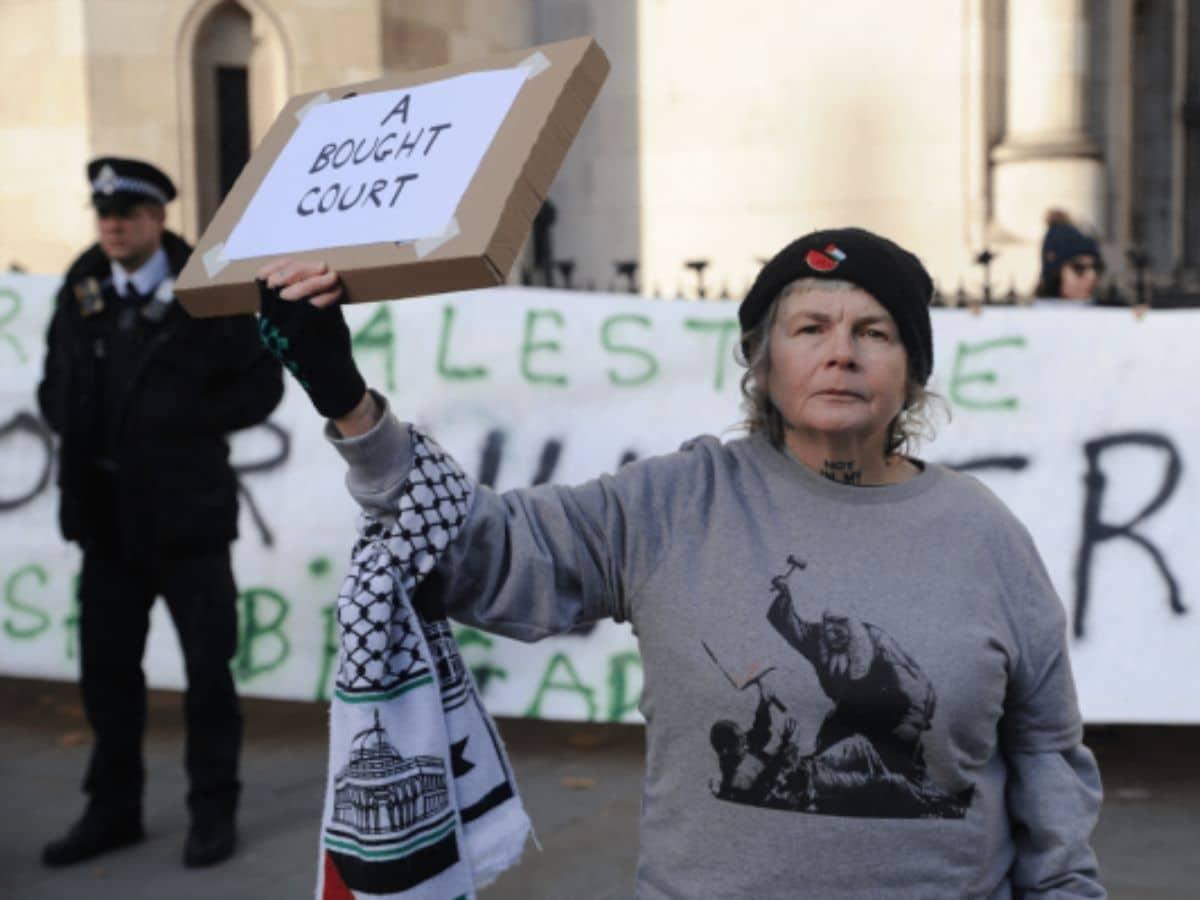
    Dozens of protesters were arrested outside the High Court during the judicial review.

Full Analysis Summary

Palestine Action proscription review

UK judges began a three-day judicial review in London to consider the government’s decision to proscribe the direct-action group Palestine Action under the Terrorism Act.

Police made arrests among demonstrators outside the Royal Courts of Justice as the hearing opened, and reports describe large demonstrations and arrests of people holding pro-Palestine signs.

The case brings into focus Palestine Action’s legal status and the consequences of proscription for activists and supporters, and the long-awaited hearing follows the government’s July decision to list the group under terrorism legislation and a legal challenge by co-founder Huda Ammori that has drawn mass public attention.

Coverage Differences

Tone / Narrative emphasis

Sources differ on how they characterise the opening day: Al Jazeera offers straightforward court reporting noting that "UK judges are reviewing the government’s decision" and that police were arresting people for displaying signs; Middle East Eye emphasises dramatic scenes and civil‑disobedience tactics in describing arrested protesters and lawyers arguing the ban "chills lawful protest"; the Canary frames the arrests and the hearing as part of "continued suppression of free speech" and highlights alleged establishment bias among the three‑judge panel. Each source reports the same event but with different emphasis—neutral reporting (Al Jazeera), protest‑centred narrative and rights framing (Middle East Eye, thecanary), and broader legal context (Evrim Ağacı and newshub reporting the legal challenge).

Court review and protests

Outside and inside court the review has been accompanied by contentious scenes and questions about judicial impartiality.

Multiple outlets describe demonstrators being detained or "going floppy" during arrests and note that arrests continued as people displayed pro-Palestine placards.

Some reports document specific incidents, such as a detained pensioner.

Separately, coverage highlights controversy over the composition of the judicial panel after the removal of one judge and activist claims of links between replacement judges and the arms industry, which campaigners say raises impartiality concerns.

Coverage Differences

Detail and emphasis on arrests vs. judicial impartiality

Middle East Eye focuses on vivid arrest scenes — "detained pensioner" and activists "going floppy" — and on lawyers arguing the ban chills protest. The Canary emphasises the arrests as evidence of "suppression of free speech" and calls attention to alleged links between the judges and the arms trade. Evrim Ağacı provides a broader legal timeline and explicitly names the judge removed (Justice Martin Chamberlain) and the replacement judges, noting "allegations of possible conflicts of interest". Al Jazeera reports arrests more neutrally. These variations show some sources foregrounding human drama while others foreground procedural and institutional concerns.

Proscription legal dispute

At the heart of the judicial review are competing legal narratives.

Lawyers for Huda Ammori and Palestine Action say the proscription unlawfully chills legitimate protest and is disproportionate because government assessments found the group does not advocate for violence.

The Home Office and the government maintain the ban is necessary and proportionate, arguing that property damage intended to influence or intimidate can meet the terrorism threshold.

The government has also cited instances of escalating criminal damage, including a reported break-in at RAF Brize Norton that authorities say caused significant financial loss, to justify proscription.

Coverage Differences

Contradiction in legal characterisation

Middle East Eye and Evrim Ağacı both report that lawyers argued the ban "chills lawful protest" and that assessments found Palestine Action does not "advocate for violence," portraying the ban as disproportionate. By contrast, Middle East Eye and Evrim Ağacı (reporting the Home Office position) also record the government's justification that property damage "can meet the legal threshold for terrorism" and that proscription is "necessary and proportionate," citing incidents such as a break‑in at RAF Brize Norton. Thecanary and newshub highlight the civil‑liberties framing and the argument that the government seeks to silence dissent, while official sources emphasise security and damage prevention.

Judicial review of protest ban

Observers and campaign groups warn the case could have wide implications for protest rights and the policing of dissent in the UK.

Coverage records that, since the ban was imposed, hundreds to thousands of people have been arrested for supporting Palestine Action, and civil‑liberties organisations as well as international bodies have criticised the ban as disproportionate.

If the judicial review overturns the decision it could lift the ban and reduce the criminalisation risk for activists; if the ban is upheld, campaigners say it will have a chilling effect on a range of pro‑Palestinian and direct‑action tactics.

Coverage Differences

Scope and framing of consequences

Evrim Ağacı emphasises the international and legal backlash — citing criticism from the UN human rights chief and the Council of Europe and giving concrete arrest and charge numbers ("about 2,300 people have been arrested... and 254 charged"). The Canary highlights the arrests and frames them as suppression of speech, while newshub and Middle East Eye stress the legal precedent and potential chilling effect on protest. Al Jazeera provides concise on‑the‑ground reporting of arrests without extended legal commentary. The sources therefore differ in scope: some prioritise legal and international criticism (Evrim Ağacı), others foreground domestic civil‑liberties impact (thecanary, Middle East Eye) or balanced reporting (Al Jazeera).

All 8 Sources Compared

5Pillars

Last-minute judge change in Palestine Action case raises serious questions

Read Original

Al Jazeera

Palestine Action’s legal challenge against UK government ban begins

Read Original

Al Jazeera

UK judge reviews Terrorism Act ban on Palestine Action

Read Original

AnewZ

Palestine Action takes legal action against UK terrorist designation

Read Original

Evrim Ağacı

Palestine Action Ban Sparks Legal Battle And Mass Arrests

Read Original

Middle East Eye

Protesters arrested outside High Court as Palestine Action fights UK terror ban

Read Original

newshub.co.uk

Challenging the UK’s terrorism label on Palestine Action

Read Original

thecanary.co

Palestine Action: Exclusive photos from High Court protest

Read Original