Britain18 December, 20253 min read
UK Government Ignores Jailed Palestine Action Hunger Strikers as Doctors Warn They Are Dying
This article is an automated aggregation of coverage from news outlets. Our editorials offer in-depth analysis curated by the NewsCord team.
Palestine Action activists in UK prisons are on coordinated hunger strikes while remanded awaiting trial Doctors and hundreds of medical professionals warn the hunger strikers are dying

5 outlets told this the same way.
UK pro-Palestine hunger strikes
Eight pro-Palestinian activists detained in the UK have been on coordinated hunger strikes since early November. Families, lawyers and supporters have issued urgent pleas as medical warnings intensify that the prisoners are in life‑threatening condition. Sources report eight people began refusing food and lawyers say the health of the six remaining strikers, aged 20–31, is deteriorating and that death is likely without intervention.
“Families, lawyers and supporters of eight detained pro‑Palestinian activists in Britain issued an urgent plea to the government, warning the hunger strikers face life‑threatening danger.”
Individual cases include 20‑year‑old Qesser Zuhrah being hospitalised after 46 days without food and others showing chest pain, breathlessness and abdominal pain. The prisoners are held on allegations ranging from break‑ins at an Israeli‑linked defence firm to damaging aircraft and are accused of acting on behalf of Palestine Action. They demand immediate bail, an end to the ban on Palestine Action and uncensored communication as their conditions worsen.

Charges linked to Palestine Action
Activists face criminal charges linked to Palestine Action, a group the UK government banned and designated as a terrorist organisation in July. Reporting says four defendants were jailed over an alleged break-in at an Israeli-linked defence firm, and four are accused of breaching a military air base and damaging two aircraft, with authorities saying the actions were on behalf of Palestine Action.
Membership of the banned group is a criminal offence and can carry a sentence of up to 14 years. Supporters and lawyers say many defendants have been held in pre-trial detention for more than a year and are demanding immediate bail and the lifting of the ban.
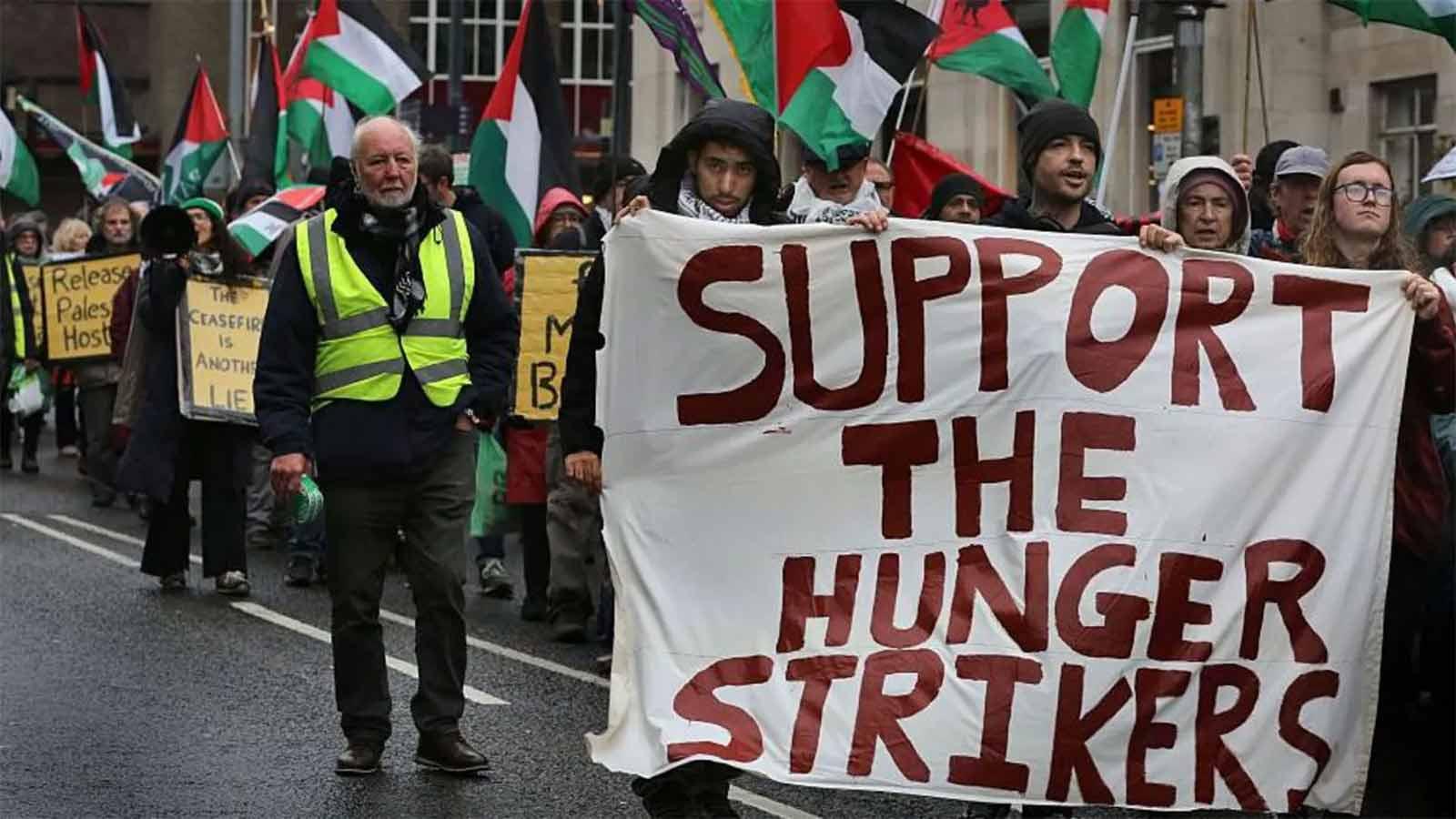
Health crisis among strikers
Doctors, other health professionals and campaigners described an escalating medical danger and called for specialist hospital monitoring. An emergency physician quoted in The Irish News warned that the strikers are 'dying'. Nearly 900 health professionals and more than 200 members of the BMA wrote to ministers urging urgent medical intervention and possibly continuous hospital care.
“Eight Palestine Action activists who are on hunger strike in prison while awaiting trial are ‘dying,’ Dr James Smith, an emergency physician and UCL lecturer, warned, saying they need specialist, possibly continuous, hospital monitoring.”
Lawyers said several strikers have been intermittently hospitalised and warned of an increasing risk of fatalities. Activists reported that some detainees have experienced dramatic weight loss and cardiac decline.
Prison hunger strike response
Government and prison authorities say they are monitoring the welfare of prisoners and following rules. A government spokesperson for Prime Minister Keir Starmer told reporters that officials were monitoring the wellbeing of those on hunger strike. The Ministry of Justice and prison services say they are following procedures and providing medical care.
In parallel, more than 50 MPs and peers have urged Justice Secretary David Lammy to meet the prisoners' lawyers. Some reports say the cross‑party appeal was led by Jeremy Corbyn.

Coverage differences and risks
Reporting across three sources converges on central facts — prolonged hunger strikes, rapidly worsening health, and political controversy — while differing in emphasis and framing. Global Banking | Finance frames the story with legal and statistical context and official figures linking arrests to Palestine Action. Azat TV focuses on named individuals, their symptoms, and protest actions that led to hospital transfers.
“Official figures show that of 1,886 terrorism‑related arrests in the UK in the year to Sept. 2025, 1,630 were linked to support for Palestine Action.”
The Irish News highlights clinical alarm from doctors and organised medical signatories. The available material suggests deaths are likely without intervention, but there is no independent clinical report in these pieces beyond quoted warnings. Details such as exact days of refusal and counts of signatories vary slightly between reports, leaving outcomes uncertain.