Protests11 December, 20253 min read
UK Government Risks Death Of Palestine Action Hunger Strikers In Prison, Lawyers Warn
Eight remand prisoners linked to Palestine Action are staging a hunger strike across multiple prisons Five of the eight strikers have been hospitalized as their health rapidly deteriorates

12 outlets told this the same way.
Outlets did split on France Suspends Police Stun Grenades at High School Protests After 15-Year-Old Loses Hand →
Hunger strike in UK prisons
Eight Palestine Action members held on remand in UK prisons have begun a prolonged hunger strike, and their lawyers warn that without urgent intervention some could die. Lawyers at Imran Khan & Partners have written to Justice Secretary David Lammy requesting an immediate meeting and report that five of the eight have already been hospitalised.
“Lawyers for eight Palestine Action activists on hunger strike in prison have warned Justice Secretary David Lammy that the strikers are at grave risk of dying without immediate intervention.”
At least one detainee has lost about 10 kg after more than five weeks without food, placing them at grave risk of dying without action, according to multiple outlets. Lawyers and campaigners stress the detainees remain unconvicted and say the strike responds to detention conditions and long pre‑trial waits, while the Ministry of Justice says it is handling correspondence and has noted routine medical monitoring of hunger strikers.
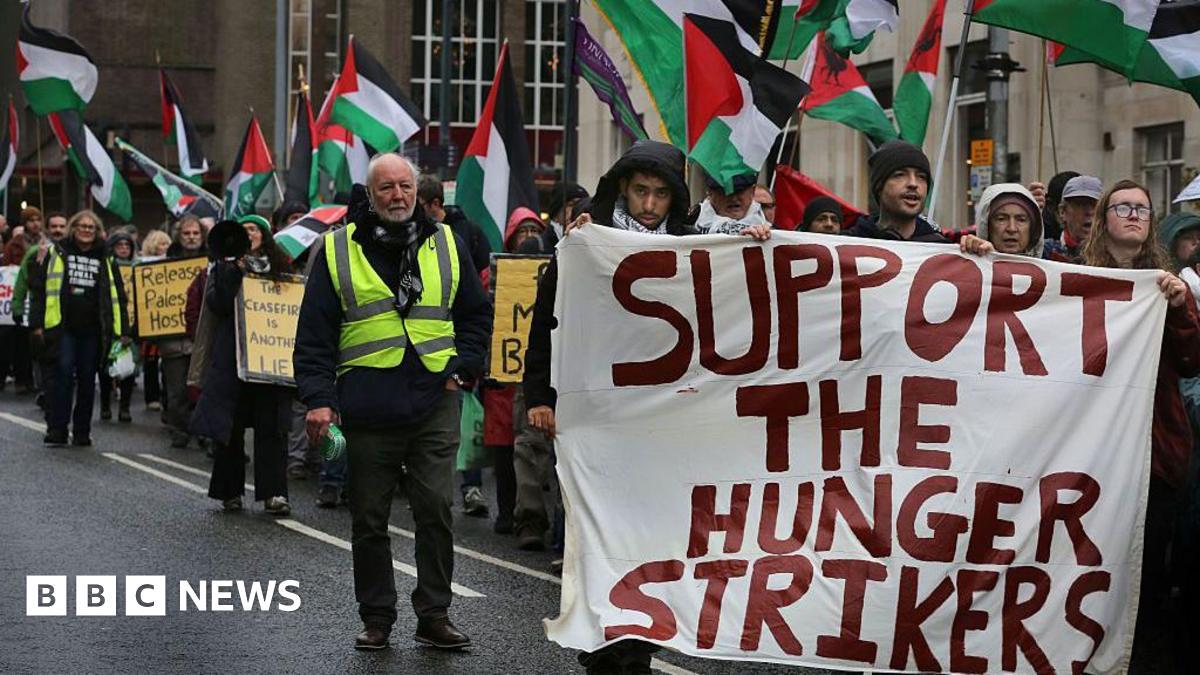
Prison hunger strike crisis
Medical and humanitarian warnings underline the severity. Five prisoners have been hospitalised. Lawyers and medics report symptoms including severe weight loss, memory loss, shortness of breath, muscle twitching, ulcers and weakened immunity.
Some hunger strikes are approaching six weeks. One report says a defendant lost roughly 10 kg after 37 days.

An emergency NHS doctor who has been in touch with families warned the situation is 'a trajectory that ends with death.' Medical experts cited by the press warn every additional day raises the risk of organ damage, permanent disability or death, even if there is monitoring in custody.
Hunger strike grievances
The hunger strike is presented as driven by both immediate custodial complaints and broader political grievances. Lawyers say the action was prompted by long pre-trial delays, with cases facing about a two-year wait because of court backlogs, and alleged mistreatment in custody. Campaigners and some reports add demands including lifting the proscription of Palestine Action and addressing alleged links between firms and Israel.
“The lawyers say the strike was prompted by long pre‑trial delays (cases face about a two‑year wait because of court backlogs) and alleged mistreatment by hospital staff, and that the activists are unlikely to stop until their demands are met.”
The defendants face charges tied to break-ins at an Elbit Systems factory and RAF Brize Norton, which some outlets note caused significant industrial damage and claims about costs. Lawyers say formal administrative routes have not met the detainees’ political grievances.
Political response and criticism
MPs and campaigners have pressed for urgent ministerial engagement after Justice Secretary David Lammy declined to meet requests, saying a meeting would be 'not appropriate' given ongoing proceedings. The Ministry of Justice says correspondence has been delegated to an appropriate minister.
Middle East Eye records sharp parliamentary criticism, with John McDonnell calling the matter 'a matter of urgency' and Speaker Lindsay Hoyle calling Lammy's failure to respond 'totally unacceptable'. Government spokespeople cited legal constraints and routine monitoring as their position.
Legal and political fallout
Imran Khan & Partners say they are preparing legal action accusing the government of breaching Article 2 (the right to life). Campaign groups have staged solidarity actions, including demonstrations and letter‑writing in Bristol.
“Imran Khan and Partners Solicitors have written to Justice Secretary David Lammy requesting a meeting and say they are preparing legal action accusing the government of breaching Article 2 (the right to life).”
One media outlet reports the group's founder has been granted permission to challenge the government ban on Palestine Action in the High Court. Observers warn the case raises acute legal and political questions about the state's duty of care for unconvicted detainees, the role of ministerial intervention, and how the state balances prisoner welfare with the rule of law and security considerations.
