
UK Universities Establish Operations in India; Nine Approvals Expected to Rise to Fifteen.
Key Takeaways
- University of York opens Mumbai campus; recruitment for 2026-27 begins ahead of operations.
- Nine UK universities approved to establish India operations; approvals expected to rise to fifteen.
- UK universities’ India expansion targets a large youth market and growing higher education demand.
Educational Expansion
UK universities are rapidly expanding their presence in India, with nine institutions already approved to establish campuses and expectations that this number could rise to fifteen soon.
“UK universities flock to India - but will they succeed”
This significant educational expansion represents a major strategic move by British higher education institutions to tap into India's vast student population.
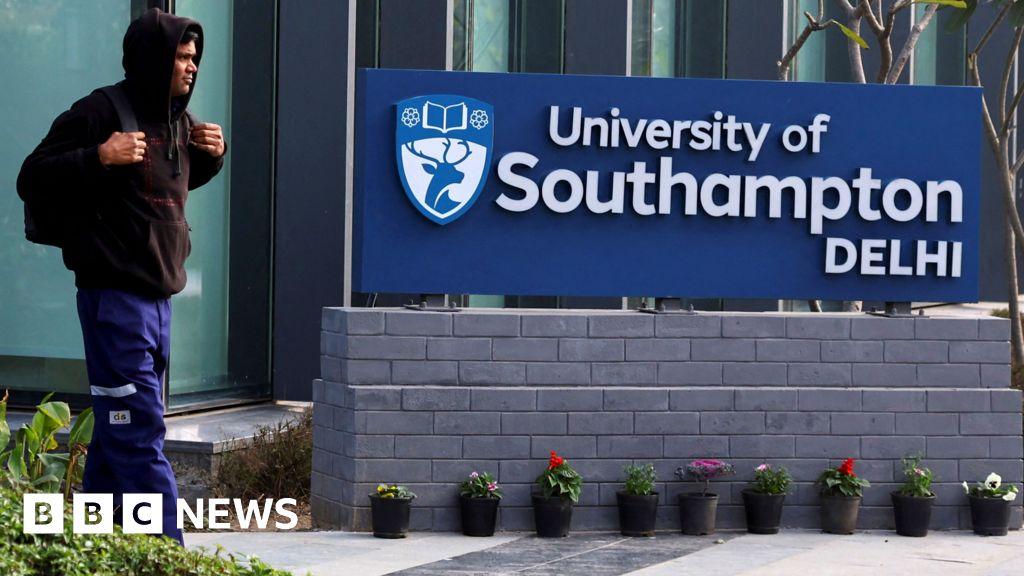
The University of Southampton has already begun operations in Delhi, while other prestigious institutions including the University of York, University of Aberdeen, University of Bristol, University of Liverpool, Queen's University Belfast and Coventry University are in various stages of establishing their campuses.
The scale of this expansion is unprecedented in speed and focus, with Alison Barrett from British Council noting that she has never seen anything this fast or focused in her experience.
Market Dynamics
India's educational landscape presents both massive opportunity and significant challenges for UK universities.
The country is home to approximately 367 million young people aged 15-29, representing the largest youth population globally, with around 40 million university students.
However, there exists a substantial supply-demand gap, as only about 200,000 of the 1.5-1.7 million top academic students can be admitted to India's top-tier institutions annually.
This creates a large market segment that foreign universities aim to serve.
Aritra Ghoshal from OneStep Global highlights that while 11 million students complete Grade 12 each year, most face a highly competitive system with limited access to quality education, making India an attractive market for international institutions seeking to fill this gap.
Fee Structure
The financial model for UK universities in India involves strategic fee positioning that balances affordability with quality justification.
“India is home to about 367 million young people between the ages of 15 and 29, the largest youth population in the world”
Institutions like the University of York plan to charge fees around 50% lower than their UK campuses, making them more expensive than many Indian private universities but positioning themselves as premium quality options.
Lindsay Oades, provost of University of York in Mumbai, emphasizes that there is a 'quality-justification' for the premium, noting that these universities follow global standards and focus on employability skills and industry partnerships.
From an affordability standpoint, Aritra Ghoshal estimates that approximately four to five million students can realistically consider degree programmes priced above £10,000 per year, representing the aspirational upper middle class rather than the mass market but providing a substantial market opportunity for British institutions.
Policy Framework
The expansion of UK universities in India is underpinned by supportive government policies and bilateral cooperation frameworks.
India's National Education Policy announced in 2020 opened the door for foreign universities, with specific regulations notified in 2023 by the University Grants Commission (UGC) allowing foreign universities ranked among the world's top institutions to establish campuses in India.
The India-UK Vision 2035 commits to expanding educational cooperation, including encouraging UK universities to establish campuses in India, promoting joint and dual degree programmes, and strengthening mutual recognition of qualifications.
Additionally, the 2025 India-UK Free Trade Agreement includes provisions to support cooperation in education, encourage partnerships between universities, and facilitate the movement of students and skilled workers between the two countries, creating a comprehensive legal and policy framework for this educational expansion.
Implementation Challenges
While the expansion presents significant opportunities, UK universities face substantial challenges in establishing successful operations in India.
“Home / Education / News / Policy engine powers India-UK academic ties: British Council CEO McDonald Policy engine powers India-UK academic ties: British Council CEO McDonald With nine UK universities receiving approval to establish operations in India over the past year, the number is expected to rise to 15 in the near future Advertisement”
The University of York's Mumbai campus, currently under final construction near Powai lake, is targeting an intake of around 270 students in the first year, with plans to scale up to 3,000-4,000 students annually over the coming years.
However, questions remain about whether students will choose to study in India rather than pursue traditional study abroad options.
The universities are attempting to address this by offering hybrid learning models between Indian and UK campuses, but the competitive landscape remains intense.
Additionally, both India and the UK face similar employment and skilling challenges, as McDonald noted, with the British Council recently signing a memorandum of understanding to support around 100,000 women entrepreneurs in India through training in English, communication, and digital skills, indicating broader cooperation beyond just traditional degree programmes.
More on Business

Revolut reports record $2.3 billion pretax profit for 2025
13 sources compared

OnlyFans owner Leonid Radvinsky dies of cancer at 43
42 sources compared

3,800 UFCW Local 7 workers strike at JBS plant in Greeley, Colorado.
10 sources compared

Senate Passes Bipartisan Housing Bill Banning Institutional Investors From Buying Single-Family Homes
19 sources compared