Full Analysis Summary
Armed naval drone deployment
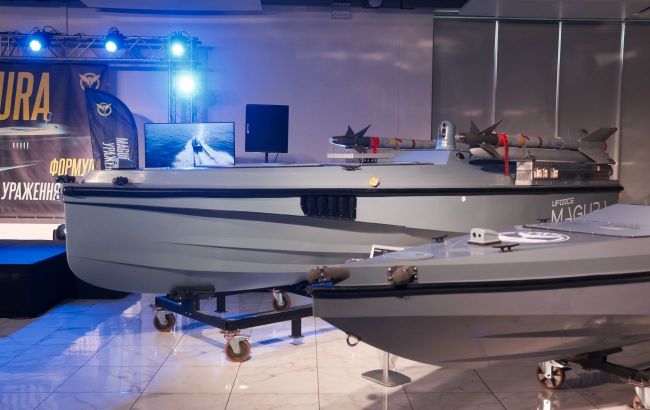
New images and briefings show Ukraine deploying a Magura V7 unmanned naval vessel fitted with surface-to-air missiles and operated by the country’s Defense Intelligence, indicating a shift toward armed naval drones.
RBC-Ukraine reports that photos posted online by AP photojournalist Efrem Lukatsky show a Ukrainian Magura V7 sailing in an undisclosed location while fitted with surface-to-air missiles.
The Associated Press says Ukraine is demonstrating remotely controlled sea drones operated from suitcase-sized consoles and has recently fitted a V7 drone with modified U.S. Sidewinder air-to-air missiles.
KTVE similarly notes the program operates from similar consoles and shows a V7 armed with modified Sidewinder missiles.
Together, these sources document the vessel’s appearance, armament, and remote-operation setup.
Coverage Differences
Discrepancy in reported combat incidents
RBC-Ukraine’s account highlights broader combat claims by saying drones “reportedly shot down two Russian Su-30 fighters,” whereas the Associated Press and KTVE report a May incident in which a Magura drone “reportedly shot down a Russian fighter” (singular). The difference is between RBC-Ukraine reporting two shootdowns in May 2025 and AP/KTVE reporting a single May event; AP and KTVE are phrasing the event as a reported incident quoted from intelligence sources, while RBC-Ukraine presents a wider claim about multiple shootdowns.
Magura V7 missile adaptations
The missiles fitted to the Magura V7 are identified as variants of the American AIM-9 Sidewinder family.
This highlights an unusual use of short-range air-to-air weapons from a naval unmanned platform.
RBC-Ukraine says the boats were armed with AIM-9 Sidewinder missiles, air-to-air weapons normally carried by fighter jets, and calls that a notable adaptation.
Both AP and KTVE describe the V7 as fitted with modified U.S. Sidewinder air-to-air missiles, indicating the weapons have been altered for use from a sea-drone platform.
Together, these accounts show consistent identification of the weapon type while AP and KTVE emphasize modification for the maritime drone role.
Coverage Differences
Emphasis on modification versus original designation
RBC-Ukraine emphasizes the missile model and the novelty of launching an AIM-9 from a naval unmanned vessel, while AP and KTVE explicitly describe the missiles as “modified,” stressing adaptation for sea use. That reflects a difference in reporting focus: RBC-Ukraine notes the missile’s identity and the novelty of naval launch, whereas AP and KTVE report that the missiles have been altered for the platform.
Ukrainian maritime AI plans
Ukrainian officials and commanders describe the Magura program as a step toward more autonomous maritime operations, with plans to employ AI and larger mixed fleets.
The Associated Press reports an intelligence commander called the May incident a breakthrough.
The commander said the next step is deeper AI integration so drones can autonomously search for and classify targets, and AP noted Ukraine has a large archive of operational video and sensor data to train AI models.
KTVE similarly reports commanders will embed more AI using large archives of operational video and sensor data to improve targeting and reduce operator workload.
KTVE says the aim is autonomy that can find, distinguish between civilian and military targets, and engage them.
RBC-Ukraine focused on photos and weapon fit rather than AI plans, so the AI and archive details appear most prominently in AP and KTVE.
Coverage Differences
Omission vs. emphasis on AI and autonomy
AP and KTVE emphasize future AI integration, archives for training, and autonomy in targeting—reporting direct quotes or paraphrases attributed to intelligence commanders—while RBC-Ukraine’s provided text focuses on images and weapon fit and does not mention AI plans. This difference is one of omission in RBC-Ukraine versus substantive reporting of AI intent in AP and KTVE.
Media framing of claim
Coverage tone and framing vary across outlets.
KTVE presents the program in assertive, optimistic terms, calling the May shootdown claim a 'breakthrough' and saying officials are working to 'create a turning point'.
AP reports the same commander's comments but frames them as reported statements from intelligence leadership, saying the commander 'called it a breakthrough' and stressing planned steps and archive use.
RBC-Ukraine's language is terser and focuses on the visual evidence and the novelty of the weapons launch platform.
Readers therefore encounter promotional language in local outlets, mainstream reported quotes, and concise factual description across these sources.
Coverage Differences
Tone and narrative framing
KTVE’s snippet uses direct, upbeat language describing the Magura program as effective and a potential turning point and reports officials as saying they are “working to create a turning point.” AP attributes the “breakthrough” language to the intelligence commander and presents it as reported comment, while RBC-Ukraine keeps to factual reporting on images and armament without the same promotional framing. These differences reflect how source type—KTVE (Other), AP (Western Mainstream), and RBC-Ukraine (Local Western)—shapes emphasis and tone.
Ukraine NATO cooperation plans
Beyond the immediate photographs and statements, AP and KTVE both report plans for expanded cooperation and production.
AP notes Kyiv plans to expand co-production with NATO partners next year and agreed with Greece during President Zelenskyy's recent visit to work jointly on maritime UAVs, training and information-sharing.
KTVE echoes that Ukraine plans greater co-production with NATO partners next year and has agreed with Greece on joint maritime UAV work, training and threat information-sharing.
RBC-Ukraine's snippet omits these international cooperation details, highlighting that some outlets prioritize equipment images and weapons novelty while others emphasize policy, alliance ties and industrial plans.
Coverage Differences
Omission of international cooperation details
AP and KTVE both report explicit plans for co-production with NATO partners and an agreement with Greece; RBC-Ukraine’s provided text omits mention of those cooperative and industrial plans, focusing instead on photos and the weapon fit. This is a clear case of missed information in the RBC-Ukraine snippet relative to AP and KTVE coverage.