Ukraine War02 November, 20252 min read
Ukraine Drones Ignite Major Fire at Russian Black Sea Oil Terminal in Tuapse
This article is an automated aggregation of coverage from news outlets. Our editorials offer in-depth analysis curated by the NewsCord team.
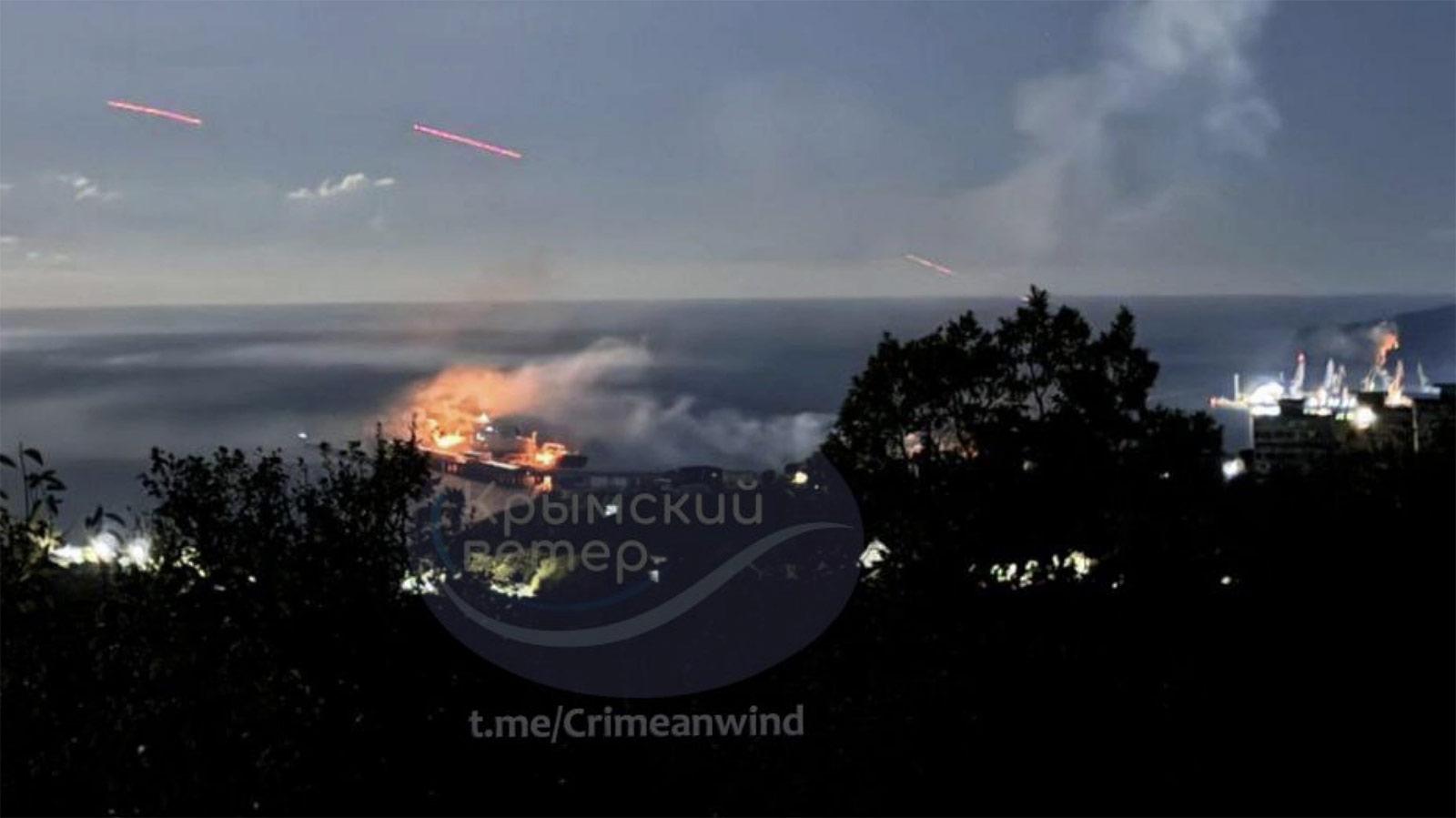
Ukrainian drones struck Tuapse oil terminal, igniting fires on port facilities and an oil tanker At least two foreign vessels were damaged during the drone attack on the Black Sea port

8 outlets told this the same way.
Drone Attack on Russian Port
Ukrainian drones struck the Russian Black Sea oil port of Tuapse, igniting fires and damaging port infrastructure and vessels. Authorities in Krasnodar said an oil tanker and port facilities were hit, with a fire on the vessel and the crew evacuated safely. Russian authorities reported no casualties and said the fire was extinguished, while also stating at least two foreign civilian vessels were damaged.
“A Ukrainian drone attack overnight damaged an oil tanker and port facilities in the Russian Black Sea port of Tuapse, causing a fire on the vessel and damage to the port's infrastructure, according to authorities in Krasnodar.”
Footage of flames at the terminal and a tanker circulated online but remained unverified. Local coverage described the attack as occurring in the early hours of November 1, even as other accounts date it to November 2, underscoring confusion around the exact timing.
Tuapse Oil Terminal Overview
The Tuapse complex is strategically significant as it hosts a Rosneft-controlled oil terminal and refinery. It serves as a crucial outlet for Russian crude and refined exports. Analysts note the terminal is a major export node for petroleum products, particularly naphtha and high-sulphur diesel, primarily to Asian markets.
The RN-Sea Terminal Tuapse is a deep-water berthing complex used to load petroleum products onto tankers. Parts of the facility were taken offline after the strikes. Reports also indicate that the terminal infrastructure itself was damaged during the attack.

Ukraine's Attacks on Russian Energy
The strike fits into Ukraine’s sustained campaign against Russian energy infrastructure. Outlets note Kyiv aims to disrupt military logistics and weaken Russia’s war-fighting capacity by hitting refineries, storage sites, and pipelines. These actions are framed as retaliation for Russian attacks on Ukraine’s power grid.
“Ukraine has increased strikes on Russian fuel infrastructure recently to disrupt military logistics and retaliate against Russian attacks on Ukraine’s power grid.”
Russian Ministry of Defense intelligence, as cited in regional reporting, estimates these attacks have reduced Russia’s petroleum processing by 18% to 20%. Some coverage adds that Western intelligence may be supporting Ukraine’s targeting, though such claims are qualified as reports rather than confirmed facts.
Incident and Security Response
On the ground, reports converge on limited immediate casualties but highlight localized damage and heightened security measures. Regional and local outlets describe shattered windows, debris in residential areas near the port, and prompt evacuation of the tanker crew. Russian authorities said the fire was extinguished and reported no injuries.
In the broader region, aviation authorities imposed temporary flight restrictions across multiple cities. Sochi’s mayor noted ongoing drone and missile threats alongside air defenses.

Ukraine-Russia Conflict Update
The Tuapse strike unfolds as Russia presses offensives on the eastern front. Western mainstream coverage describes an intensifying Russian assault on Pokrovsk—the “gateway to Donetsk”—with a reported pincer movement and competing claims over whether Ukrainian forces are holding or beginning to surrender.
“Russian forces are intensifying their assault on the strategically important city of Pokrovsk, known as the 'gateway to Donetsk,' with thousands of troops involved and at least 200 having breached the city's defenses.”
This battlefield pressure provides context for Ukraine’s strategy of deep strikes designed to disrupt Russia’s war effort and logistics. Multiple outlets frame energy-infrastructure attacks within a broader military campaign.