
Ukraine Resumes Russian Oil Through Druzhba Pipeline as EU Approves €90bn Loan
Key Takeaways
- EU approves €90 billion loan for Ukraine after Hungary lifts veto
- Druzhba pipeline restarts, resuming Russian oil flows to Hungary and Slovakia
- Restart enables disbursement of €90 billion loan; EU ambassadors give preliminary approval
Deadlock Ends as Oil Flows
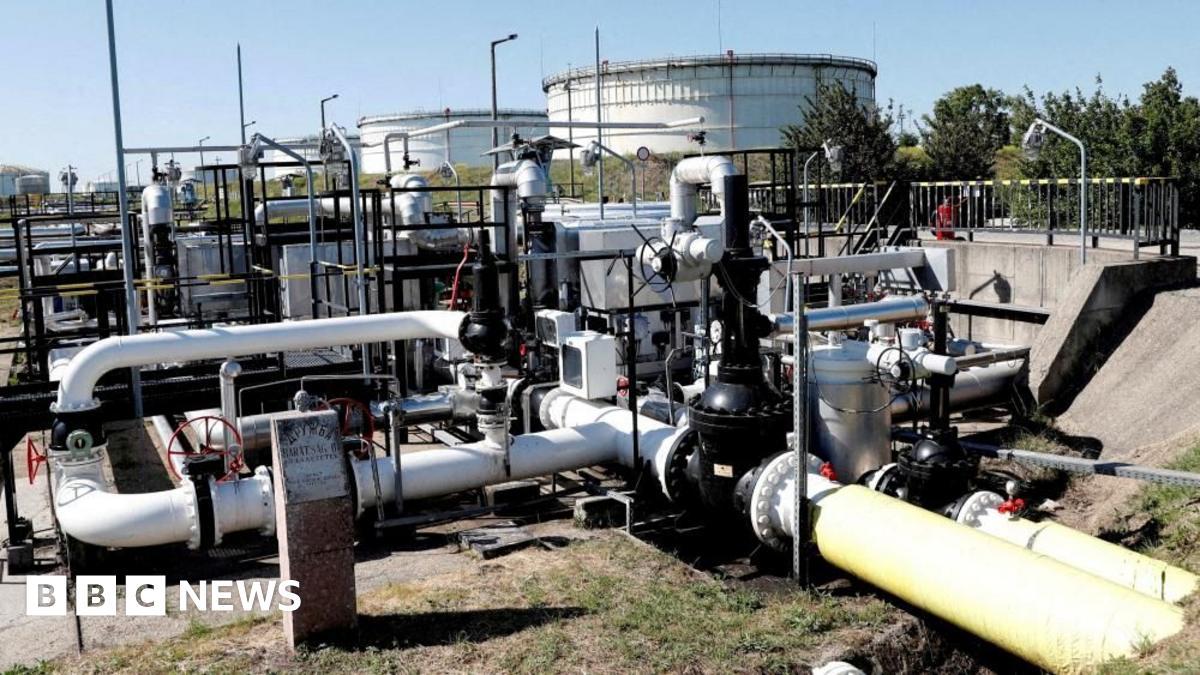
Ukraine’s government says it has resumed pumping Russian oil through the Druzhba pipeline into Hungary and Slovakia, ending “months of deadlock” over a €90bn loan that the European Union described as vital support for Kyiv.
“Russian oil to Slovakia resumes flowing through pipeline that crosses Ukraine The European Union has approved a massive loan package to help Ukraine meet its economic and military needs for the next two years BRUSSELS -- The European Union on Thursday approved a massive loan package to help Ukraine meet its economic and military needs for the next two years, the bloc’s Cypriot presidency said, after Hungary lifted its veto”
The BBC reports that “Ukraine says it has resumed pumping Russian oil through a pipeline into Hungary and Slovakia,” and that EU ambassadors meeting in Brussels gave “preliminary approval” to the loan and “a 20th package of sanctions on Russia.”

The BBC adds that it is “now expected to be signed off on Thursday,” after Hungary’s Viktor Orbán had vetoed the payment in February following Ukraine’s claims that Russian attacks had halted supplies.
The AP and ABC News both tie the resumption to the same pipeline dispute, saying Russian crude deliveries began flowing into Hungary on Thursday and that the hiatus had lasted “nearly three months.”
AP quotes Hungarian energy group MOL saying it “received crude oil at the Fényeslitke and Budkovce pumping stations earlier Thursday,” and that deliveries “have thus resumed to Hungary and Slovakia after a hiatus of nearly three months.”
The CNN account places the restart in time with the diplomatic shift, saying pumping began at “5:35 a.m. ET” and that “EU ambassadors meeting in Brussels approved the loan” shortly afterwards.
The BBC also reports a specific transit timing figure, quoting a Ukrainian government source that “the transit of oil had begun at 12:35 local time (09:35 GMT),” and Slovak Economy Minister Denisa Sakova saying pressurising began on Wednesday morning with crude expected to start flowing into Slovakia on Thursday.
How the Veto Was Lifted
The EU loan was held up because Hungary’s Viktor Orbán used a veto tied directly to whether oil could move again through the Druzhba pipeline after damage in January.
The BBC says the funding was “agreed last December,” but Orbán “slapped a veto on the payment in February” after Ukraine said “damage caused by a Russian attack had brought supplies to a halt.”

It also reports that Orbán “had demanded the oil start flowing again before the loan could be paid out,” and that Ukraine confirmed repairs were completed on Tuesday.
AP and ABC News describe the same linkage in different terms, saying Hungary and Slovakia opposed the sanctions and loan after Russian oil deliveries were halted in January “after a pipeline was damaged,” with Ukrainian officials blaming “Russian drone attacks.”
AP says the flow resumed after three months at “2 a.m. Thursday,” citing the Slovak economy ministry, and that this lifted “a major obstacle to approving the EU funds for Ukraine later Thursday.”
The New York Times similarly frames the impasse as months-long, saying ambassadors took a “critical step” after Hungary dropped its opposition, and that the reopening of the Druzhba pipeline cleared the way for the money to flow to Kyiv.
France 24 adds that Zelensky welcomed the decision “at a two-day meeting in Cyprus on Thursday,” and that Orban had vetoed the funds until Kyiv repaired a pipeline hit by a Russian strike, with “work now completed.”
POLITICO.eu adds a conditional timeline, reporting that EU officials expected the €90 billion loan to be unlocked on Thursday “if, as officials now expect, oil flows restart via the Druzhba pipeline by then,” and that “Hungary and Slovakia made clear their support depends on oil physically reaching their territory.”
Voices From Kyiv, Brussels, and Budapest
The restart and loan approval were accompanied by statements from senior EU and Ukrainian officials, as well as from political leaders in Slovakia and Hungary.
“Russian crude oil deliveries to Hungary resume via the Druzhba pipeline Russian crude oil deliveries to Hungary resume via the Druzhba pipeline BUDAPEST, Hungary (AP) — Russian supplies of crude oil began flowing into Hungary on Thursday, Hungarian energy group MOL said in a statement, bringing an end to a nearly three-month interruption in deliveries through the Druzhba pipeline that led to spiralling political tensions with Ukraine”
The BBC quotes EU foreign policy chief Kaja Kallas saying, “Ukraine really needs this loan and it's also a sign that Russia cannot outlast Ukraine,” and it reports that Ukrainian Deputy Prime Minister Taras Kachka described the funding as “a matter of life and death” for Kyiv.
The BBC also quotes Slovak Economy Minister Denisa Sakova, saying she had been told by energy operator Ukrtransnaft that pressurising had begun and that crude oil would start flowing into Slovakia on Thursday.
AP quotes Cypriot Finance Minister Makis Keravnos saying, “Today the Council approved the final element needed to allow for the disbursement of the 90-billion-euro loan for Ukraine,” and that “Loan disbursements will start flowing as soon as possible.”
AP also includes Slovak Prime Minister Robert Fico welcoming the development as “good news,” while ABC News repeats Fico’s line: “Let’s hope a serious relation between Ukraine and the European Union has been established.”
On the Hungarian side, the BBC reports that Orbán said that “as soon as oil deliveries through the pipeline were restored” he would “no longer stand in the way of approving the loan,” and it notes that Orbán had accused Ukraine of imposing an “oil blockade.”
The Foreign Policy account adds a direct quote attributed to Orbán on X: “Once oil deliveries are restored, we will no longer stand in the way of approving the loan,” and it also quotes Zelensky on X saying, “There can be no grounds for blocking it anymore.”
In the same set of reporting, Zelensky is also quoted by France 24 saying, “Today is an important day for our defence and for our relations with the European Union,” and that “The European support loan for Ukraine has been unblocked – EUR90 billion over two years.”
Different Outlets, Different Emphases
While the core facts converge—Druzhba pipeline restart, Hungary lifting its veto, and EU approval of a large loan—outlets emphasize different details, timelines, and even the setting of the diplomatic step.
The BBC says EU ambassadors meeting in Brussels gave “preliminary approval” and that the loan is “now expected to be signed off on Thursday,” while also describing Orbán’s veto in February and the repairs completed on Tuesday.
AP and ABC News both describe the EU’s approval as happening “on Thursday,” with AP noting that the bloc’s “Cypriot presidency” said the loan package was approved after Hungary lifted its veto, and ABC News repeating that the Cypriot presidency said the EU approved the package.
CNN, by contrast, describes the restart and approval as tightly linked in time, saying pumping began at “5:35 a.m. ET” and that EU ambassadors approved the loan “shortly afterwards,” and it also specifies that the EU’s 27 member states are expected to formally sign off by “Thursday afternoon.”
The New York Times frames the same moment as ambassadors taking a “critical step” after Hungary dropped its opposition, and it highlights that the loan had been held up since February by Orbán, with the reopening of the pipeline clearing the way.
France 24 places Zelensky’s welcome at “a two-day meeting in Cyprus on Thursday,” while the BBC’s correction note says an earlier version of its story had the ambassadors meeting in Cyprus rather than Brussels.
POLITICO.eu adds a more conditional framing, reporting that the EU would unlock the €90 billion loan “on Thursday if, as officials now expect, oil flows restart via the Druzhba pipeline by then,” and it quotes EU officials and diplomats about technical checks and arrival timing.
Al Jazeera emphasizes the unblocking as a result of the pipeline restart and says the EU is expected to sign off on a “90-billion-euro ($106bn) loan” after preliminary approval in Brussels, while also warning that Slovak Prime Minister Robert Fico said he “would not be surprised if the 90-billion loan were unblocked and then oil supplies were cut off again.”
Even the loan’s dollar figure varies by outlet, with AP describing it as “$106 billion” and CNN citing “$105.79 billion,” while the BBC uses “€90bn (£78bn)” and other reports cite “$106bn” or “roughly $105 billion.”
What Comes Next for Ukraine and Europe
The immediate consequence of the pipeline restart is that EU financial support for Ukraine moves toward disbursement, but multiple reports stress that timing and follow-on measures remain central.
“Russian oil flowed through the Ukrainian section of the Druzhba pipeline on Wednesday after a halt lasting months, officials said, allowing Hungary to lift its veto on a 90 billion euro ($105”
The BBC says EU ambassadors gave preliminary approval and that it is “now expected to be signed off on Thursday,” and it reports that two-thirds of the €90bn loan will be spent on “bolstering Ukraine's defence needs” while the rest will go to “broader financial assistance.”

AP and ABC News both describe the loan as intended to help Ukraine meet “economic and military needs for the next two years,” and AP says the Council approved the “final element needed to allow for the disbursement” and that “Loan disbursements will start flowing as soon as possible.”
POLITICO.eu adds that if the loan is approved this week, “Kyiv would be set to receive the money in May,” while also noting that the European Commission would disburse after “technical checks expected to take a few weeks.”
Al Jazeera frames the unblocking as a “financial lifeline” for Ukraine “more than four years into a costly pushback,” and it says the EU agreed to the loan “to maintain Ukraine’s liquidity through 2026 and 2027.”
At the same time, the sanctions track is linked to the same diplomatic package, with the BBC saying ambassadors approved “a 20th package of sanctions on Russia,” and AP describing “a new raft of sanctions against Russia.”
The BBC also reports that Ukraine has targeted oil facilities inside Russia, including “a pumping station in Samara region linked to the Druzhba pipeline this week,” while also noting that Russia said it will halt oil from Kazakhstan through a separate Druzhba section to Germany from “1 May.”
CNN adds a separate development, saying Germany confirmed that “no Kazakh crude would reach its PCK Schwedt refinery” from May after Russia was set to stop Kazakhstan’s oil exports via the Druzhba pipeline.
The BBC reports that Germany’s economics minister Katherina Reiche said there were “alternative supply routes” via “the ports of Gdansk and Rostock,” and that she expressed confidence that production could be maintained.
More on Ukraine War

Trump Says Prince Harry Is Not Speaking for the UK After Kyiv Security Forum Speech
32 sources compared

Olaf Scholz Condemns Donald Trump’s Remarks Calling Volodymyr Zelenskyy a Dictator
12 sources compared
Erdogan Says Turkiye Is Working to Revive Russia-Ukraine Talks With Leaders
11 sources compared
Zelensky Calls US Envoys Kushner and Witkoff’s Moscow-Only Visits Disrespectful
17 sources compared