Ukraine War30 November, 20252 min read
Ukraine Strikes Two Russian Shadow-Fleet Oil Tankers in Black Sea Using Underwater Drones
Ukrainian Sea Baby naval drones struck and heavily damaged two Gambian‑flagged tankers, Kairos and Virat Attacks occurred inside Turkey’s exclusive economic zone about 28–35 nautical miles off Kocaeli

55 outlets told this the same way.
Outlets did split on Russian Attack Kills At Least 33 On Two Buses In Kramatorsk →
Black Sea drone strike report
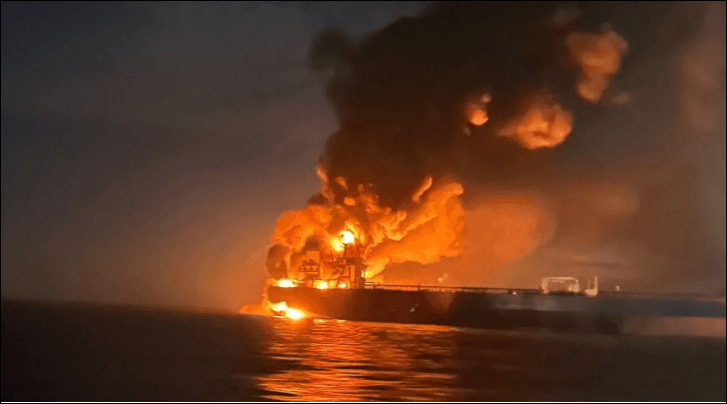
Ukrainian authorities said a coordinated operation using domestically produced "Sea Baby" naval drones struck two Gambian-flagged oil tankers, identified in multiple reports as the Kairos and the Virat, in the Black Sea inside Turkey's exclusive economic zone roughly 28-35 nautical miles off Kocaeli. Kyiv's Security Service (SBU) released video it says shows waterborne drones racing toward the vessels followed by explosions and fires, and Ukrainian statements described the attack as a joint SBU-Navy operation. Several outlets report the strikes occurred late Friday and into Saturday, and that Ukraine says the action disabled ships it contends were part of a Russia-linked "shadow fleet".
“Ukraine’s security services (SBU) said domestically made Sea Baby naval drones struck two Gambian‑flagged oil tankers, the Kairos and the Virat, late Friday in the Black Sea inside Turkey’s exclusive economic zone about 28–35 nautical miles off Kocaeli.”
Vessel strike reports
Reports differ on the scale of physical damage and crew outcomes. Multiple outlets say the Kairos caught fire and all 25 crew were evacuated by Turkish teams. The Virat was hit, sent a distress call, and several accounts say it was struck again the following day with less severe above‑waterline damage.
Turkish coastguard and rescue vessels fought fires and assisted crews, and no fatalities were widely reported. Some reports note both ships were empty and were heading to Novorossiysk to load rather than carrying crude when struck.

Strikes on Russian tankers
Kyiv said the strikes were part of a campaign to choke off Russian wartime oil revenue and to disrupt a so‑called "shadow fleet" of tankers that analysts and sanctions trackers say help Moscow evade embargoes. Ukrainian officials and many Western outlets estimate the two vessels' capacity impact at roughly $70 million in oil and link the targets to Western sanctions lists. At the same time, outlets differ in framing: some call the operation a tactical escalation in naval warfare, while others emphasize its role in sanctions enforcement and economic pressure.
“The attacks are seen as an escalation aimed at cutting Russian oil revenues and signalling that vessels carrying Russian oil face both sanctions and direct attacks.”
Turkey's response to strikes
Turkey warned the incidents posed serious risks to navigation, life, property and environmental safety and said it was consulting relevant parties. Ankara also said it will investigate whether mines, missiles, another vessel or drones caused the explosions. The strikes, which occurred inside Turkey’s Exclusive Economic Zone, put Ankara in a delicate position because it controls the Bosporus and Dardanelles transit routes and maintains ties with both Kyiv and Moscow, prompting diplomatic coordination to avoid wider escalation.
Regional shipping and energy risks
Analysts and industry trackers highlighted wider consequences. The Caspian Pipeline Consortium temporarily halted loading after a separate unmanned-boat strike damaged a mooring. Kazakhstan lodged protests.
“Markets have mostly adjusted—causing only brief oil price spikes—but the main impact is to hinder Russia’s ability to export crude via opaque tanker networks.”
Markets saw only short, muted price reactions. Observers warned the incidents complicate insurance, navigation and sanctions enforcement. Russia had not publicly commented in many reports.
Western open-data projects and sanctions lists were cited to trace the vessels' links to sanction-evasion networks. Commentators diverge on likely follow-up. Some see a tightening of asymmetric Ukrainian naval tactics.
Others warn of diplomatic fallout and pressure on third-party flag states. Outlets agree the episode raises new risks for Black Sea shipping and energy flows.