Ukraine War15 June, 20263 min read
Ukrainian Drone Manufacturer Says Fully Autonomous Drones Killed Russian Soldiers in Battlefield Test
This article is an automated aggregation of coverage from news outlets. Our editorials offer in-depth analysis curated by the NewsCord team.
A Ukrainian drone maker claims autonomous drones killed Russian soldiers in a two-year-old battlefield test. Alexander Kokhanovskyy, CEO of Aero Center, made the claim.

5 outlets told this the same way.
Autonomous drone test
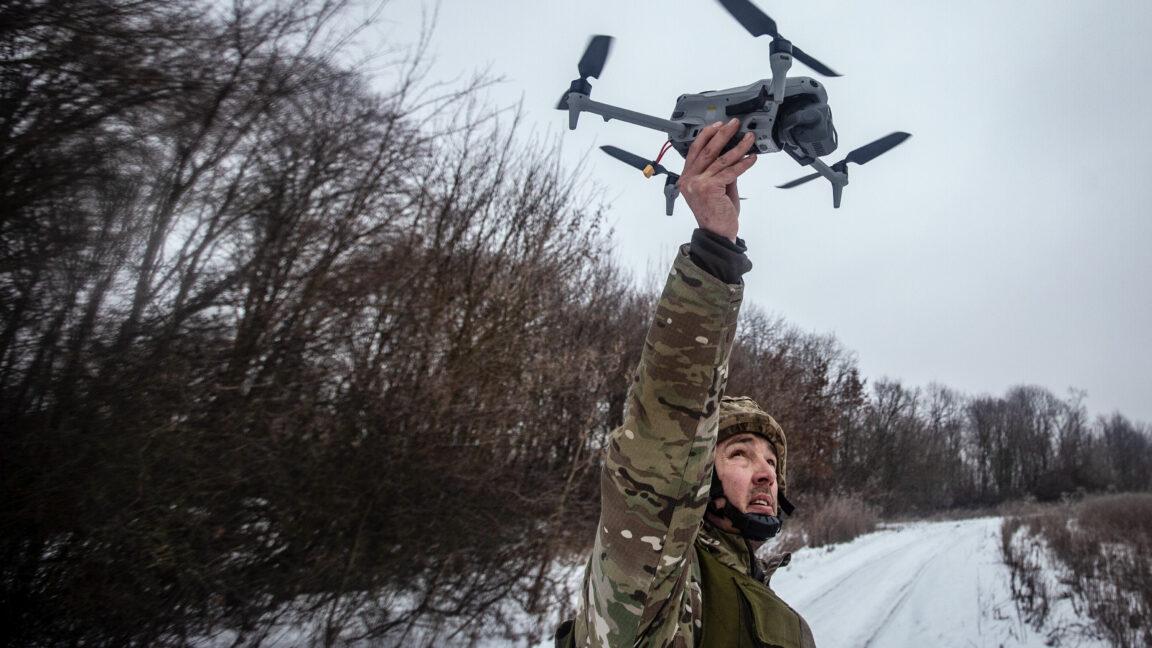
A Ukrainian drone manufacturer said fully autonomous drones killed Russian soldiers during a battlefield test two years ago, describing quadcopter drones preprogrammed to fly to a front-line area before activating an AI-powered “Terminator mode.” Alexander Kokhanovskyy, CEO of Aero Center, said the test did not involve his current company and that there was apparently no video feed showing what the drones targeted and attacked. Kokhanovskyy told New Scientist that human-piloted drones sent to check the aftermath found “a couple” of dead Russian soldiers, leading to the conclusion that the fully autonomous drones had killed them.
Representatives at a Ukrainian embassy event said the Ukrainian government bans the use of AI in the final stage of target interception, while a Ukrainian military commander told New Scientist that drone pilots use semi-autonomous systems with humans making crucial control decisions. The Ars Technica account also notes the one-time nature of the experiment and the risk of “friendly fire” incidents or attacks on civilian noncombatants when fully autonomous systems attack without any human operator intervention.
Belarusians as cannon fodder
In Russia’s war with Ukraine, Belarusians face each other on the front lines, with some fighting in the Armed Forces of Ukraine and others signing contracts with the Russian army, according to Ukrainian political scientist Yevhen Mahda. Mahda said the number of Belarusians fighting on Russia’s side numbers in the hundreds and warned they become “cannon fodder,” arguing that Russia recruits soldiers from citizens of other countries. He described the pattern as “A person signs a contract, and a couple of months later – a funeral,” adding that Moscow wants to solve its problems at the expense of Russian citizens.
Mahda also said Belarusian authorities do not send people directly to war but facilitate it, pointing to portraits of Putin and Russian flags hanging in GUBOPiK offices. He warned that citizens fighting on Ukraine’s side are persecuted, while those who enlist in the Russian army are not touched, which he said “gives them a green light.”

Academic links and resilience
As the war continues, a University of Aberdeen neuroscientist who fought on the front line returned to Ukraine as part of a UK-linked academic scheme, with Dr Sergiy Sylantyev joining a programme selected by The Fund of the President of Ukraine for Education, Science, and Sports. Sylantyev said he is “proud to represent an institution that recognizes international scientific partnerships as a vital component of higher education,” and he travelled to Odesa National University to teach cellular and molecular neurophysiology. He framed his return as part of a broader effort, saying “Ukraine requires not only military support and humanitarian assistance, but also a long-term strategy for sustainability,” and he added that “Scientific and educational collaboration is equally essential.”
Rowett Institute deputy director Professor Lora Heisler said: “Sergiy is an outstanding scientist whose dedication extends far beyond the laboratory,” describing his service during the conflict and his current role supporting Ukraine’s academic community. The Hippocratic Post also reported that the programme requires the physical presence of participating scientists in Ukraine, and Sylantyev said the scheme received approximately three times more applications than anticipated, leading to an additional selection stage.