Gaza Genocide18 December, 20251 min read
Ultra-Orthodox Jews Riot in Occupied Jerusalem After Police Move to Arrest Draft Evaders, Attack and Injure 10 Israeli Police Officers
This article is an automated aggregation of coverage from news outlets. Our editorials offer in-depth analysis curated by the NewsCord team.
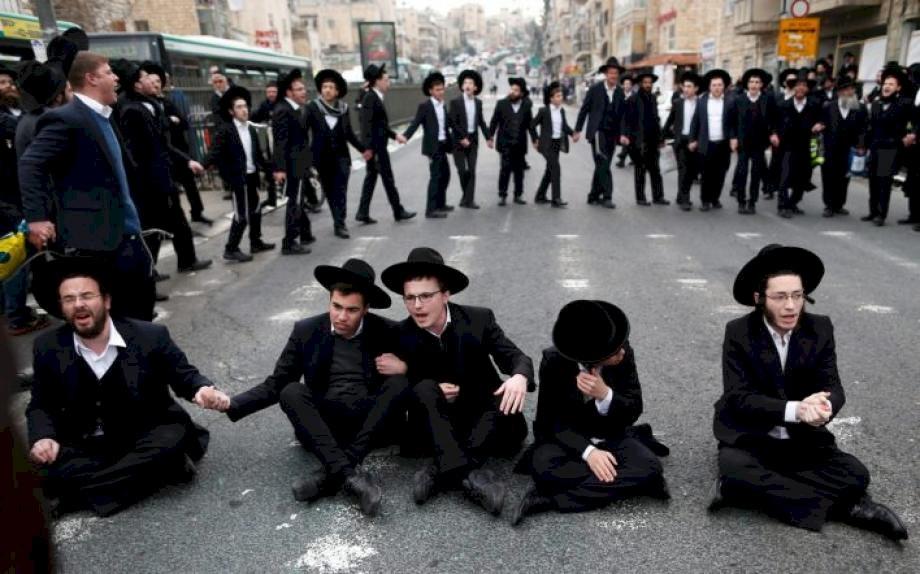
Ten Israeli police officers injured during Jerusalem riots Riot began when police tried to arrest suspected Haredi draft evaders during parking enforcement
5 outlets told this the same way.
Outlets did split on Thousands March in London Calling for Britain to Stop Arming Israel and Impose Sanctions →
Jerusalem arrest sparks riots
On Dec. 18, Israeli police in occupied al-Quds (Jerusalem) attempted to arrest several young ultra-Orthodox (Haredi) men suspected of evading military service.
“On Dec. 18, clashes broke out in occupied al-Quds (Jerusalem) after Israeli police carrying out a routine parking-enforcement operation attempted to arrest several young ultra-Orthodox (Haredi) men suspected of evading military service, Israeli media reported via Al-Mayadeen. The confrontation escalated into violent riots in which rioters threw stones, overturned a vehicle, vandalized property and attacked officers; 10 police were injured and four people were arrested.”
The operation escalated into violent riots in which rioters threw stones, overturned a vehicle, vandalized property, and attacked officers.

The clashes left 10 police wounded and resulted in four arrests.
The account comes from Mehr News Agency’s report of Israeli media via Al-Mayadeen.
Ultra-Orthodox military exemptions
The incident sits against a long-running dispute over ultra-Orthodox military exemptions. The Winnipeg Free Press notes that since 1948 a small number of ultra-Orthodox men were exempted from compulsory military service.
Over decades, those exemptions have grown under pressure from religious political parties. Roughly 1.3 million ultra-Orthodox Jews, about 13% of Israel's population, oppose enlistment and argue that full-time study in religious seminaries is their paramount duty.

Political blame and exemptions
Political figures and officials framed responsibility differently. Mehr News Agency reports that opposition figures Yair Lapid and Avigdor Lieberman blamed draft evasion and Haredi political influence for the violence.
“Opposition figures Yair Lapid and Avigdor Lieberman blamed draft evasion and Haredi political influence for the violence.”
The Winnipeg Free Press highlights domestic political pressure, citing religious parties' influence on draft exemptions and a growing secular push to end exemptions after the war with Hamas. Middle East Monitor did not provide text showing its framing or quotes from local actors.
Reporting gaps and contradictions
Reporting gaps and contradictions remain. Mehr describes a violent escalation that injured 10 officers and led to arrests. Winnipeg's earlier phrasing, 'No violence was reported immediately,' suggests different timelines, different sources, or editorial caution.
The Middle East Monitor's missing article means its perspective, framing, or any eyewitness detail cannot be assessed or compared. Despite these differences, the available sources agree that the arrest attempt and the broader draft-drafting dispute are linked. However, they diverge on immediacy, emphasis, and available detail.
