Full Analysis Summary
Challenges in Global Climate Talks
UN climate talks are portrayed as struggling to curb a worsening surge in emissions.
Declining top-level engagement is undermining the momentum of these talks.
The BBC questions the relevance of COP itself amid declining global leadership involvement and rising emissions.
This contrasts with the almost universal leader turnout at COP21 in Paris.
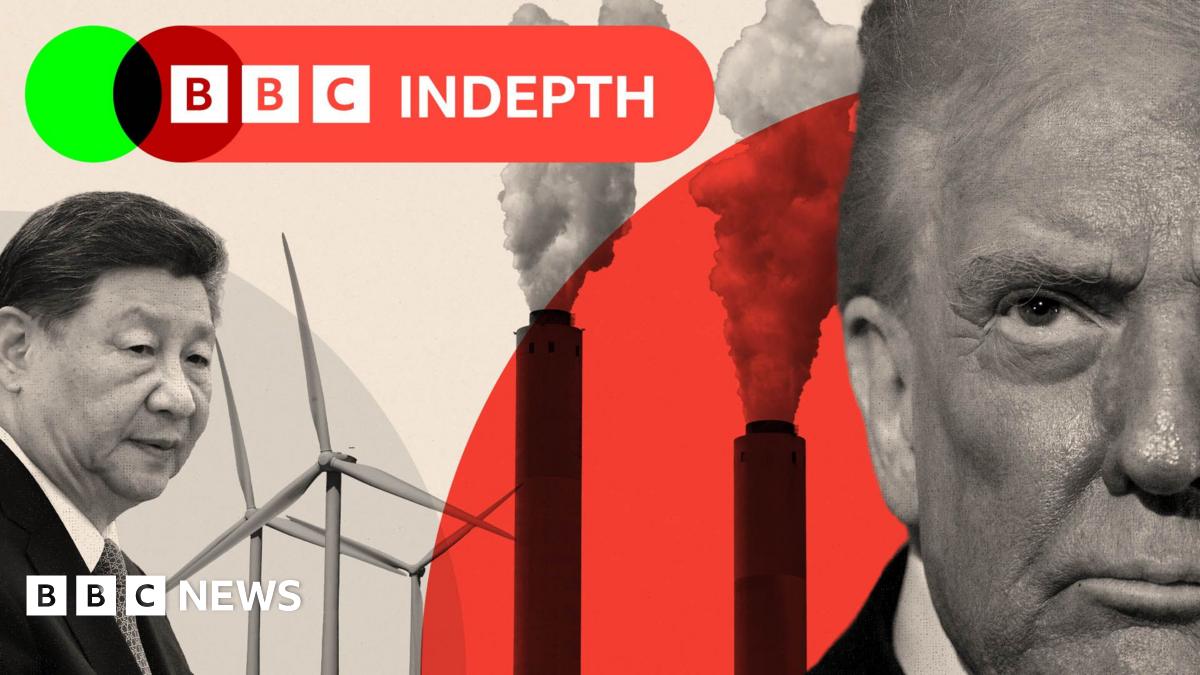
At COP30 in Brazil, there was a much smaller turnout, with key leaders such as the US President and China’s Xi absent.
This faltering participation is seen as a symptom of a broader crisis of political will.
Despite successive summits and pledges, global emissions continue to rise.
Coverage Differences
Missed information
Only BBC (Western Mainstream) is provided, so cross-source contrasts (e.g., West Asian or Western Alternative outlets that might emphasize frontline climate impacts or Global South financing gaps) cannot be assessed. The available BBC reporting focuses on leadership attendance and the efficacy of COP rather than, for example, adaptation funding or loss-and-damage priorities that other source types might highlight.
Tone
BBC (Western Mainstream) adopts an institutional effectiveness lens—linking reduced leader participation to doubts about COP’s impact—where other source types might foreground climate justice or on-the-ground crisis narratives; however, such contrasts cannot be substantiated here due to lack of additional sources.
US Energy Policy Impact
A core strand of the reported crisis is the United States’ policy shifts during the Trump administration.
BBC frames these shifts as actively undermining collective progress.
The outlet notes the US withdrew from the Paris Agreement, rolled back clean energy policies, and promoted fossil fuels aggressively.
The US aimed to become the top energy superpower.
BBC further cites a concrete consequence at the sectoral level: the US blocked a major deal to cut shipping emissions.
This action is presented as emblematic of how national policy choices can stall multilateral action in critical industries.
Coverage Differences
Narrative
BBC (Western Mainstream) emphasizes US policy as a blocker to multilateral climate action, highlighting withdrawal from Paris and obstruction of shipping emissions cuts. Without additional sources (e.g., Western Alternative might stress corporate capture of COP; West Asian outlets might spotlight historical responsibility or equity), we cannot compare alternative causal narratives.
Tone
BBC’s tone is institutionally critical of US climate rollback—linking it to undermined global efforts—where other source types might frame this as either sovereignty over energy policy (some Western Alternative or industry-aligned narratives) or as climate injustice; such contrasts cannot be verified here due to absent sources.
China's Clean Energy Investment
In contrast to the US rollback, BBC reports that China is pouring investment into clean technology.
This positions China at the center of the future energy economy.
The outlet says China is investing heavily in clean technology, making this a key driver of its economic growth and global energy influence.
This sets up a structural rivalry, presented as a defining feature of today’s climate politics, over control of the future energy economy.
The rivalry has implications for supply chains, trade, and technology standards that shape how quickly emissions can be reduced worldwide.
Coverage Differences
Narrative
BBC (Western Mainstream) frames China primarily through its clean-tech expansion and resultant geopolitical leverage, rather than, for instance, its continued coal use or domestic emissions profile, which other source types might stress. Without additional sources, we cannot verify or contrast those emphases.
Challenges to COP Effectiveness
BBC concludes that the geopolitical split, especially between the US and China, casts doubt on COP’s ability to deliver emissions cuts at the speed and scale required.
With rising emissions and diminished leader engagement since the high-water mark of Paris, the article suggests COP’s effectiveness is in question in the current political climate.
Competing visions for energy supremacy further complicate the situation.
The result is a widening gap between summit rhetoric and real-world emissions trajectories.
Coverage Differences
Contradiction (potential, unverified)
Other source types might argue COP remains essential for establishing norms and mobilizing finance, disputing claims of diminishing relevance; however, with only BBC (Western Mainstream) available, such contradictions cannot be confirmed.
Tone
BBC’s tone is skeptical about COP’s efficacy under current geopolitics, linking leadership absences and great-power rivalry to weak outcomes; other outlets might adopt a more solution-oriented tone, but no corroborating sources are provided here.