Syria03 December, 20253 min read
UN General Assembly Demands Israel Withdraw From Occupied Syrian Golan Heights After 123 Nations Vote
This article is an automated aggregation of coverage from news outlets. Our editorials offer in-depth analysis curated by the NewsCord team.
UN General Assembly adopted a resolution demanding Israel withdraw to the June 4, 1967 line Resolution affirmed Israel’s occupation and annexation of the Golan Heights is illegal

5 outlets told this the same way.
Outlets did split on Asad Al-Shaibani Meets Saddam Haftar in Benghazi Over Syrian Consulate And Missing Syrians →
Golan Heights resolution vote
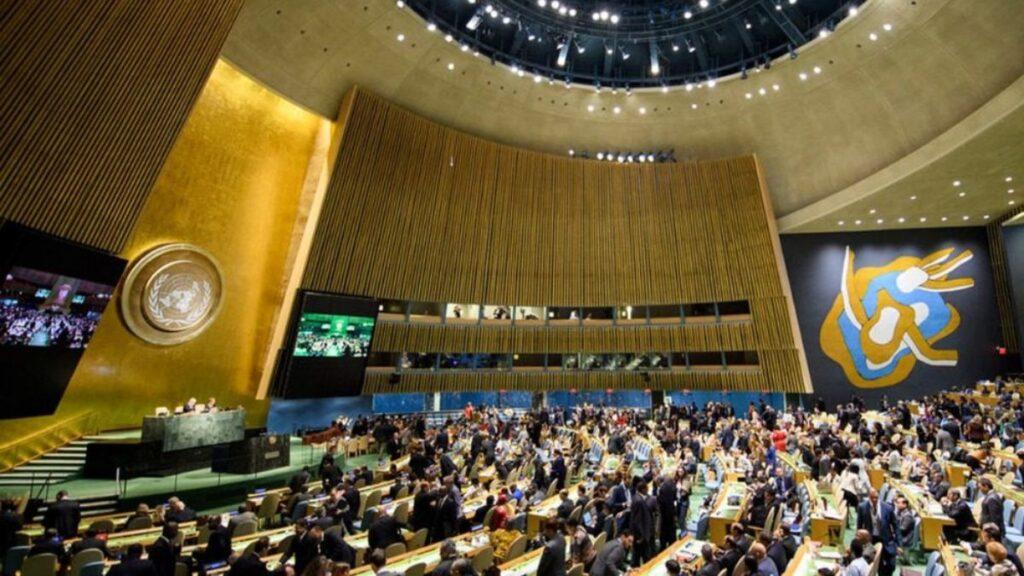
The UN General Assembly on Dec. 3 adopted a resolution calling on Israel to withdraw from the occupied Syrian Golan Heights to the June 4, 1967 line.
“The UN General Assembly on Tuesday adopted a resolution calling on Israel to withdraw from the occupied Golan Heights and reaffirming that Israel’s occupation and annexation of the territory are ‘illegal.’ The vote was 123 in favor, 7 against (including Israel and the US) and 41 abstentions.”
The texts commonly describe Israel’s occupation and annexation of the Golan as illegal.

The resolution passed after 123 states voted in favor, with a smaller number opposing and 41 abstaining.
Anadolu Ajansı reported the vote as 123 in favor, 7 against (including Israel and the US), and 41 abstentions.
Enab Baladi recorded 123 votes in favor, seven against and 41 abstentions, and noted the United States joined Israel in opposing the text.
SANA stated the draft was approved by 123 states, with Israel and six countries voting against it and 41 abstaining.
UN resolution on Golan
The resolution’s substantive language, as reported across sources, reiterates that acquiring territory by force is inadmissible. It rejects settlement activity and other Israeli measures in the Golan. The text also refers to Israel’s non-compliance with UN Security Council Resolution 497 (1981).
Anadolu Ajansı notes the text rejects settlement activity and other Israeli measures in the Golan, urges withdrawal to the June 4, 1967 lines, and notes Israel’s non-compliance with UN Security Council Resolution 497 (1981). Enab Baladi says the text reaffirms that acquiring territory by force is inadmissible, declares Israeli settlement construction and other activities in the Golan illegal, and notes Israel has not complied with UN Security Council Resolution 497. SANA emphasizes the 1981 decision is null and void and demands withdrawal in line with relevant Security Council resolutions.

Syrian UN vote reactions
Three outlets reported reactions that reflect Damascus's diplomatic framing and pride in gaining more votes compared with last year. Anadolu Ajansı said Damascus welcomed the increase from 97 votes last year to 123, calling it 'strong support for new Syria'.
“Damascus welcomed the increased support — up from 97 votes last year to 123 — calling it ‘strong support for new Syria,’ thanked Egypt for submitting the text, and said the result validated its stance while stressing that technical discussions on security do not amount to concessions on the Golan.”
Enab Baladi recorded Syria's Foreign Ministry saying the rise from 97 to 123 'reflects growing international backing for Syria's claim' and quoted Syria's UN ambassador Ibrahim Olabi saying 'more than 26 states changed their votes in favor'. SANA quoted Ambassador Ibrahim Al-Olabi calling the vote 'an important event,' praising Egypt's sponsorship and reiterating that the Golan is Syrian territory and its status cannot be addressed in talks with Israel.
Golan Heights dispute coverage
Coverage records firm Israeli opposition and the political context around retaining the Golan. Enab Baladi quotes Israel's UN ambassador Danny Danon condemning the resolution, calling the Golan a 'vital defensive line' and saying Israel will not return to the 1967 borders. Enab Baladi also reports Israeli officials, including Foreign Minister Gideon Sa'ar, have said Israel intends to retain the Golan and could link recognition of sovereignty to normalization with Syria.
Anadolu Ajansi reports Israel has occupied the Golan since 1967 and says Israeli forces expanded into the buffer zone and Mount Hermon after the fall of the Bashar al-Assad regime last year. SANA quotes Syria's position that the Golan is Syrian and the status cannot be negotiated. These accounts show clear opposition from Israel alongside stronger emphasis from regional sources on Syrian claims.
Reactions to UN resolution
Observers and sources say the General Assembly resolution is not legally binding but signals broad international rejection of Israel's annexation policy. Anadolu Ajansı notes the annual Arab Group–sponsored resolution is not legally binding like a Security Council measure but reflects broad international rejection of Israel's occupation. Enab Baladi frames the resolution as stating the occupation and de facto annexation impede a just, lasting peace.
“The annual Arab Group‑sponsored resolution is not legally binding like a Security Council measure but reflects broad international rejection of Israel’s occupation.”
SANA reiterates the nullity of Israel's 1981 annexation step. The outlets thus converge on the political, rather than enforceable legal, effect of the vote. They differ in tone: Anadolu Ajansı presents a diplomatic-rejection framing, Enab Baladi links the resolution to impediments to peace, and SANA stresses Syrian sovereign claims.