UN Secretary-General António Guterres Warns Sahel Terrorism Threatens Global Security, Urges Nations to Coordinate Against Terrorists
Key Takeaways
- UN Secretary-General warned Sahel terrorism is a growing global threat
- UN chief urged regional nations to coordinate and permit joint action against terrorist groups
- UN Security Council held a Nov. 18, 2025 briefing on West Africa peace consolidation
Sahel terrorism and response
UN Secretary-General António Guterres told the Security Council that terrorism in the Sahel has moved beyond a local concern and is now a growing global threat.
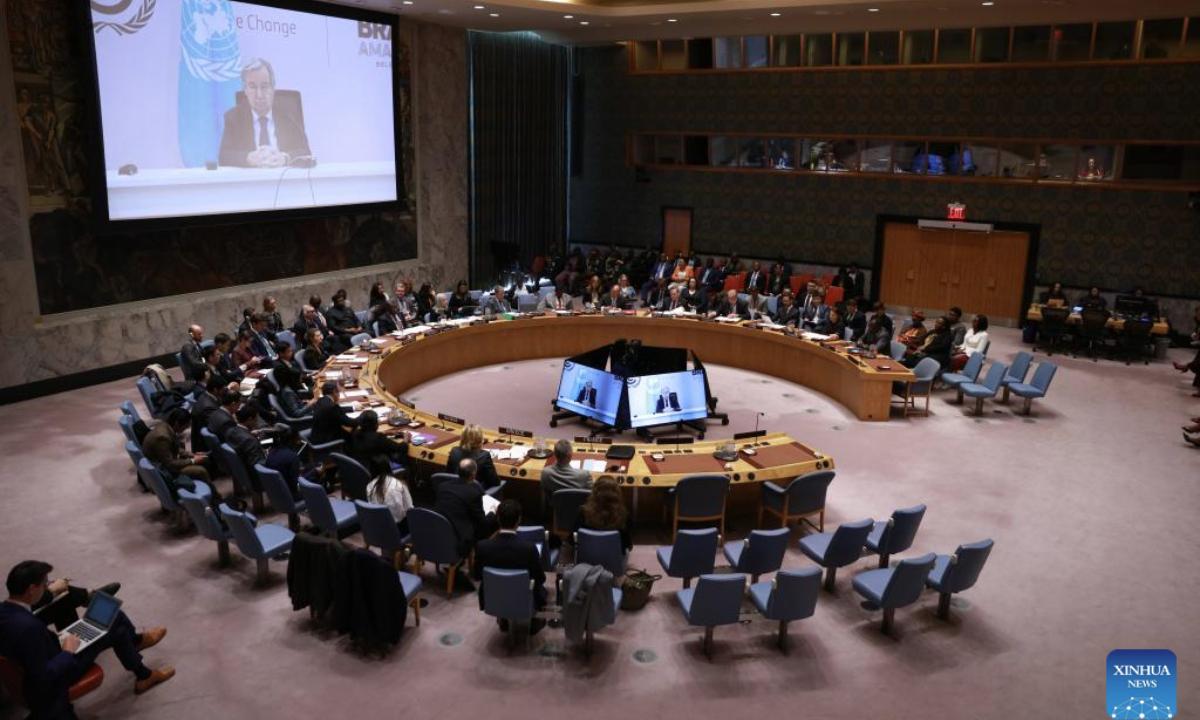
“The United Nations Security Council holds a meeting on peace consolidation in West Africa at the UN headquarters in New York, Nov”
He urged countries in the region to cooperate and enable coordinated action to prevent a disastrous domino effect across the Sahel.
Guterres framed the situation as urgent and transnational, stressing that regional unity and collective responses are required to halt the spread of violence and instability.
The Global Times reported that Guterres urged regional unity to combat terrorism in West Africa and the Sahel, underscoring the shared call for cooperation.
Daily Post Nigeria highlighted practical capacity-building work in the region and noted international support and institutional efforts that complement the Secretary-General's call for coordination.
Sahel coordination priorities
UN Secretary-General Antonio Guterres publicly warned the Security Council and called for coordinated action among Sahel states, noting that outlets mirror the theme but differ on what coordination should prioritise.
Africanews emphasizes the security imperative and uses urgent language about a spreading threat that requires immediate international attention.
The Global Times calls for regional unity, framing the message in succinct political terms without outlining specific programs.
Daily Post Nigeria provides concrete examples of capacity building and donor support, reporting that Britain funds and trains national and regional counterterrorism institutions and stressing broader governance and development reforms as part of the response.
Security and Development
Reporting from Daily Post Nigeria expands the debate to include caution about partner choice and the need to address root causes.
“with AP Share this article The United Nations Secretary-General has warned world leaders that terrorism in the Sahel is "not only a regional dramatic reality" but "a growing global threat”
Ambassador Kariuki warned states to choose security partners carefully so as not to exacerbate threats, and urged governments to tackle the root causes of insecurity.
He recommended improving governance, reducing poverty, countering disinformation, protecting civic space, and addressing climate change as measures that link security and development.
That development-forward framing complements Guterres' security warning by pointing to preventative, non-military tools alongside capacity-building efforts.
Media coverage differences
Africanews centers Guterres' statements and the geopolitical risk.
@globaltimesnews distils the message to a short call for unity.
Daily Post Nigeria highlights the role of external partners and institution-level support, for instance Britain’s funding and training for Nigeria’s National Counter-Terrorism Centre, Côte d’Ivoire’s Counter Terrorism Academy, and the Regional Intelligence Fusion Unit supporting the MNJTF.
These reporting choices shape how readers understand both the immediacy of the threat and feasible responses, with some sources foregrounding international security frames and others foregrounding development and capacity.
Media framing of Sahel
The three sources converge on the core claim that Guterres called for cooperation to confront Sahel terrorism.
“The United Nations Security Council holds a meeting on peace consolidation in West Africa at the UN headquarters in New York, Nov”
They differ in tone and emphasis: africanews frames the crisis as a global threat with urgent language, @globaltimesnews compresses the message to a call for regional unity, and Daily Post Nigeria elaborates on practical capacity‑building measures and governance remedies while cautioning about partner choice and humanitarian consequences.
Those contrasting framings — security emergency versus unity message versus development‑oriented prescriptions — influence how readers understand the causes of and solutions to Sahel insecurity.
No explicit factual contradictions appear in the excerpts provided, but the sources' differing emphases and specificity create a varied picture of priorities and proposed actions.
More on Africa

German Police Kill Escaped Tiger After Attacking 73-Year-Old Man Near Leipzig
10 sources compared
U.S. and Nigerian Forces Kill ISIS Second-In-Command Abu-Bilal al-Minuki in Borno
17 sources compared
Trump Says US and Nigeria Killed ISIS Deputy Abu-Bilal Al-Minuki in Lake Chad Basin Strike
28 sources compared

Emmanuel Macron Storms Stage At Africa Forward Summit In Kenya, Demands Audience Silence
22 sources compared