UN Security Council Delegation Visits Damascus, Meets Syrian President Ahmed al-Sharaa in First-Ever Trip

UN Security Council Delegation Visits Damascus, Meets Syrian President Ahmed al-Sharaa in First-Ever Trip

04 December, 20257 sources compared
Syria

Key Points from 7 News Sources

  1. 1

    UN Security Council delegation made its first-ever visit to Damascus

  2. 2

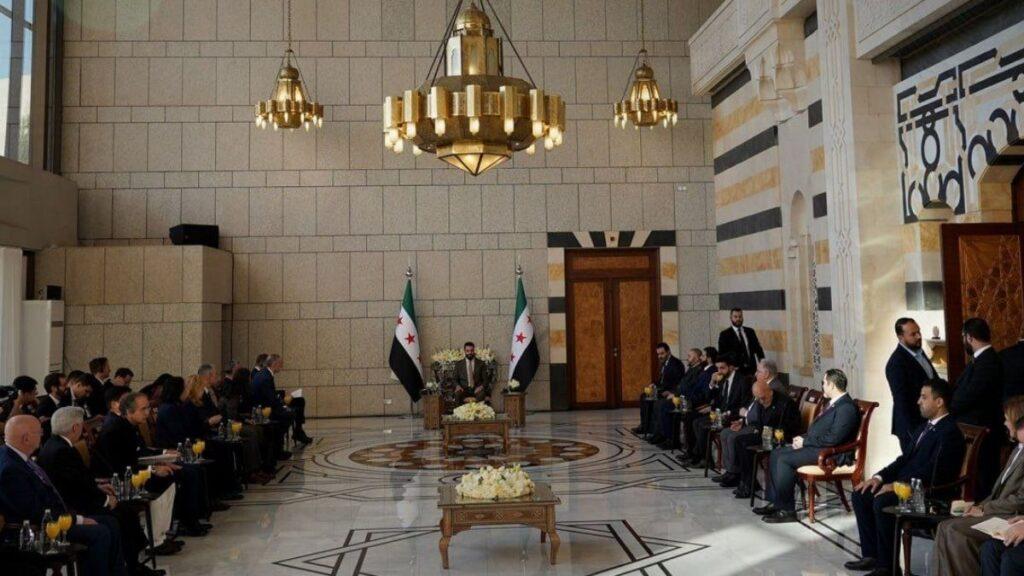
    Delegation met Syria's transitional president Ahmed al-Sharaa in Damascus

  3. 3

    Delegation expressed international solidarity one year after Bashar al-Assad's overthrow

Full Analysis Summary

UN visit to Syria

A United Nations Security Council delegation made a historic first visit to Syria.

The delegation entered via the Jdeidet Yabus/Jdeidet Yabous crossing from Lebanon and met the country’s new authorities led by President Ahmed (Ahmad) al-Sharaa.

Delegates, led by Slovenia’s Council president Samuel Žbogar (Samuel Zbogar), toured heavily damaged neighbourhoods such as Jobar and visited historic sites in Old Damascus.

The trip was presented as the Council’s first official Middle East visit in six years and was intended to re-establish UN–Syria dialogue and signal international engagement.

Coverage Differences

Tone/Emphasis

Al Jazeera (West Asian) emphasizes the visit’s timing and Syria’s attempt to re-establish international ties and reports the trip was “very well” received, while The Daily Tribunal (Other) frames the visit around a recent lifting of sanctions on Ahmed al‑Sharaa and highlights the delegation’s aim to press for an inclusive transition and action against terrorism. Enab Baladi (Other) stresses unified Council support and describes the visit as a “clear message of solidarity.” These portrayals differ in tone: Al Jazeera underscores reception and timing, The Daily Tribunal foregrounds political measures and security aims, and Enab Baladi highlights solidarity and Council unity.

Naming/Spelling and Title Variations

Sources use varying spellings and titles: Al Jazeera and Enab Baladi use “Ahmed/Ahmad al‑Sharaa/Al‑Shara,” while Al‑Jazeera Net and The Daily Tribunal use slightly different transliterations; some call him “interim” or “transitional” president. These differences reflect reporting choices and transliteration variations rather than substantive contradictions about the visit.

Damascus damage and recovery

Delegates toured extensively damaged neighbourhoods and cultural heritage sites in Damascus, including Jobar and parts of Old Damascus such as the Umayyad Mosque, and met civil society figures, religious leaders and the new authorities.

The itinerary reported by multiple outlets highlighted concern for the humanitarian and cultural toll of the conflict and an intent to assess reconstruction and displacement challenges on the ground.

Coverage Differences

Narrative focus

Al Jazeera (West Asian) highlights both damage and the Council’s intent to press humanitarian concerns and noted the visit was “very well” received; Enab Baladi (Other) details interactions with civil society and religious leaders and notes the delegation’s specific inspections (Jobar, Old Damascus, Umayyad Mosque). The Daily Tribunal (Other) briefly mentions touring Jobar and planned meetings; Al‑Jazeera Net lists the same sites but also notes the visit’s role in strengthening UN–Syria dialogue. Each source thus emphasizes slightly different aspects: reception (Al Jazeera), local meetings and solidarity (Enab Baladi), and the visit’s diplomatic purpose (Al‑Jazeera Net, The Daily Tribunal).

Level of detail

Enab Baladi and Al‑Jazeera Net provide more granular site-level detail (Umayyad Mosque, Old Damascus) and mention accompanying UN officials (Najat Rochdi), while The Daily Tribunal provides a briefer account. This reflects a variance in on‑the‑ground reporting depth and emphasis on cultural heritage.

UN mission objectives and reports

Council officials said the mission aims to rebuild trust, strengthen UN–Syria dialogue, press for an inclusive transition, and address security concerns such as terrorism.

They also said the mission would assess regional dynamics, including a fragile Israel–Hezbollah ceasefire, and plan a visit to Lebanon to consult UNIFIL.

UN spokesperson Stephane/Stefan Dujarric (different spellings reported) and Slovenia’s Samuel Žbogar were quoted on dialogue and timing.

Enab Baladi and The Daily Tribunal reported discussions on sanctions, economic and humanitarian impacts, and on repeated Israeli violations cited by Syria’s UN ambassador.

Coverage Differences

Reported agenda vs. local claims

The Daily Tribunal (Other) reports the Council aims to “press for an inclusive transition and action against terrorism” and notes the Council “recently lifted sanctions on Sharaa,” while Enab Baladi (Other) reports Syria’s UN ambassador Ibrahim Olabi saying talks addressed “repeated Israeli violations” and the humanitarian impact of sanctions—Emphasizing that The Daily Tribunal is reporting Council statements and actions, whereas Enab Baladi is quoting Syrian diplomatic responses and claims about Israeli violations and sanctions’ impacts.

Regional framing

Al Jazeera and Al‑Jazeera Net (West Asian) highlight the visit’s timing relative to regional events and note plans to visit Lebanon and UNIFIL, while The Daily Tribunal (Other) also mentions assessing a fragile Israel–Hezbollah ceasefire; this shows broad agreement on regional aims but different emphases on humanitarian versus security frames.

Media responses to visit

Al Jazeera described the visit as well received and emphasized its timing amid Syria’s transitional phase.

Enab Baladi framed it as unified Council solidarity and a shift from earlier divisions.

The Daily Tribunal foregrounded the political context by reporting the previous lifting of sanctions on al-Sharaa and stressing counter-terrorism aims.

Al-Jazeera Net reiterated the council-wide participation and the call for comprehensive transition.

Together, the sources portray a visit intended to rebuild ties, but their tones differ from conciliatory and diplomatic to politically fraught depending on which facts each outlet highlights.
Coverage Differences

Tone and implication

Al Jazeera (West Asian) states the trip was “very well” received, conveying a conciliatory tone; Enab Baladi (Other) uses language like “clear message of solidarity” and stresses unanimity among Council members; The Daily Tribunal (Other) introduces politically sensitive details (lifting sanctions, describing Sharaa as a “former jihadist”), which can produce a more contentious framing. Al‑Jazeera Net (West Asian) focuses on the call for a comprehensive transition. These represent genuine tonal and contextual differences across the sources.

Omissions and specificity

Al‑Jazeera Net and Enab Baladi provide specifics such as sites visited and accompanying UN officials, whereas some outlets (e.g., The Daily Tribunal) give briefer accounts and highlight particular political actions; Middle East Monitor (Western Alternative) did not provide reporting content in the supplied snippet, representing a gap in accessible coverage in the dataset.

Reporting gaps and caveats

Reporting gaps and transliteration differences underscore remaining uncertainties: sources say all 15 Council members were represented but do not list which countries' representatives attended, and spellings of names and titles differ across outlets.

One provided snippet (Middle East Monitor) lacked an accessible article body in the material supplied here, so it adds no substantive detail.

Readers should note consistent core facts — the first Council trip to Syria, meetings with al-Sharaa, tours of Jobar and Old Damascus, and Council statements about dialogue and transition — while remaining aware of variations in framing and omitted specifics across sources.

Coverage Differences

Omission/Unclear details

Al‑Jazeera Net explicitly notes it did not name which countries were present: “without naming which countries were present,” and Enab Baladi and other outlets likewise do not list the specific country delegations, resulting in an omission across sources. Middle East Monitor’s snippet indicates inaccessible content, creating another gap. These omissions mean some details remain unclear from the supplied material.

Transliteration variation

Different outlets render names and spellings differently (e.g., Jdeidet Yabus / Jdeidet Yabous; Ahmed/Ahmad; al‑Sharaa/al‑Shara; Zbogar/Žbogar), reflecting editorial transliteration choices rather than substantive disagreement about events.

All 7 Sources Compared

Al Jazeera

UNSC delegation visits Syria on first trip a year after al-Assad’s fall

Read Original

Al-Jazeera Net

A delegation from the UN Security Council begins an unprecedented visit to Syria.

Read Original

Al-Jazeera Net

A UN delegation arrives in Syria and meets al-Sharaa in Damascus.

Read Original

Enab Baladi

Israeli violations dominate UN Security Council talks with Syria’s transitional president - Enab Baladi

Read Original

Middle East Monitor

UN Security Council delegation visits Syria after 14 years of isolation, meets Sharaa

Read Original

The Daily Tribunal

UN Security Council delegation visits Syria for the first time

Read Original

thenationalnews

Syria's Al Shara receives UN Security Council delegation in Damascus

Read Original