Full Analysis Summary
Sudan humanitarian crisis consultations
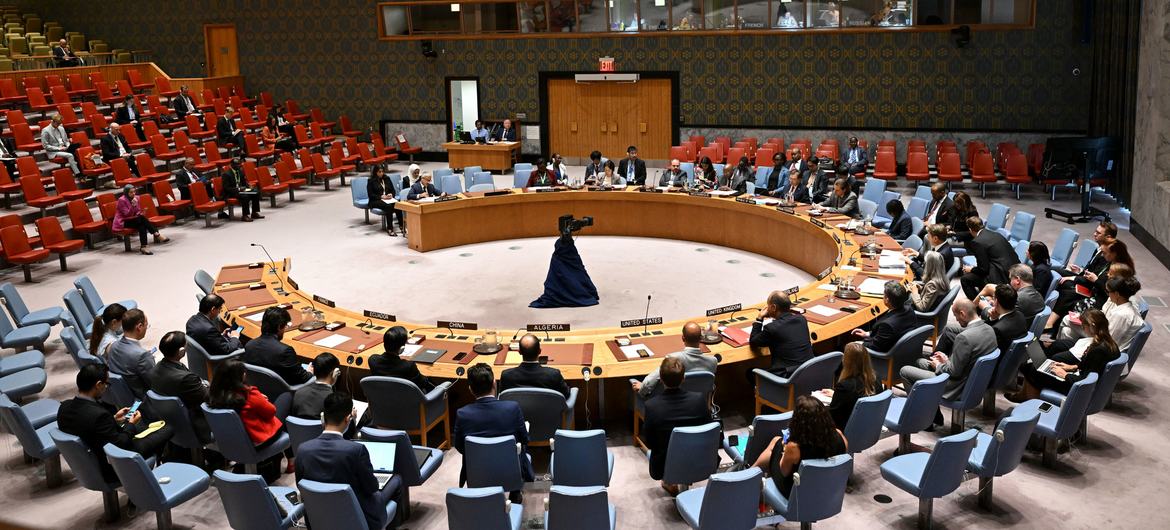
The UN Security Council convened closed consultations on Sudan following a 5 February IPC alert that warned of worsening famine and escalating conflict across Greater Darfur and Greater Kordofan.
The meeting was requested by the UK, with Bahrain and Denmark named as co-chairs on conflict and hunger issues, and briefings were expected from OCHA's Edem Wosornu and WFP's Matthew Hollingworth.
The consultations aim to address rapidly deteriorating humanitarian indicators flagged by the IPC and to consider international responses to mounting displacement and malnutrition risks.
Coverage Differences
Tone and phrasing (minor)
Both sources report the same event and participants but use slightly different verb tenses and parenthetical notations: Dabanga Radio TV Online writes that 'The UN Security Council is holding closed consultations today ... Briefings will be given by OCHA’s Edem Wosornu and WFP’s Matthew Hollingworth. The meeting was requested by the UK, with Bahrain and Denmark as co-chairs on conflict and hunger issues.' Radio Dabanga uses very similar wording but frames the UK as 'the Council’s Sudan penholder' and notes the briefers as 'Edem Wosornu (OCHA) and Matthew Hollingworth (WFP)'. These differences reflect stylistic choices rather than substantive disagreement.
Famine and malnutrition alert
The IPC alert and November 2025 findings show famine-like conditions were already present in parts of North and South Kordofan.
Famine thresholds for acute malnutrition have now been exceeded in two additional North Darfur areas, Umbro and Karnoi.
The updated IPC warning raises the risk of excess mortality and warns of potential spillover into neighbouring areas unless humanitarian access and security improve immediately.
Coverage Differences
Narrative emphasis
Both sources report the IPC's technical findings (famine-like conditions in November 2025 and newly exceeded famine thresholds in Umbro and Karnoi). The emphasis is identical in substance, but Radio Dabanga explicitly links the 5 February alert to a prior November 2025 IPC report, while Dabanga Radio TV Online states the November findings as background — a minor difference in narrative framing rather than content.
El Fasher displacement 2025
Reports attribute much of the new displacement and local collapse of livelihoods to Rapid Support Forces (RSF) advances near Umbro and Karnoi.
They also point to an RSF offensive in late October 2025 that devastated El Fasher.
Those advances forced thousands to flee toward rural areas and the Chadian border.
Most civilians in El Fasher have either fled or died, with fewer than 100,000 reported as still trapped in parts of the city.
By the end of 2025, roughly 1.22 million people had been internally displaced from El Fasher.
Coverage Differences
Specific phrasing on displacement
Both sources attribute displacement to RSF advances and give the same displacement figures, but Radio Dabanga explicitly uses the phrase 'forced thousands to flee toward rural areas and the Chadian border' while Dabanga Radio TV Online uses a near-identical phrase. The two reports are consistent in substance; differences are limited to wording and sentence order.
Humanitarian warnings and context
Both reports warn that without an immediate ceasefire or cessation of hostilities and a large-scale humanitarian response, the humanitarian situation along the El Fasher–Tina corridor toward Chad will worsen and avoidable deaths will likely rise.
Notably, the two sources used here are closely aligned and appear to draw from the same IPC alert, offering limited diversity of media perspective since both are classified as 'Other'.
That absence should be treated as an informational limitation: the available reporting confirms the IPC's technical warnings but provides little additional diplomatic or political context or on-the-record remarks from meeting participants.
Coverage Differences
Omissions and perspective
Both sources report the IPC warning that the 'El Fasher–Tina corridor toward Chad will worsen without an immediate cessation of hostilities and a large-scale humanitarian response' (Radio Dabanga) or 'without an immediate ceasefire and a large-scale humanitarian response' (Dabanga Radio TV Online). Neither source provides broader Security Council reactions or quotes from the briefers, indicating a gap in diplomatic detail and limited perspective diversity in the provided material.