Syria07 November, 20253 min read
UN Security Council Lifts Sanctions on Syrian President Ahmed al-Sharaa Amid Post-Assad Power Shift
UN Security Council voted 14-0, with China abstaining, to lift sanctions on al-Sharaa and Khattab Sanctions removed include asset freezes, travel bans, and arms embargoes linked to terrorism allegations

23 outlets told this the same way.
Outlets did split on France Suspends Police Stun Grenades at High School Protests After 15-Year-Old Loses Hand →
UN Resolution on Syrian Officials
A U.S.-drafted UN Security Council resolution removed Syrian President Ahmed al‑Sharaa and Interior Minister Anas (Hasan) Khattab from the ISIL/Al‑Qaeda sanctions list. The resolution passed with 14 votes in favor and one abstention from China. Multiple outlets describe this as a significant development following Bashar al‑Assad’s ouster, noting it comes before al‑Sharaa’s planned visit to the White House.
“The resolution, drafted by the US and supported by 14 of the 15 UNSC members (with China abstaining), comes just days before al-Sharaa's historic visit to the White House.”
Western Mainstream media (DW) reports the delisting was supported by 14 of the 15 UNSC members, with China abstaining, and calls the visit historically unprecedented since 1946. West Asian media (Al Jazeera) also notes the 14‑0 vote with China abstaining, while describing the move as largely symbolic.

Western Alternative (AL‑Monitor) and Asian (Associated Press of Pakistan) sources emphasize the U.S. policy shift behind the vote and the formal adoption, with the latter highlighting Pakistan’s support. Other outlets (GKToday) focus on the broad support for the resolution and the lifting of travel bans and asset freezes.
Syria's Post-Assad Power Shift
Coverage links the vote to Syria’s post-Assad power shift and the role of Hayat Tahrir al-Sham (HTS). Western Mainstream (DW) says Assad was removed after HTS seized Damascus, noting the officials’ previous links to al-Qaeda. Western Alternative (AL-Monitor) emphasizes HTS associations but situates the delisting within a broader U.S. policy turn after 13 years of war.
Other (WNWN-FM) and Asian (VOI.ID) add that a recent UN assessment found no active al-Qaeda ties for HTS this year, a detail used to justify easing sanctions. West Asian (arabnews.jp) frames the decision as recognition of Syria’s new political order after Assad’s December 2024 overthrow by an HTS-led coalition, highlighting stated commitments on counterterrorism and rights.

US Policy Shift on Syria
Washington’s recalibration is a central theme. West Asian (Al Jazeera) says the UNSC delisting is largely symbolic because travel waivers were already common and the toughest U.S. sanctions under the 2019 Caesar Act still require Congress. Western Mainstream (DW) underscores the historic nature of al‑Sharaa’s White House visit—the first by a Syrian president since 1946.
“This move, led by the United States, is largely symbolic... Trump... still requires Congress to remove the toughest sanctions under the 2019 Caesar Act.”
Other (GKToday) and Local Western (WDIO) link the vote to President Donald Trump’s broader policy shift and note remaining congressional hurdles. Local Western (MyNorthwest) adds pre‑summit diplomacy in Riyadh. Other (Букви) casts the U.S. outreach as recognition of Syria’s bid to become a bridge between East and West.
Global Reactions to UNSC Resolution
Great-power and regional perspectives differ across various news outlets. West Asian source Türkiye Today reports that China abstained from voting due to concerns that the resolution did not fairly address the interests of all parties involved. Türkiye Today also notes that Russia supported the resolution while condemning Israel’s presence in the Golan Heights.
The outlet previews upcoming talks on reconstruction, counter-terrorism, Syria-Israel issues, and even the Abraham Accords. Asian source VOI.ID similarly mentions China’s abstention, citing security concerns related to ETIM. VOI.ID also references international criticisms of Beijing’s human rights record.
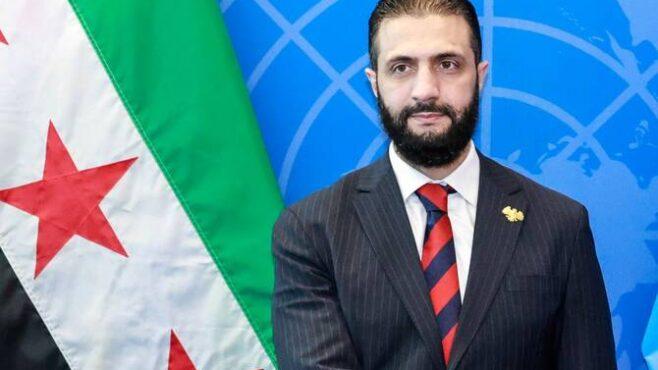
West Asian outlet Al Jazeera places the UNSC decision in the context of ongoing conflicts and Israel’s occupation of the Golan Heights. Asian source Associated Press of Pakistan simply records the adoption of the resolution and Pakistan’s support for it.
Coverage of Syria Sanctions and Diplomacy
Some reporting broadens the perspective on recent developments. West Asian source arabnews.jp links the UNSC move to COP30 diplomacy and to broad commitments by Damascus. Local Western outlet WDIO emphasizes that despite improved ties, the toughest U.S. sanctions under the Caesar Act still require Congressional approval.
“Al-Sharaa recently arrived in Brazil for the COP 30 climate conference and is scheduled to meet US President Donald Trump.”
Another source, tconews, highlights the fifth anniversary of the Israel-UAE Abraham Accords as context for the normalization discussions some outlets anticipate. Western Alternative, The National, includes the sanctions topic within a diverse news roundup and notes that China opposes the resolution. Enab Baladi focuses on travel exemptions and the uncertain timing of the measure's preparation, underscoring the transitional nature of Syria’s diplomacy.
