UN Women Says Israeli Air Bombardment Killed Over 38,000 Women And Girls In Gaza
Key Takeaways
- UN Women: over 38,000 women and girls killed in Gaza Oct 2023 to Dec 2025.
- UN Women: about 47 women and girls killed daily in Gaza.
- Women and girls account for more than half of Gaza's total fatalities.
UN Women’s Gaza toll
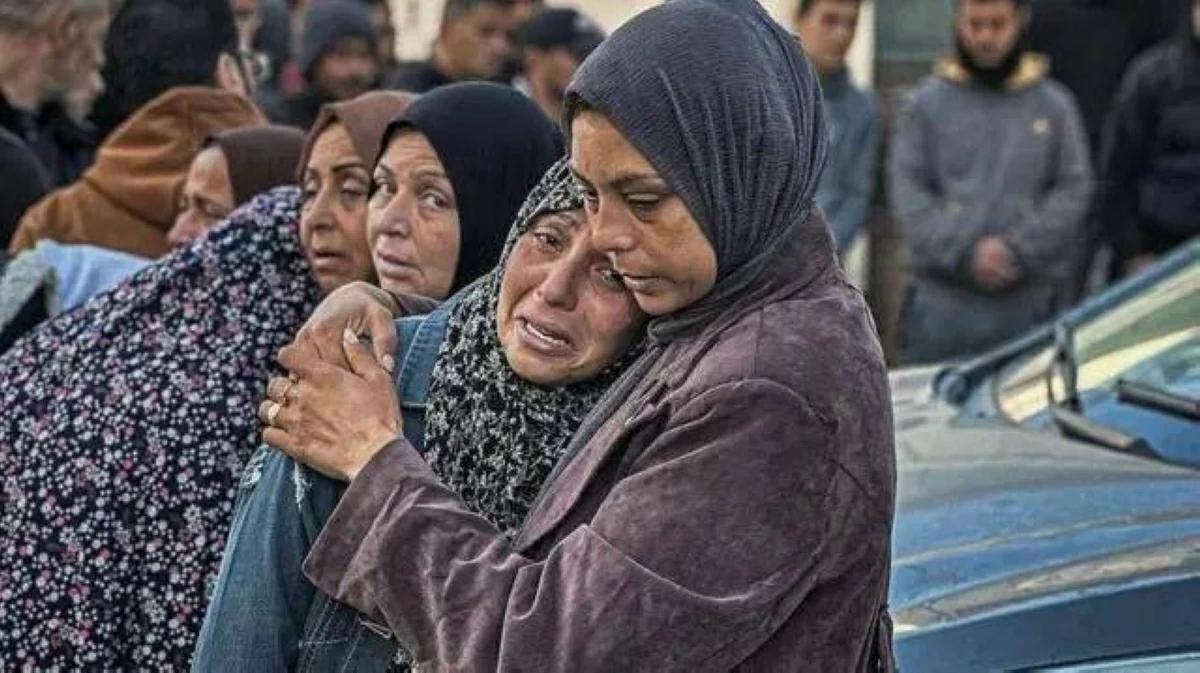
UN Women figures released in Geneva say an average of at least 47 women and girls were killed each day during the war in Gaza, with the agency reporting that “more than 38,000 women and girls died between October 2023 and December 2025.”
UN Women’s spokeswoman Sofia Calltorp told reporters that “Between October 2023 and December 2025, more than 38,000 women and girls were killed in Gaza - the result of Israeli air bombardment and land military operations,” according to PressTV.

Multiple outlets repeat the same UN Women breakdown, including “over 22,000 women and 16,000 girls” killed in the period, with the Straits Times quoting Calltorp saying, “Women and girls accounted for a proportion of deaths far higher than those observed in previous conflicts in Gaza.”
The Straits Times also reports that UN Women warned deaths have continued “six months into a fragile ceasefire,” while AnewZ says the agency “does not yet know how many of those killed since the ceasefire are women or girls, due to a lack of detailed data.”
The UN Women analysis also frames the numbers as likely incomplete, with AnewZ warning that “many bodies are still believed to be buried under rubble” and with Morocco World News adding that the numbers are “likely underestimated given the collapse of health information and reporting systems.”
Across the coverage, the UN Women report is presented as a gender-focused accounting of deaths and injuries during the two-year war, with the PressTV account tying the killings to “Israeli air bombardment and land military operations.”
Ceasefire, continued killings
The UN Women reporting described by AnewZ and the Straits Times places the gendered death toll in the context of a ceasefire that began in October 2025, while still emphasizing that killings did not stop.
AnewZ says the report “warns that killings have continued even after a ceasefire agreed in October,” adding that “The truce brought an end to two years of full-scale fighting between Hamas and Israel, but violence has not stopped entirely.”

The Straits Times similarly says the ceasefire “halted two years of full-scale war but left Israeli troops in control of a depopulated zone,” and it reports that “More than 750 Palestinians have been killed since then, according to local medics, while militants have killed four Israeli soldiers.”
Straight Arrow News and the Egyptian outlet both echo the same ceasefire framing, with Straight Arrow News stating, “Despite a ceasefire agreed to in October, these killings have continued,” and with the Egyptian paper saying the agency warned that “the death toll would continue after six months of the fragile ceasefire.”
AnewZ also reports that “Both sides have accused each other of breaching the agreement,” while the Straits Times says “Israel and Hamas have traded blame for ceasefire violations.”
In the same coverage, UN Women’s gender-aggregated uncertainty is highlighted: AnewZ says the agency “does not yet know how many of those killed since the ceasefire are women or girls, due to a lack of detailed data,” and the Straits Times says UN Women “does not know exactly how many have died due to a lack of gender-aggregated data.”
Voices: Calltorp and Gaza women
Across the reporting, UN Women officials and other named voices are used to frame the meaning of the numbers and the continuing risks.
Sofia Calltorp, head of humanitarian action at UN Women, told AnewZ that “The scale of the loss is striking,” and she said, “These were people with lives and dreams,” adding, “They were mothers, daughters, sisters and friends, deeply loved by those around them.”
The Straits Times quotes Calltorp again, saying, “They were individuals with lives and with dreams,” and it reports that she expressed concern that the killing of women and girls has continued since an October 2025 ceasefire.
PressTV quotes Calltorp directly at a Geneva press briefing, saying, “Women and girls accounted for a proportion of deaths far higher than those observed in previous conflicts in Gaza,” and it adds that the killings were “the result of Israeli air bombardment and land military operations.”
Al-Jazeera Net describes the UN Women report’s publication as triggering “widespread engagement and a wave of anger,” and it quotes Moaz Dreed, the Regional Director of UN Women for the Arab States, saying the war “reshaped the structure of families, with women now bearing the burden of supporting tens of thousands of families at present.”
The same Al-Jazeera Net piece also includes a quoted reaction from former Palestinian Health Minister Bassam Naeem, who said the figures reveal “targeted and forced social engineering, which proves that it is a genocidal war requiring the utmost punishment and accountability.”
How outlets frame the same UN data
While the underlying UN Women figures are consistent across multiple reports, the framing differs in how each outlet emphasizes cause, uncertainty, and the broader political context.
The Straits Times presents the UN Women analysis as a gender-focused accounting and ties it to the ceasefire’s status, stating that the agency warned deaths have continued “six months into a fragile ceasefire,” and it adds that “Israel and Hamas have traded blame for ceasefire violations.”

AnewZ similarly highlights the ceasefire and the data gap, saying UN Women “does not yet know how many of those killed since the ceasefire are women or girls, due to a lack of detailed data,” and it also reports that “Local medics say more than 750 Palestinians have been killed since the ceasefire, while militants have killed four Israeli soldiers.”
PressTV, by contrast, foregrounds the attribution of killings to “Israeli air bombardment and land military operations” and describes the UN Women estimate as part of “the Israeli genocide in Gaza.”
Morocco World News uses the UN Women numbers to broaden into a wider regional narrative, asserting that “Broader tensions in the Middle East have diverted attention from the genocide in Gaza” and describing Israel’s campaign as “genocidal” and “mass killings, starvation, destruction of infrastructure, and forced expulsions since October 2, 2023.”
Al-Jazeera Net adds a social-media and identity-focused layer, describing “a wave of anger” and quoting questions about “who killed these victims at a rate of 47 women and girls per day,” while also quoting Moaz Dreed’s remarks about women bearing family burdens.
Injuries, displacement, and what comes next
Beyond deaths, the UN Women reporting described in these articles emphasizes injuries, displacement, and the continuing strain on healthcare and basic services.
“Lebanon and Israel have a “fundamentally incompatible” understanding of the ceasefire agreed on Thursday (16 April), Dr Nouran El-Bayaa”
AnewZ says “Nearly 11,000 women and girls have been injured, many with life-changing disabilities,” and it adds that “The true number of casualties may be higher, as many bodies are still believed to be buried under rubble.”

It also reports that “Around one million women and girls have been displaced,” and it says “Access to healthcare is especially limited,” citing World Health Organisation figures that “more than 500,000 women cannot access basic services, including care during pregnancy and after childbirth.”
The Straits Times similarly says “Extensive damage to infrastructure has made it almost impossible for women and girls in Gaza to access their basic needs like healthcare,” and it reports that “World Health Organization figures show more than 500,000 women lack access to essential services, including antenatal and postnatal care and management of sexually transmitted infections.”
UNICEF is also brought into the picture in multiple outlets, with AnewZ stating that “UNICEF reported that at least 214 children have been killed in the past six months alone.”
On what comes next, UN Women is calling for “full respect for the ceasefire, as well as adherence to international law and a significant increase in humanitarian aid,” and AnewZ adds that the agency “stressed that women and girls must be at the centre of recovery and peace efforts.”
More on Gaza Genocide

Israel Detains Jerusalem Grand Mufti Sheikh Muhammad Hussein, Bans Him From Al-Aqsa for One Week
15 sources compared
Israeli Security Forces Kill Four Bani Odeh Family Members Near Tubas in West Bank
14 sources compared
Haley Stevens And Abdul El-Sayed Clash In Michigan Senate Debate Over Israel And Gaza Policy
12 sources compared
Settlers Attack Hawara, Injuring 13 Palestinians South of Nablus
13 sources compared