
Africa · 30 April, 2026 · 8 min read
UNECA Workshop In Lusaka, Zambia Urges Morocco, DRC, Zambia To Build Electric Mobility Value Chains
Kenyan and African leaders push regional coordination to build mineral value chains. Stop exporting raw minerals; focus on processing, refining, and local value addition.
10 of 11 outlets skipped it: kenya is pushing reforms to formalize artisanal mining, while officials warn illegal operations are effectively scaling to near-industrial levels and creating safety/environmental risks and fraud..
12outlets compared
Same story, two versions
tap a side to read it in full
Capitalfm.co.ke
““We will no longer be a supplier of raw materials to fuel the industries of others,””Read the original ↗
One frame stresses multilateral/regional coordination as the prerequisite for success, while another foregrounds a national commitment to stop raw mineral exports—potentially implying different implementation priorities (coordination-first vs export-ban-first).
Value Chains Take Center Stage
Africa’s push to reshape how it develops critical minerals and electric mobility value chains is gathering momentum across multiple policy platforms, with repeated calls to stop exporting raw materials and instead build regional processing and manufacturing capacity.
“In December 2024, in Lusaka, Zambia, UNECA organized a capacity-building workshop”
In December 2024, the United Nations Economic Commission for Africa (UNECA) organized a capacity-building workshop in Lusaka, Zambia, focused on developing regional value chains for mobility in Morocco, the DRC, and Zambia, alongside a high-level policy dialogue on regional value chains in the automotive sector and electric mobility.
The proceedings “resulted in a call to accelerate the signing of a memorandum of understanding by the three countries in 2025 and to include Morocco in the Zambia–DRC Special Economic Zone,” according to Africa Renewal.A
The same article frames the goal as strengthening “refining capabilities and diversify beyond the simple export of raw minerals,” while generating “greater value added, boosting tax revenues, and transferring skills.”
It also says Morocco “aims to produce 100,000 electric vehicles this year and to open factories for electric batteries,” positioning the country to benefit from “reliable access to strategic minerals” while reinforcing Africa’s status as a producer of electric vehicles for the European market.
Other African countries named as aspiring to expand production capacities include South Africa, Benin, Egypt, Kenya, Nigeria, and Rwanda, spanning batteries, buses, cars, motorcycles, and electric tricycles.
The policy thrust is also echoed in a joint multilateral statement from the Multilateral Development Banks (MDBs), which says they will collaborate to build “diversified, resilient and responsible value chains for critical minerals destined for the manufacturing industry.”
Export Bans, Energy Limits
The continent’s value-chain agenda is being shaped by a parallel debate over export restrictions on raw minerals and the practical bottlenecks that determine whether processing can scale.
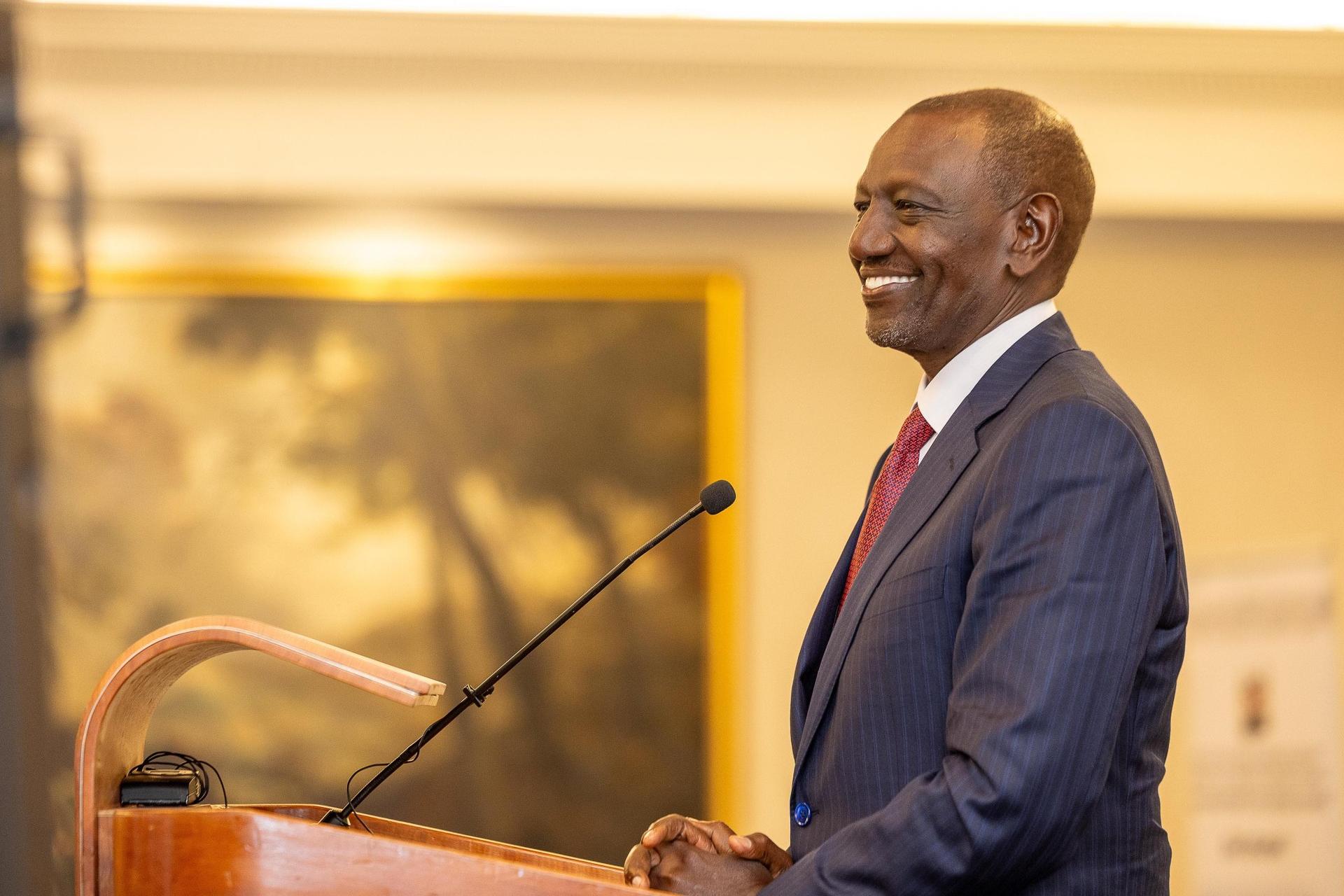
Climate Home News reports that Kenyan President William Ruto used the inaugural Kenya Mining Investment Conference & Expo in Nairobi to confirm Kenya will end exports of raw mineral ore, while also describing deposits of gold, iron ore and copper and a tender for rare earths valued at $62 billion.
In the same report, Ruto argues that “For too long we have extracted and exported raw materials at the bottom of the value chain, while others have processed, refined, manufactured and captured the greater share of economic value,” and says Africa captures “less than 1% of the value generated from global clean energy technologies.”
The article places Kenya’s stance within a broader pattern: it says “Africa currently captures less than 1%” and notes that more than a dozen African nations have either banned or imposed export curbs, including Burundi, Malawi, Nigeria and Zimbabwe.
It also cites a report by the Organisation for Economic Co-operation and Development (OECD) saying export restrictions on critical raw materials have grown “more than five-fold since 2009,” and adds that in 2024 countries including Sierra Leone, Nigeria and Angola introduced restrictions.
OECD secretary-general Mathias Cormann is quoted warning that export restrictions are “a structural shift in the wrong direction,” adding that “Export restrictions distort investment, reduce volumes and undermine supply security often while delivering limited gains in value added.”
Natural Resource Governance Institute’s Thomas Scurfield tells Climate Home News that export restrictions “can look like a promising route to local value addition” but have “rarely worked” unless countries already have “reliable energy, infrastructure and competitive costs for processing.”
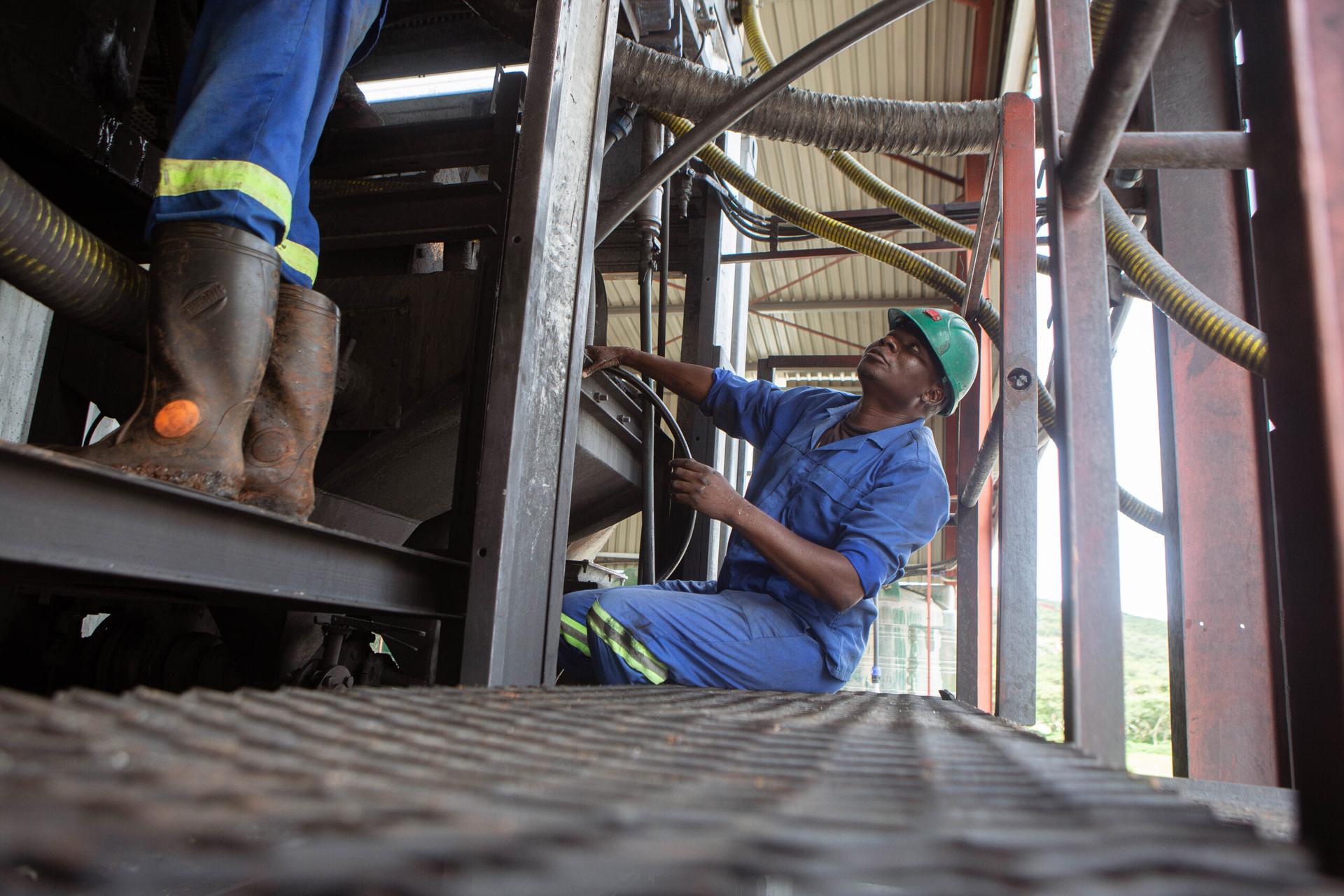
Global Witness partnerships lead Alaka Lugonzo adds that “Meaningful value addition and real industrialisation requires heavy machinery… and you will need better infrastructure,” and highlights that in mining regions “there’s no railway, there’s no electricity, there’s no water.”
Leaders, Ministers, and Critics
Across the reporting, the push for regional coordination is presented through direct statements by senior officials and through responses from civil society and governance-focused voices.
“A fragmented Africa weakens our bargaining power. A united Africa strengthens our strategic relevance.”
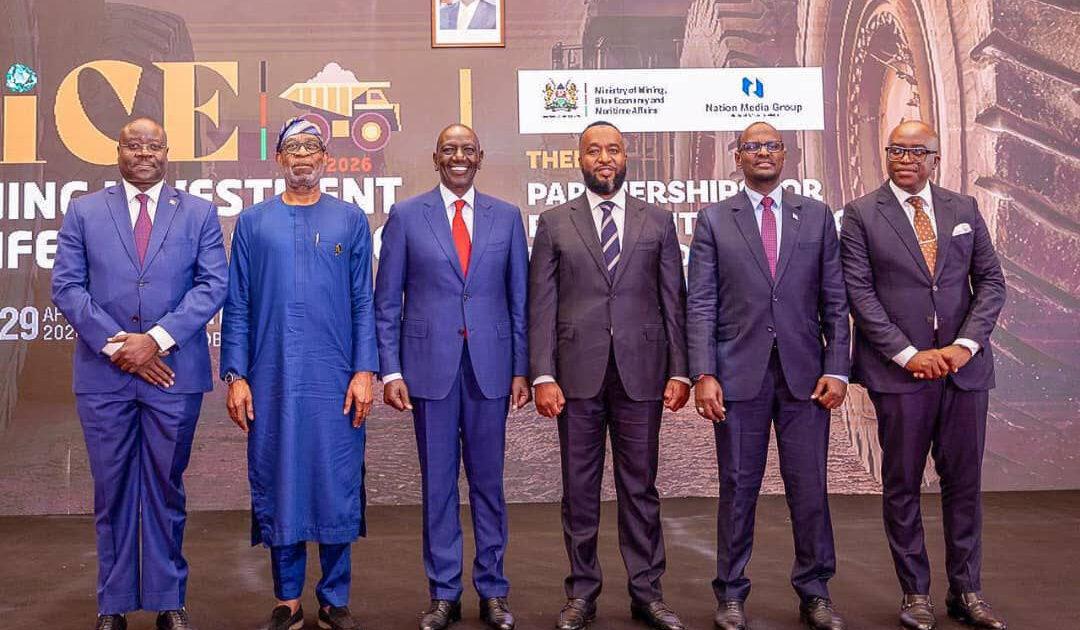
Punch Newspapers quotes Oladele Alake, Minister of Solid Minerals Development and Chairman of the Africa Minerals Strategy Group, urging stronger regional cooperation at the Kenya Mining Investment Conference and Exhibition 2026, warning that “Africa risks missing out on the full benefits of its vast mineral resources if it continues to operate in isolation.”
Alake is quoted saying, “For decades, Africa has remained largely an exporter of raw materials and an importer of finished products,” and he adds that “A fragmented Africa weakens our bargaining power. A united Africa strengthens our strategic relevance.”
The same reporting describes the Africa Minerals Strategy Group as established in January 2023 by 16 member states and expanded to 31 countries, and it says the group is helping African countries “negotiate fairer terms with global partners” and “harmonise regulatory frameworks.”
FRCN HQ similarly attributes to Alake the argument that “The time has come for Africa to redefine its place within the global mineral economy, and that transformation must begin with regional cooperation,” and it repeats his line that “Value addition is not merely an economic aspiration; it is a development imperative.”
In parallel, Daily Nation reports that Kenya’s Cabinet Secretary for Mining, Blue Economy and Maritime Affairs Hassan Ali Joho warned that “widespread illegal operations, weak regulation and rising fraud risks are undermining the industry’s credibility and long-term sustainability.”
Joho is quoted describing a West Pokot case where “We had 27 operators in a block managed by two cooperatives, and each had at least five excavators,” and he asks, “Tell me how it is possible to have hundreds of excavators extracting minerals and still call that artisanal mining,” according to the same article.
Joho also warns against corruption, saying, “If a Member of Parliament, governor or any leader asks for shares, that is criminal and should be reported,” and he cautions investors with a story about claims of “seven tonnes of gold” and requests for payments disguised as “insurance and facilitation fees.”
Different Frames, Same Minerals
While the policy direction is consistent—value addition, regional coordination, and reduced dependence on raw exports—the sources frame the drivers and risks differently, revealing a divergence in emphasis across outlets.
Climate Home News foregrounds the tension between export bans and the capacity constraints of processing, quoting OECD’s Mathias Cormann that export restrictions are “a structural shift in the wrong direction,” and quoting Thomas Scurfield that export restrictions “rarely worked” without “reliable energy, infrastructure and competitive costs.”

In contrast, Punch Newspapers and FRCN HQ focus on political alignment and bargaining power, with Alake urging harmonisation of mining regulations, cross-border infrastructure, and intra-African trade under the African Continental Free Trade Area, and repeating that “A fragmented Africa weakens our bargaining power. A united Africa strengthens our strategic relevance.”
Capitalfm.co.ke presents President William Ruto’s position as a “clear and deliberate position” to end raw mineral exports, quoting him: “We will no longer be a supplier of raw materials to fuel the industries of others,” and “We will process our minerals here, refine them here, manufacture them here.”
The same Capitalfm.co.ke report adds concrete project details, including an iron ore pelletisation plant in Taita Taveta “currently in its final stages of construction,” valued at KSh 11 billion and expected to create about 3,000 jobs, and it points to a gold refinery project nearing completion and the operational Voi gemstone value addition centre.C
Daily Nation, however, shifts attention to governance and enforcement, with Hassan Ali Joho warning about illegal operations and fraud risks, including the claim about “seven tonnes of gold” and the need for investors to verify deals through official government channels.
La Nouvelle Tribune frames the issue through geopolitics, saying “the U.S. turns to Africa to counter China’s influence,” and describing U.S. plans including a ministerial meeting invited by U.S. Secretary of State Marco Rubio for February 4, 2026 in Washington.
It also ties the minerals agenda to infrastructure and trade frameworks, citing the “Lobito Corridor linking Angola, Zambia, and the DRC” and stating that the Critical Minerals Agreement has been incorporated into the revision of AGOA, with preferential access tied to minerals cooperation.
What Comes Next
The sources converge on the idea that Africa’s next steps depend on coordination mechanisms, infrastructure buildout, and credible governance, with multiple outlets describing what is at stake if the shift fails.
“none can succeed alone”
Africa Renewal argues that “none can succeed alone” and that “lack of infrastructure, especially electricity generation, storage, and charging networks, remains a challenge,” while also asserting that coordinated action can “reduce countries’ exposure to international price volatility” and “foster economic diversification and job creation.”A
It also ties the electric mobility value-chain effort to development goals, stating that these advances would contribute to achieving “SDGs 3, 4, 7, 8, 9, 10, 11, 12, 13, and 15.”
Punch Newspapers and FRCN HQ both portray Alake’s regional cooperation agenda as a way to strengthen Africa’s position in global negotiations, with Punch quoting him that “A fragmented Africa weakens our bargaining power. A united Africa strengthens our strategic relevance,” and FRCN HQ describing the Africa Minerals Strategy Group as a platform advancing cooperation to “negotiate fairer terms with global partners” and “strengthen geological data systems to attract investment.”
The MDB joint statement adds a financing and implementation dimension, saying the banks will “mobilize capital at scale for projects that meet our respective development objectives and ESG criteria,” and it commits to “urgent, results-driven collaboration” and reporting on progress.
Daily Nation underscores that the credibility of the sector hinges on enforcement and transparency, with Joho warning that “widespread illegal operations, weak regulation and rising fraud risks are undermining the industry’s credibility and long-term sustainability,” and it notes his plan to publish “verified lists of licensed operators to improve transparency.”
La Nouvelle Tribune describes a U.S. approach that could reshape bargaining dynamics, saying Washington’s ministerial meeting is set for “February 4, 2026 in Washington,” and that a strategic agreement signed in November 2025 between the United States and the DRC is designed to foster “peace, stability, and economic development,” while giving American companies “a right of first offer on certain mining projects.”
The same report also states that the 2025 National Security Strategy relies on accelerated development of mining corridors, including the Lobito Corridor, with the aim of “multiplying transport capacity tenfold” and reducing export costs to the United States by “30%,” linking future minerals value chains to logistics and trade access.