Crime30 November, 20252 min read
Unidentified Gunman Kills Four, Including Three Children, and Wounds 11 at Stockton Birthday Party
This article is an automated aggregation of coverage from news outlets. Our editorials offer in-depth analysis curated by the NewsCord team.
Four people were killed, including three children. About 10–11 other people were wounded and hospitalized.

78 outlets told this the same way.
Stockton family gathering shooting
A mass shooting during a family gathering described by local officials as a child’s birthday party unfolded shortly before 6 p.m. on the 1900 block of Lucile Avenue in Stockton, California. Multiple outlets reported an unidentified gunman opened fire inside a banquet hall or in an adjacent shopping-center lot.
“A gunman opened fire Saturday evening at a banquet hall in Stockton where more than 100 people had gathered for a family event, killing three children and one adult and wounding 11 others.”
The attack left four people dead and multiple others wounded, and reports vary on the number of injured but consistently mention both children and adults among the victims. Law enforcement launched an active multi-agency investigation, with the San Joaquin County Sheriff’s Office, Stockton police and federal partners processing the scene and asking the public for tips and video.
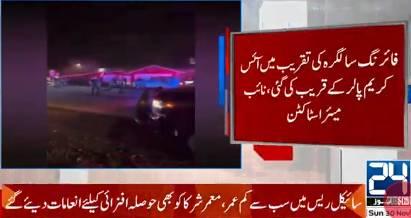
Four fatalities, age uncertainty
Authorities and news organizations consistently report four fatalities but differ on the ages and descriptions of the deceased. Several outlets, including mainstream U.S. and international reports, say the dead included three children and a young adult, with some officials providing specific ages while other reports withhold ages until next-of-kin notifications are complete. Multiple reports emphasize the profound trauma for families and children who should have been celebrating a birthday rather than facing gunfire.
Attack reporting discrepancies
Reporting diverges about how the attack unfolded and the number of shooters. Some witness accounts cited by outlets described a lone assailant; for example, the Los Angeles Times quoted witnesses who said they saw 'a lone 5-foot-6 gunman' firing what sounded like fully automatic weapons.
“Witnesses described a lone 5‑foot‑6 gunman in dark clothing and reported hearing fire from a fully automatic weapon and a handgun...”
Other reporting, including UPI, stated that multiple shooters entered and that gunfire continued outside. Official statements from San Joaquin County said early indications the incident 'may have been targeted' but did not confirm the number of shooters or a motive as investigators processed evidence.
Media and official responses
Coverage differed in tone and emphasis from official reactions and community impact.
Some local and national outlets quoted city officials' emotional responses and framed the attack as an assault on families, with the Los Angeles Times reporting Mayor Christina Fugazi calling it 'an act of terrorism'.

Regional and international outlets relayed Vice Mayor Jason Lee and others describing devastation and urging calm.
Several sources noted Gov. Gavin Newsom was briefed and the state Office of Emergency Services coordinated with local agencies.
Other reports emphasized a $25,000 reward for information and community calls for witnesses to submit video.
Details Under Investigation
Important uncertainties remain: the exact number of wounded, whether one or multiple shooters fired, the motive, and full victim identifications. Multiple outlets say those details are under investigation, and reporters and officials have asked the public for surveillance footage and tips. Investigators warned that early targeted indications are preliminary, and given divergent immediate accounts—witness reports, evolving victim counts, and differing venue descriptions—the factual record is still developing, so early specifics should be treated as provisional.
“A mass shooting just before 6 p.m. Saturday at the Monkey Space banquet hall... left four people dead and about 12–14 others wounded...”