UNIFIL Reports Third Blue-Helmet Death After Attack On Its Lebanon Base
Key Takeaways
- UN observers and UNIFIL patrols remain active along the Blue Line.
- Israeli-Hezbollah clashes around southern Lebanon have intensified.
- UN peacekeepers reported a blue-helmet death after an attack on their base.
UNIFIL deaths and mandate
The United Nations Interim Force in Lebanon (UNIFIL) announced on Friday, April 24, the death of a blue-helmet peacekeeper who had been wounded on March 29 in an attack on its base in Lebanon, making it the third blue-helmet death in a week.
“Monday, 22/06/2026 ArEnFrEs [](http://almanar”
Midi Libre said UNIFIL was created in 1978 after the Israeli invasion and occupation of southern Lebanon to a depth of about 40 kilometers in March 1978, and that it monitors the 'Blue Line' along the South Lebanon border.
Midi Libre also reported that as of March 30, 2026, UNIFIL counted 7,505 peacekeepers from 47 countries, including 605 French troops and 754 Italians.
The same article said the UN Security Council voted to end the mission on December 31, 2026, giving UNIFIL one year to withdraw its personnel and equipment.
In the background of intensifying Israel-Hezbollah conflict along the 'Blue Line,' Midi Libre tied the latest UNIFIL death to the force being regularly targeted.
Yellow Line and sovereignty
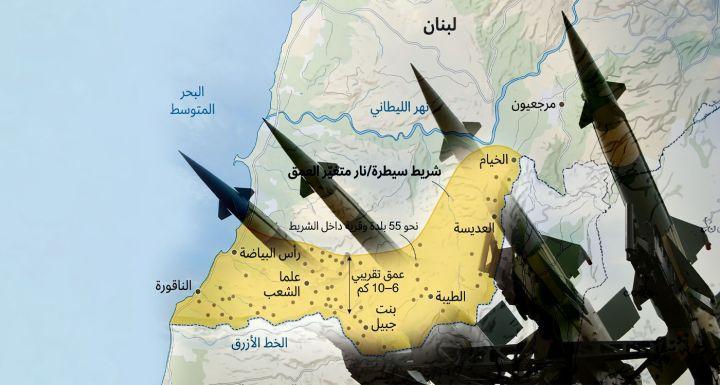
In southern Lebanon, Ici Beyrouth described the 'Yellow Line' as an Israeli military concept aimed at establishing a secure buffer zone 5 to 10 kilometers deep inside Lebanese territory, covering 55 villages and localities.
The outlet said the 'Yellow Line' also aims to empty the area of its inhabitants and remove any presence or military influence of Hezbollah, including its fighters, positions, missiles, tunnels, flags and symbols.

Ici Beyrouth quoted Parliament Speaker Nabih Berri saying, "there are neither yellow lines, nor red lines, nor green lines, nor any other color, and none of these lines concerns us."
The same article said the President of the Republic, Joseph Aoun, stated that 'the negotiations do not signify concession or surrender, but rather a means of solving problems, and it is important that the Lebanese stand by their state in this moment.'
Ici Beyrouth added that the legal and political questions raised by the 'Yellow Line' include the fate of nearly 600,000 displaced and fears it could turn into a security belt imposing lasting restrictions.
May 29 security meeting
A security meeting on May 29 is expected to be held in Washington, with a trilateral committee and the activation of UN observers discussed for monitoring violations and tracking Israeli withdrawals from Lebanese territory, according to صوت بيروت إنترناشونال.
“War in the Middle East: What is UNIFIL, the UN peacekeeping mission that has already lost several soldiers in Lebanon”
The outlet said the session would consider a proposal to form a trilateral committee comprising representatives from the Lebanese and Israeli armies and the American military to monitor violations and oversee the Lebanese Army’s deployment in the south.
It also reported that another proposal is to "activate the observers’ work," meaning increasing their numbers and strengthening their work, and that UNTSO observers are limited to "monitoring and reporting," not fighting.
صوت بيروت إنترناشونال said Hezbollah MP Hassan Fadlallah warned "against American–Israeli talk about forming an armed force loyal to Israel" and said it would be confronted "as we confront the enemy," while praising Hezbollah’s relationship with the Lebanese Army as “excellent.”
The outlet further stated that Hezbollah continued criticisms of President Joseph Aoun’s diplomatic path, and that Fadlallah attacked the Lebanese state at a press conference held at the Parliament.
More on Lebanon

Israeli Strike Kills Lebanese Marine Ecologist Mona Khalil Near Tyre
12 sources compared
Israeli Air Raids Kill Dozens In Nabatieh And Saida After Ceasefire
14 sources compared

Iran Shuts Strait of Hormuz Over Israeli Strikes in Lebanon as U.S. Says Traffic Continues
10 sources compared

Iran Closes Strait of Hormuz After Israeli Strikes on Lebanon Ahead of U.S.-Iran Talks in Switzerland
12 sources compared