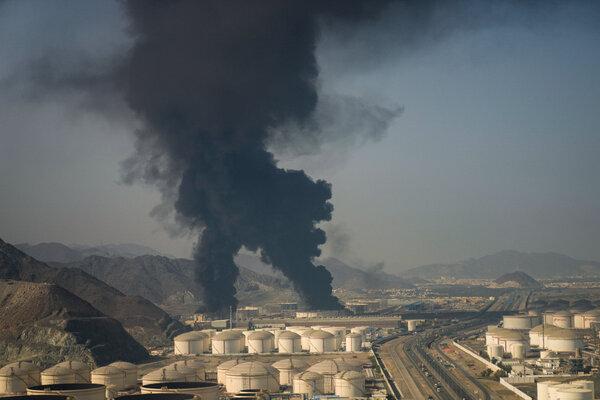
United Arab Emirates Quits OPEC, Ending Decades of Membership Effective Friday
Key Takeaways
- UAE withdraws from OPEC after six decades of membership.
- The move signals Gulf energy autonomy and could reshape OPEC+ dynamics.
- Likely raises UAE production and affects global markets amid Hormuz tensions.
UAE exits OPEC
The United Arab Emirates announced it would quit OPEC, ending decades of membership and setting an effective exit date of Friday, according to Al Jazeera and Modern Diplomacy.
“After decades of membership, the United Arab Emirates has decided to quit the oil producers’ group, OPEC, in order to focus on “national interests” and forge its own path, it has said”
Al Jazeera said the UAE decided to leave “in order to focus on ‘national interests’ and forge its own path,” and described the move as “a major blow to the Vienna-based oil cartel” while adding it “will not spell the end of it altogether.”

Modern Diplomacy framed the decision as the end of “Fifty-nine years of membership,” with the UAE announcing it “on a Tuesday and an effective date of Friday.”
NBC News reported that the UAE said Tuesday it would leave OPEC, and that the departure will likely lead the UAE to boosting energy output, though “with the Strait of Hormuz closed, it’s not clear how fast any increased production would be able to reach global markets.”
CNBC similarly described the UAE’s decision as reverberating across global energy markets and exposing “fractures in the powerful oil cartel as production quotas risk prompting other members to follow suit.”
The Council on Foreign Relations said the Emirati government’s withdrawal “effective Friday” “ends a fifty-eight-years membership in the cartel,” and called it “a symbolic blow” to an alliance strained by “regional war and fractured diplomacy.”
Quotas collide with capacity
Multiple outlets tied the UAE’s OPEC exit to a long-running dispute over production quotas and the country’s expanding capacity.
Al Jazeera said the UAE’s decision came after “years of open dissatisfaction with the oil cartel’s policy of capping members’ production as a way to control prices and stabilise the market,” and noted that under its OPEC agreement the UAE was “only allowed to produce 3.2 million bpd” despite higher capacity.

It also reported that the UAE has invested billions of dollars to increase capacity “from 3 to 5 million barrels per day (bpd) by 2027,” and that before the war its production capacity had grown to “4.8 million bpd.”
Modern Diplomacy stated that “the quotas have capped UAE output at around 3.2 million barrels per day,” while the UAE’s ambition and capacity were “closer to 5 million barrels per day by 2027.”
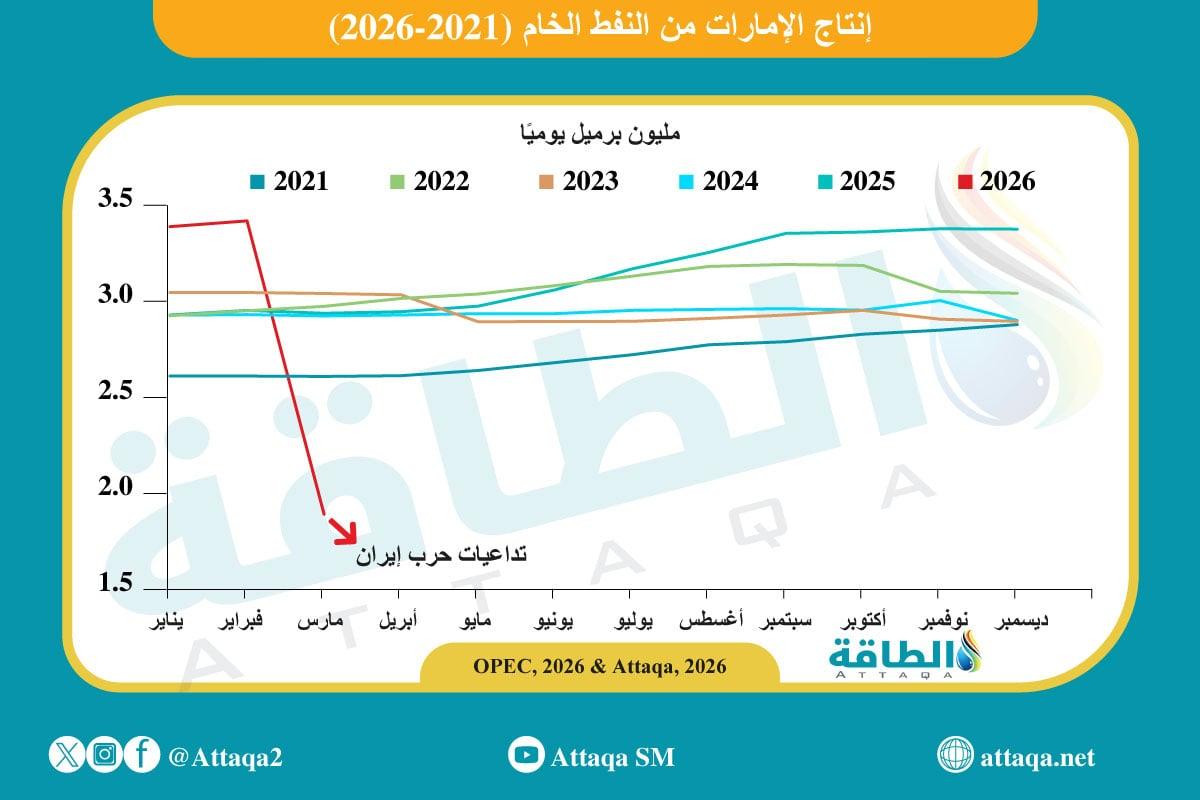
CNBC added a near-term snapshot, saying the UAE “pumped about 2.37 million barrels per day in March, compared with its sustainable capacity of roughly 4.3 million bpd,” and described the underlying tension as reluctance to be constrained by quotas designed to support prices.
NBC News said the UAE’s departure “will likely lead the UAE to boosting energy output,” and quoted the state-run news agency’s statement that “Following its exit, the UAE will continue to act responsibly, bringing additional production to market in a gradual and measured manner, aligned with demand and market conditions.”
War and Hormuz block exports
The UAE’s decision unfolded against a backdrop of the US-Israel war on Iran and the resulting disruption of Gulf shipping, with multiple outlets linking the OPEC exit to the Strait of Hormuz crisis.
Al Jazeera said the region and the rest of the world faced “an energy crisis triggered by the US-Israel war on Iran, which began on February 28,” and reported that Tehran responded by hitting back at Israel, US military assets and other infrastructure in Gulf countries.
It also said Iran “closed off most access to the Strait of Hormuz,” adding that “20 percent of the world’s supplies of oil and liquefied natural gas (LNG) are shipped from Gulf producers.”
NBC News described the operational constraint directly, noting that “with the Strait of Hormuz closed, it’s not clear how fast any increased production would be able to reach global markets,” and it reported that after peace talks with Iran failed to show meaningful progress, “the price of U.S. crude oil surpassed $100 per barrel for the first time since April 10.”
CNBC similarly said the UAE’s decision followed “weeks of missile and drone strikes by fellow OPEC member Iran,” and that “the blockade of the Strait of Hormuz” disrupted exports.
Al Jazeera also provided a workaround, saying the UAE “has been able to sell some of its oil via the Fujairah terminal, which sits on the Gulf of Oman,” and that “Last year, it exported 1.7 million bpd of crude oil and refined fuels this way” while “the US continues its naval blockade of Iranian ports” and Iran refuses foreign-flagged transit.
Analysts weigh what comes next
As the UAE leaves OPEC, analysts and officials in the sources described both near-term limits and longer-term implications for cartel cohesion and market volatility.
NBC News quoted Rystad energy analyst Jorge Leon saying, “The UAE withdrawal marks a significant shift for OPEC,” and added that “While near-term effects may be muted given ongoing disruptions in the Strait of Hormuz, the longer-term implication is a structurally weaker OPEC.”
CNBC featured Andy Lipow, president of Lipow Oil Associates, who said, “If countries that are abiding by their quota get disgusted with those that don’t, we could see additional exits that could eventually make OPEC irrelevant as a cartel,” and he warned that uneven compliance could drive further departures.
CNBC also cited Matt Smith of Kpler, who flagged Kazakhstan as a key candidate, saying, “Kazakhstan has been vastly over producing last year, and so they may be seeing this as a potential out for them to leave the group as well,” and mentioned Nigeria and Venezuela as other “flight risk” countries.
The Council on Foreign Relations argued that while the move is “a significant geopolitical move,” it is “unlikely that Emirati decision will undermine OPEC itself—it still has eleven other members who have not shown any signs of leaving—or global oil flows.”
Al Jazeera included a Saudi downplay from Mohammad al-Sabban, Saudi Arabia’s former senior oil adviser, who said, “It’s not a major blow, especially for OPEC+ [which] consists of 23 countries, and one country going out doesn’t mean anything,” and described the UAE’s move as “more a political decision.”
Cartel cohesion and market stakes
The sources also connected the UAE’s exit to broader stakes for oil prices, supply shocks, and the stability of OPEC+ discipline.
CNBC said OPEC+ is enforcing core production quotas that reportedly cut output by “about 2 million barrels per day until the end of 2026,” and it reported that eight key OPEC+ producers including Saudi Arabia and Russia agreed on April 5 to begin “a cautious easing of their voluntary output cuts,” gradually returning “about 206,000 barrels per day” to the market in May from a broader “1.65 million bpd reduction” first introduced in 2023.
CNBC quoted Bob McNally, president of Rapidan Energy Group, saying, “The main impact will be to increase the volatility of oil prices,” and it also included Claudio Galimberti of Rystad Energy arguing that OPEC’s function “remains intact, even with fewer members.”
Al Jazeera described how the UAE’s departure could matter if traffic returns to pre-war levels, saying the UAE could “flood the market with its 1.6 million bpd of extra production,” which it described as “equivalent to about 1.5 percent of global oil supply.”
NBC News added a market-price dimension, reporting that U.S. crude oil rose to nearly “$102 per barrel” and that Brent rose to nearly “$113 per barrel,” while it also said the nationwide average price per gallon of gasoline was “$4.18.”
CleanTechnica framed the longer-run business stakes in terms of institutional stability, stating that “Oil demand is beginning to bend under the weight of EVs, electric trucks, efficiency, remote work, substitution, and changing logistics,” and warning that “the petroleum system is more likely to become less stable as it declines.”
More on Business

United Arab Emirates Quits OPEC and OPEC+ Effective May 1 Amid Strait of Hormuz Crisis
11 sources compared

Anant Ambani Offers to Relocate 80 Pablo Escobar ‘Cocaine Hippos’ to India
15 sources compared
United Arab Emirates Quits OPEC and OPEC+ Effective May 1, 2026
18 sources compared
United Arab Emirates Quits OPEC On May 1, Seeking More Production Capacity
19 sources compared