Full story
Low approach, pole strike
A United Airlines Boeing 767-424ER, operating as Flight 169 on May 3, 2026, struck a light pole during its descent into Newark Liberty International Airport, sending debris into a tractor-trailer on the New Jersey Turnpike.
“The copilot of a United Airlines Boeing 767 warned the captain that the aircraft was flying low and slow moments before it struck a light pole on approach to Newark Liberty International Airport (EWR), sending debris into a tractor-trailer on the New Jersey Turnpike, according to a preliminary report released by the National Transportation Safety Board (NTSB)”
The National Transportation Safety Board said the copilot recognized the aircraft was coming in low but did not realize it in time to call for an aborted landing, and the crew recalled hearing a loud “thump” and feeling a “mild jolt” just before touchdown.
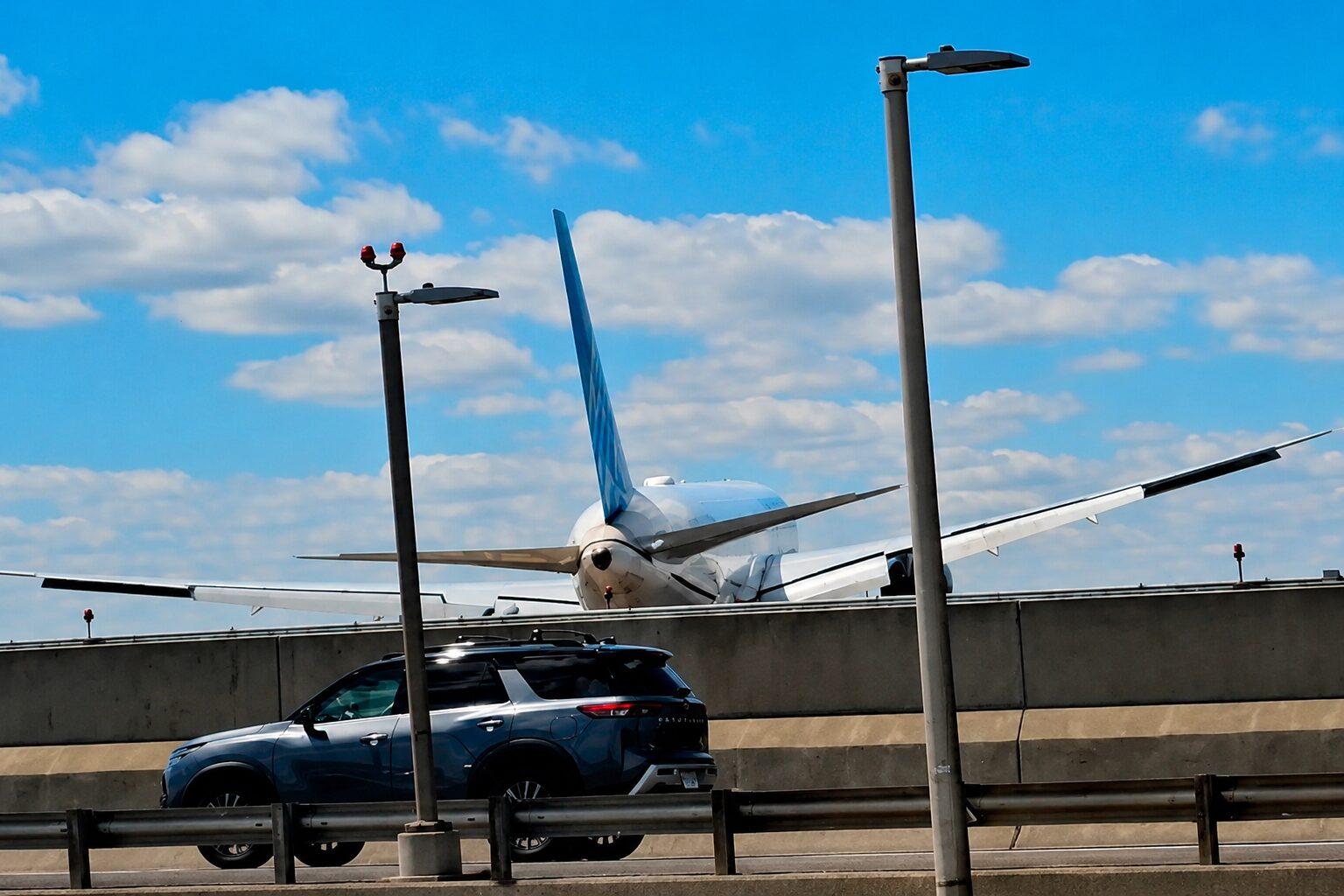
The NTSB initial report described the first officer recalling, “Hey you are slow,” followed moments later by “You are still slow and a little low,” as the plane approached the runway.
Despite the collision, the plane landed safely and none of the 221 passengers or 10 crewmembers were injured, while the aircraft sustained “substantial” damage to its fuselage and one landing tire showed evidence of slash marks.
The tractor-trailer driver sustained cuts from broken glass to his arm and forearm after debris from the light pole struck the vehicle, and the truck’s windshield was damaged and its trailer punctured, according to the NTSB report.
Investigators weigh decisions
The NTSB report said the crew was arriving to Newark from Venice, Italy, and that the flight crew originally expected to land on Runway 4R before the runway assignment was changed to Runway 22L and then to Runway 29.
AeroTime reported that the captain was the pilot flying and the first officer was the pilot monitoring, and that the captain told investigators the flight was stabilized at 1,000 feet before disconnecting the autopilot and autothrottles at about 880 feet MSL near the AXELL waypoint.
In the NTSB account, the first officer told investigators, “Hey you are slow,” followed by, “You are still slow and a little low,” but because they were about to touch down, he did not process it in time to call for a go-around.
The New York Daily News quoted the NTSB report saying the pilot looked back outside and recalled “I thought we were low,” but “didn’t process the information in time to get a go-around callout verbalized.”
The NTSB said it had downloaded the cockpit voice recorder and flight data recorder and was reviewing CVR, FDR, ADS-B, radar and security video data as part of the investigation.
What’s at stake next
The NTSB report did not identify a specific reason why the plane came in so low, and it said recommendations about how to prevent similar incidents were not expected until the NTSB releases its final report, likely sometime next year.
“The copilot of a United Airlines flight thatstruck a light pole during a wild caught-on-camera crash on the New Jersey Turnpikelast month knew the plane was coming in low as they landed in Newark Liberty International Airport last month, but didn’t realize how low until it was too late, according to a report”
Associated Press quoted aviation safety expert Jeff Guzzetti saying strong winds appeared to be challenging for the pilot, and it reported that an air traffic controller told the pilots at the time winds were gusting up to 31 mph (50 kph).
Associated Press also quoted D. Blake Stringer, director of the Center for Aviation Studies at The Ohio State University, saying, “It’s not surprising that the airplane clipped infrastructure near the runway,” and added that “If a pilot can’t fly the intended flight path, the general recommendation is to steepen the angle of descent, not shallow it out.”
AeroTime reported that United issued an operations alert for EWR arrivals specific to Runway 29 RNAV vertical guidance and a pilot bulletin on short-runway landings warning that “ducking under,” or shifting the aimpoint below electronic or visual glide path indications, can contribute to low approach altitudes during the visual segment.
The NTSB classified the fuselage damage as substantial and categorized the incident as an accident, while the Boeing 767 sustained three punctures in the left lower aft fuselage and investigators found slash marks on the No. 1 tire on the left main landing gear.


