Business09 February, 20263 min read
United States and India Slash Tariffs on Indian Textile Exports to 18% in Interim Trade Framework
This article is an automated aggregation of coverage from news outlets. Our editorials offer in-depth analysis curated by the NewsCord team.
United States and India unveiled an interim trade framework lowering tariffs, deepening economic ties. Rupee strengthened and Indian textile stocks rose after the framework announcement.

7 outlets told this the same way.
Interim India-US trade
India and the United States announced an interim trade framework that temporarily fixes reciprocal tariffs on Indian apparel, textiles and made‑ups at 18%. The move has been described as an interim reset rather than a full free‑trade agreement. Markets reacted positively, with Republic World reporting that shares of Indian textile firms jumped in early trade.
“Shares of Indian textile firms jumped in early trade after India and the United States announced an interim trade framework cutting reciprocal tariffs on Indian apparel, textiles and made‑ups to 18% from punitive levels that had reached about 50% on some categories.”
Republic World also said the tariff cut was welcomed by markets and industry bodies, including the Confederation of Indian Textile Industry. The Daily Star framed the pact as a preliminary trade pact that opens Indian access to a large U.S. market while imposing an 18% U.S. tariff on many Indian exports.

The Hans India similarly summarized the interim understanding as setting a reciprocal 18% U.S. tariff on a list of Indian-origin goods. Together, these accounts present the deal as a significant, market-sensitive interim arrangement affecting textiles and other labour-intensive exports.
India-US tariff deal
Under the framework, the U.S. will apply an 18% tariff on a defined list of Indian-origin goods including textiles, leather, footwear and certain machinery. In return, India agreed to cut or remove tariffs on a broad set of U.S. industrial and agricultural goods and to consider rules for quotaed items. The Daily Star lists the affected Indian export categories and notes India wins tariff relief on certain aircraft parts and a quota for auto-parts imports.
The Hans India gives granular agricultural examples (DDGs, sorghum, tree nuts, fruit, soybean oil, wine and spirits) that India will liberalize. Republic World highlights the practical export impact by saying the deal "opens access to a roughly $118 billion segment of the US market." These descriptions align on the 18% figure but vary in which product details and side-payments they foreground.

Reactions to tariff reset
Industry groups and markets welcomed the interim tariff reset as restoring predictability and competitiveness for exporters. Republic World reports industry bodies welcomed the 'predictable duty structures' and said lower US duties should 'boost price competitiveness, margins, orders and market share'. The Daily Star records that India committed to large U.S. purchases and notes the opposition Congress called the agreement a 'complete surrender'.
“The tariff cut — not a full free‑trade agreement but a significant reset in trade dynamics — was welcomed by markets and industry bodies (including the Confederation of Indian Textile Industry) for restoring predictable duty structures and improving exporters’ unit economics.”
The Hans India records protests from the Congress-led Opposition and farmer unions calling the pact rushed, opaque and harmful to farmers and strategic autonomy. These accounts together show a split between market and industry optimism and political or social-sector skepticism.
Outstanding trade negotiation issues
Key areas remain unresolved or slated for follow‑on talks: negotiations on generics and ingredients, non‑tariff barriers, export‑control cooperation, and precise rules of origin. The Daily Star notes some outcomes for generic pharmaceuticals will depend on the result of U.S. tariff investigations. Officials aim to sign a formal agreement in March, after which tariff changes on U.S. exports would take effect.
The Hans India records both sides agreeing to tackle non‑tariff barriers and to negotiate preferential market access in priority sectors. Republic World stresses this is an interim arrangement rather than a finished FTA. Coverage consistently shows the 18% cap is a provisional fixture while many technical and politically sensitive items remain to be finalised.
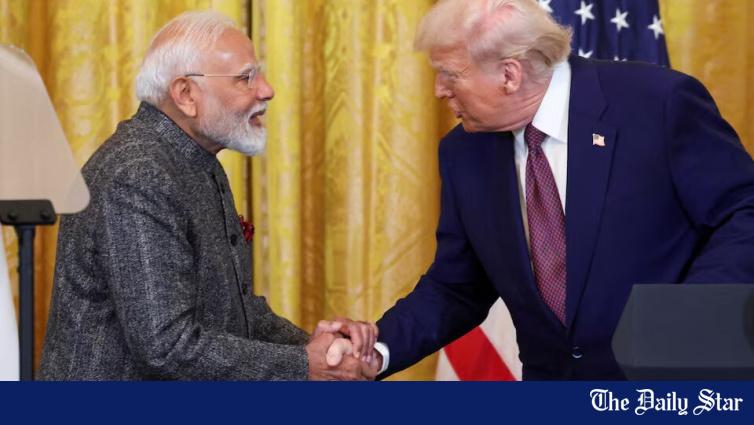
Interim India–US tariff
The sources portray the interim 18% tariff as a pragmatic, if partial, recalibration of India–US trade. It promises immediate market relief for Indian textile exporters and improved predictability. It has also triggered political debate over concessions, agricultural protections, and strategic autonomy.
“The article traces the arc of India–US relations from early Cold War strains—...to a steady improvement...”
The Hans India situates the pact within the broader arc of improving India–US ties. The Daily Star highlights procurement commitments and security-adjacent cooperation on export controls, explicitly noting references to China.
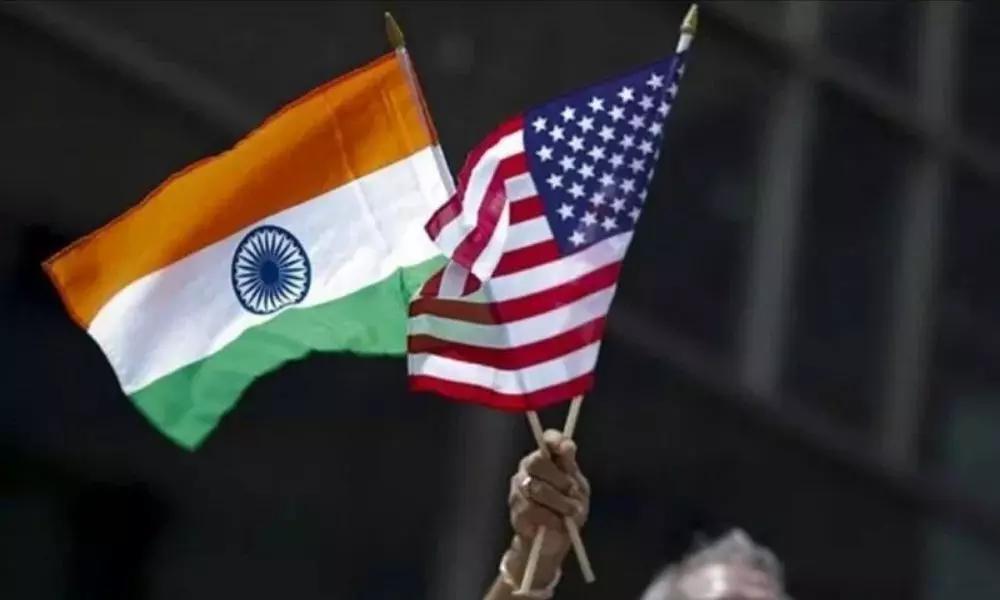
Republic World underscores near-term exporter benefits and positive market sentiment. Coverage diverges in emphasis between economic opportunity and stock-market gains on one hand, and political backlash and unresolved technical negotiations on the other.