Iran-Israel01 March, 20263 min read
United States and Israel Kill Iran's Supreme Leader Ayatollah Ali Khamenei
This article is an automated aggregation of coverage from news outlets. Our editorials offer in-depth analysis curated by the NewsCord team.
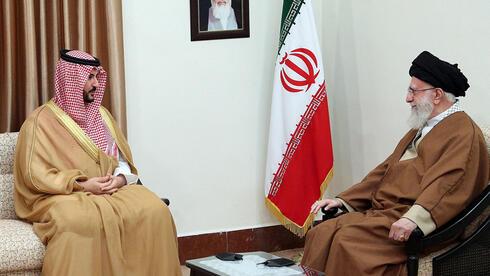
U.S. and Israeli strikes killed Iran’s Supreme Leader Ayatollah Ali Khamenei and senior commanders Iran declared 40 days of mourning and the IRGC vowed revenge
88 outlets told this the same way.
Outlets did split on U.S. Intercepts Iran Message Activating Sleeper Cells After U.S.-Israel Strike Kills Khamenei →
Reports on Khamenei's death
U.S. and Israeli forces carried out a large, coordinated set of strikes that multiple outlets reported hit sites across Iran and — according to Iranian state media and statements from U.S. and Israeli officials — killed Supreme Leader Ayatollah Ali Khamenei. Newsweek summarized that "Multiple reports say Iran’s Supreme Leader Ayatollah Ali Khamenei was killed in U.S.-Israeli strikes (operation code-named \"Epic Fury\"); Iranian state media later confirmed his death, describing him as \"martyred\" and declaring 40 days of mourning."
“Iran’s hardline supreme leader Ayatollah Ali Khamenei was reported killed in joint U.S.–Israeli strikes, Iranian state media confirmed after initially saying he was ‘safe and sound.’”
CNN reported that Iran’s hardline supreme leader Ayatollah Ali Khamenei was reported killed in joint U.S.–Israeli strikes and that Iranian state media confirmed his death after initially saying he was "safe and sound." The BBC described the operation as a "large, ongoing US–Israel military campaign against Iran — dubbed 'Operation Epic Fury' —" and noted that the report of Khamenei’s death came from state media and U.S. comments while independent verification remained difficult.
Reported strikes on Iran's leadership
Reporting from multiple outlets said the strikes targeted Iran’s senior command and named several high‑level figures among the dead, though tallies and identities varied across accounts. Axios wrote that Israeli officials said the operation 'targeted about 30 top military and civilian leaders and ‘decimated’ Iran’s command, with seven senior defense and intelligence figures reported killed: Ali Shamkhani, Mohammad Pakpour, Aziz Nasirzadeh, Mohammad Shirazi, Saleh Asadi, Hossein Jabal Amelian and Reza Mozaffari-Nia.'
The BBC noted U.S. and Israeli sources 'cited roughly 40 Iranian officials killed; Israel named seven senior Iranian defence figures among the dead, including Ali Shamkhani and other senior commanders.' CNN listed senior figures the strikes 'targeted' including 'Khamenei, President Masoud Pezeshkian and armed forces chief Abdolrahim Mousavi.'

Iran strikes and disruptions
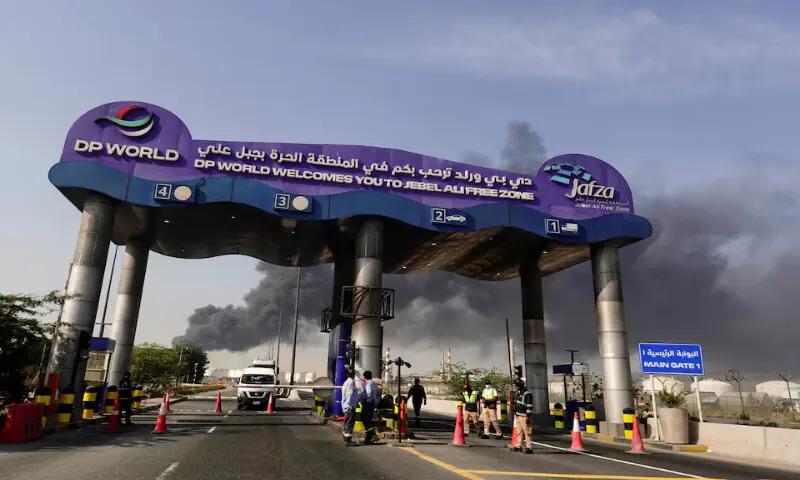
Iran retaliated with missiles, drones and strikes across the region, producing damage, airport closures and wider disruption, according to multiple governments and agencies. Al Jazeera said the IRGC vowed revenge and reported it struck 27 bases hosting U.S. troops in the region and Israeli military facilities in Tel Aviv, and the outlet described explosions in the Gulf and elsewhere.
“Iran reportedly retaliated by firing ballistic missiles and launching drones at US assets and regional allies; the article lists involvement or targeting across the region including Israel, Bahrain, Kuwait, Qatar, the UAE and Jordan.”
The BBC reported that Iran reportedly retaliated by firing ballistic missiles and launching drones at U.S. assets and regional allies, listing involvement or targeting in Israel, Bahrain, Kuwait, Qatar, the UAE and Jordan. Business Insider highlighted major aviation impacts, saying airports across the Gulf suspended operations after a series of strikes, Dubai International was struck and evacuated, and four airport staff were injured and treated.
Reactions to strikes
U.S. political leaders framed the strikes as necessary and urged further pressure on Iran, while international reactions ranged from calls for restraint to legal and diplomatic challenges.
Newsweek said "U.S. President Donald Trump confirmed the death on Truth Social, calling Khamenei 'one of the most evil people in History,' and framed the strikes as a chance for Iranians to push for regime change."
The Mercury News reported Trump saying airstrikes would continue "throughout the week or as long as necessary."
Nation Thailand noted international diplomatic fallout, saying the U.N. demanded an immediate halt to hostilities and that Russia and China condemned the U.S. and Israeli actions at the Security Council.
Nation Thailand also said U.S. domestic critics urged congressional authorization for a prolonged campaign.
Politico wrote that Trump "framed the operation as the start of regime change, vowed to destroy Iran’s missile capabilities... and urged Iranians to 'take over your government.'"
Media on Iran succession
Major outlets emphasized that many central claims remained unverified, that Iran’s constitutional succession and domestic politics create acute uncertainty, and that the long-term regional consequences are unpredictable. The BBC cautioned that "many claims were reported in real time and may not be independently verified," and that an internet blackout and other disruptions made verification difficult.
“The situation is described as rapidly developing; a near‑total internet blackout and Iran’s airspace closure have made independent verification difficult and many claims remain unverified.”
Axios observed that "Under Iran’s constitution an interim council would assume authority while the 88-member Assembly of Experts selects a new supreme leader, but the succession process is complicated by the reported deaths of much of the top leadership." The Associated Press warned that efforts at U.S.-led "regime change" have historically been fraught and that it was "unclear what 'regime change' would even mean in Iran today," underscoring the unpredictability of outcomes.