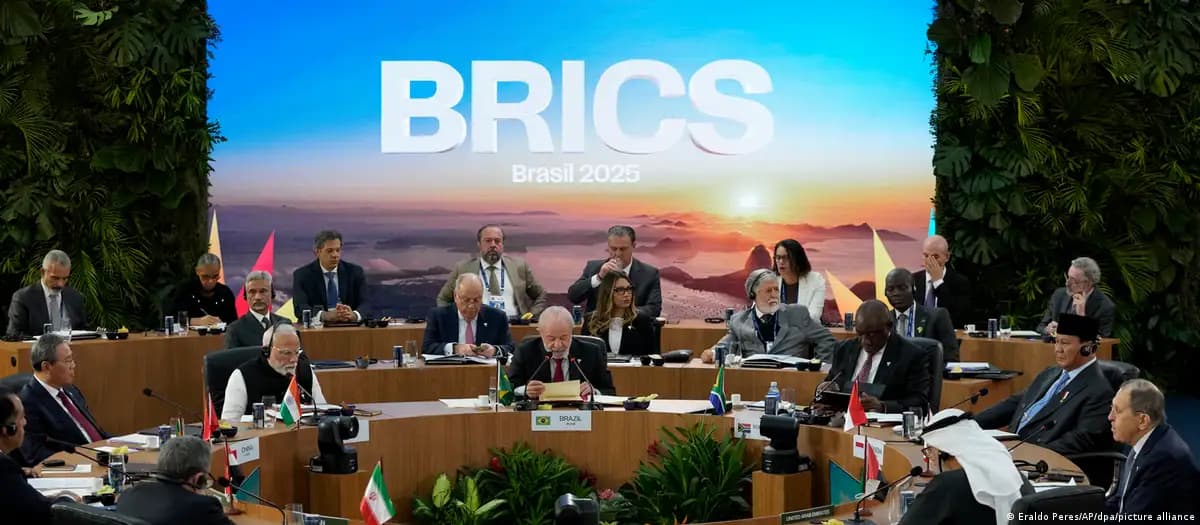
United States and Israel Launch Offensive on Iran, Splinter BRICS as Members Refuse Joint Statement
Key Takeaways
- United States and Israel launched an offensive against Iran.
- Iran launched retaliatory attacks on Gulf countries.
- BRICS failed to issue a joint position, contrasting its unified 2025 response.
BRICS expansion history
The provided article traces BRICS’s evolution from its 2009 Yekaterinburg summit through a major 2023–2025 expansion that added new members and shifted internal dynamics.
“Divided and with different interests at stake, the bloc’s countries are unable to issue a joint position on the conflict”
It notes that the bloc "underwent a major expansion, gaining six new members: Egypt, Ethiopia, United Arab Emirates, Iran and Indonesia," that this expansion "was largely the result of pressure from China," and that early BRICS summits began with the 2009 Yekaterinburg meeting and South Africa’s later joining which "added the 'S' to the Brics acronym."
BRICS divisions over conflict
The article describes growing factionalism within BRICS over the current Middle East conflict: an April 2025 foreign ministers’ meeting "ended without the release of a joint statement,"
while a later July leaders’ meeting did manage a consensus on issues like UN reform and a two-state solution, producing "an official declaration."
It frames the split as linked to differing diplomatic orientations among members — with the rotating BRICS presidency in India and worries that expansion could undermine "cohesion."
India’s pivotal stance
India’s role is highlighted as pivotal and ambiguous: the rotating BRICS presidency is held by India, which "maintains close relations with the United States and Israel,"
“Divided and with different interests at stake, the bloc’s countries are unable to issue a joint position on the conflict”
and diplomats in Brazil reportedly do not expect India to convene a unifying meeting.
The article emphasizes Modi’s restrained public posture: he "initially avoided commenting on the Israeli attack that killed Iran’s 'supreme leader', Ali Khamenei," while instead condemning Iranian retaliation that caused damage in Gulf states and denouncing what he called violations of other states’ sovereignty.
External pressure on membership
The snippet notes external pressures shaping membership decisions: it says the Saudis "were invited, but began to avoid making their entry official after their US allies began threatening countries that aligned themselves with the bloc with tariffs,"
and that Chinese pressure drove expansion while Brazil resisted for fear of losing leadership.
Those dynamics are presented as contributing to uneven policy coordination when crises unfold.
No evidence for offensive
Crucially, the provided article does not substantiate the headline claim that the United States and Israel launched an offensive on Iran; it focuses on BRICS membership shifts and diplomatic divisions,
“Divided and with different interests at stake, the bloc’s countries are unable to issue a joint position on the conflict”
and reports that Modi "had a telephone conversation with Israeli Prime Minister Benjamin Netanyahu" in which he said he conveyed "India’s concerns" and "the need for a rapid end to hostilities," while "Modi also did not report contacting any Iranian officials."
The absence of reporting on any US–Israel offensive in the supplied text means that the claim is unsupported by this source.
More on India

Indian-Owned Sunrisers Leeds Sign Pakistan Spinner Abrar Ahmed, Breaking IPL-Linked Teams' Boycott
10 sources compared
EAM Jaishankar Holds Calls With Iran’s FM Abbas Araghchi to Secure Strait of Hormuz Shipping
11 sources compared

Prime Minister Narendra Modi and President Luiz Inácio Lula da Silva Sign Rare Earths, Digital and Mining Deals, Set Bilateral Trade Goal of $20–30 Billion
16 sources compared
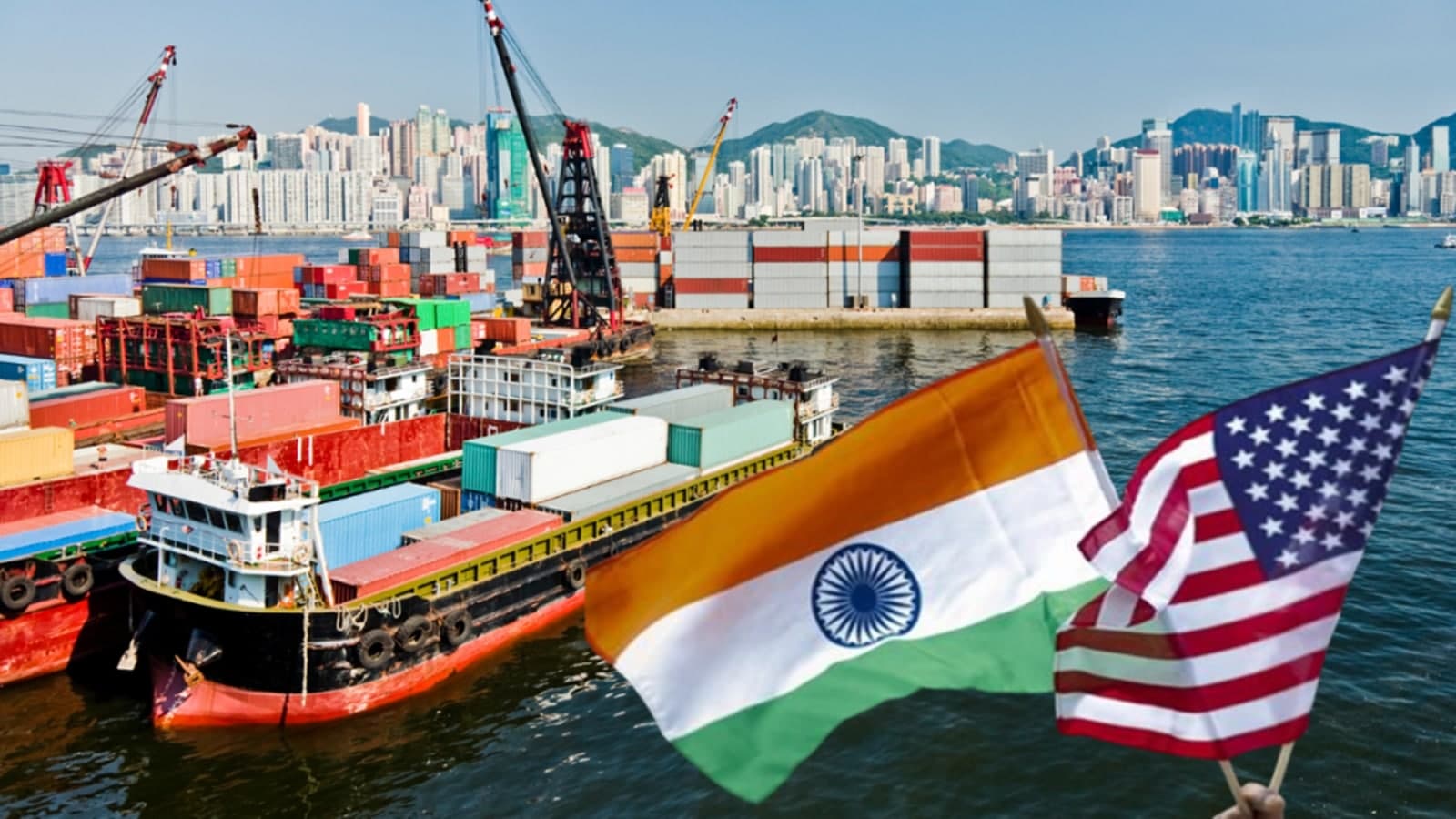
Trump Announces U.S. Will Cut Tariffs on Indian Exports to 18% in Trade Deal
11 sources compared