
United States and Israel Strike Iran on Day 13; Iran Says 1,348 Civilians Killed
Key Takeaways
- United States and Israeli strikes on Iran continued on day 13.
- Tehran stepped up attacks to disrupt energy markets, triggering a spike in oil prices.
- Iran's UN representative Amir Saeid Iravani said at least 1,348 civilians have been killed.
Overview and verification
The Al Jazeera article documents heavy military activity on Day 13 but does not provide or verify the specific claim that Iran says 1,348 civilians were killed; instead it records reciprocal strikes and broad operational claims.
“The United States and Israeli strikes on Iran continue, as Tehran has stepped up attacks to disrupt energy markets, triggering a spike in oil prices”
It notes a "Joint strike with Hezbollah: Iran’s Islamic Revolutionary Guard Corps (IRGC) said it carried out a joint missile operation with Lebanese ally Hezbollah against targets in Israel," and also reports that "the US Central Command (CENTCOM) announced that approximately 6,000 targets have been struck in Iran since the operations began."
The piece further cites reporting that a "‘Targeting error’ likely led to school strike: An Iranian school was likely hit by a US Tomahawk missile due to a targeting mistake, The New York Times reported, quoting US officials," and that "the opening week of the war cost the US military more than $11.3bn, lawmakers were told in a Pentagon briefing, according to media reports," underscoring intense, costly operations even as casualty tallies remain contested in this article.
Gulf state impacts
The conflict has spilled across the Gulf, with multiple states reporting intercepted drones, damaged infrastructure and civilian disruption.
Al Jazeera reports that the "United Arab Emirates intercepted a massive wave of Iranian projectiles, including six ballistic missiles, seven cruise missiles, and 39 drones on March 11," and that "Saudi Arabia... said two drones heading towards the Shaybah oilfield were intercepted and destroyed over the kingdom’s Empty Quarter desert."
Kuwait saw infrastructure damage when "Six electricity transmission lines in Kuwait went out of service after debris from intercepted drones fell on the infrastructure," and a drone strike in Oman "damaged several fuel tanks at the port of Salalah, an act strongly condemned by Qatar as a dangerous escalation. Iran has denied being behind the attack," illustrating how strikes and interceptions are affecting energy and civilian services across the region.
Strait of Hormuz incidents
Maritime and security tensions in the Strait of Hormuz and nearby waters intensified, with state actors reporting direct engagements at sea and emergency responses.
“The United States and Israeli strikes on Iran continue, as Tehran has stepped up attacks to disrupt energy markets, triggering a spike in oil prices”
The article states the "IRGC said it fired at two vessels that allegedly ignored warnings," and that "Oman’s navy rescued 20 sailors from a Thai-flagged vessel attacked in the strait,"
while also documenting broader concerns about shipping safety and regional escalation as Gulf navies and militaries respond to perceived threats.
Economic and political fallout
The crisis has also produced economic and political ripple effects: financial institutions, airlines and governments shifted operations while leaders sought to reassure citizens.
Al Jazeera reports that "Citibank has told The Associated Press news agency that it will close all its branches except one following a threat from Iran to target financial institutions in the region," and that "Qatar Airways... will operate 29 flights to and from Doha on Thursday after receiving temporary government authorisation,"
while Qatar’s prime minister praised unity: "‘Proud as a Qatari’: Qatari Prime Minister Sheikh Mohammed bin Abdulrahman bin Jassim Al Thani praised the unity of citizens and residents during repeated Iranian attacks, pledging to keep daily life undisrupted."
The article also records domestic security measures such as "Espionage arrests: Bahrain’s Ministry of Interior said four Bahraini citizens were arrested on charges of spying for Iran’s IRGC," showing the internal security responses unfolding alongside military operations.
Reporting limits and needs
Limits of the provided reporting and outstanding questions: the single Al Jazeera piece supplied here details wide-ranging military actions, interceptions and disruptions across the Gulf and cites US and international reporting on specific incidents, but it does not present an independently verified civilian death toll of 1,348 attributed to Iran.
“The United States and Israeli strikes on Iran continue, as Tehran has stepped up attacks to disrupt energy markets, triggering a spike in oil prices”
The article instead focuses on operational claims, interceptions and the human and infrastructural fallout noted above, leaving casualty verification and attribution unresolved in this dataset and in need of corroboration from additional primary reporting and official tallies.
More on Iran
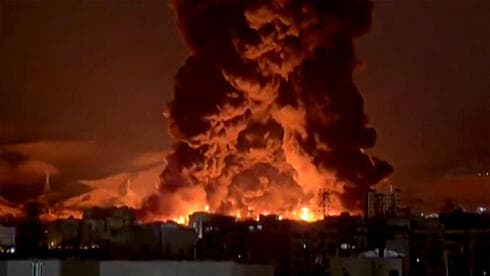
US obliterates military targets on Iran’s Kharg Island, Trump warns
13 sources compared
US Deploys About 2,500 Marines to Middle East After Iran Attacks Gulf Shipping
33 sources compared
FBI Warns of Iranian Drone Plot Based on Unverified Tip; California Says No Credible Threat
10 sources compared

White House Demands ABC Retract Report Claiming Iran Sought To Launch Drone Attacks On California
11 sources compared