Full Analysis Summary
Maduro arrest coverage
U.S. authorities have presented the arrest of Venezuelan President Nicolás Maduro as part of a broader crackdown on organized crime and drug trafficking.
Maduro has publicly denied the charges and framed himself as a victim.
Al-Jazeera reports that Maduro is facing trial in New York on charges including running a corrupt government and collaborating with drug traffickers.
Al-Jazeera also reports that he rejected the accusations at the first session and called himself a prisoner of war.
Folha de S.Paulo notes that Washington framed the arrest as part of a crackdown on organized crime but cautions the move may not immediately disrupt Venezuela's major criminal networks.
The Times of India entry provided contains no substantive article text and therefore offers no independent coverage, an absence worth noting alongside the other outlets' accounts.
Coverage Differences
Tone and emphasis
Al-Jazeera (West Asian) emphasizes the legal case and Maduro’s own public rejection and political framing, while Folha de S.Paulo (Latin American) emphasizes analytical caution about the arrest’s practical impact on criminal networks. The Times of India (Asian) supplied no article text in the provided snippet and thus contributes no direct reporting; its absence is itself a form of omission in this dataset.
Media and geopolitical framing
Beyond the immediate legal case, coverage differs on the geopolitical framing and regional consequences tied to the arrest.
Al-Jazeera records U.S. claims that 'the U.S. would oversee Venezuela’s affairs during a transition and send American firms to invest in its oil sector.'
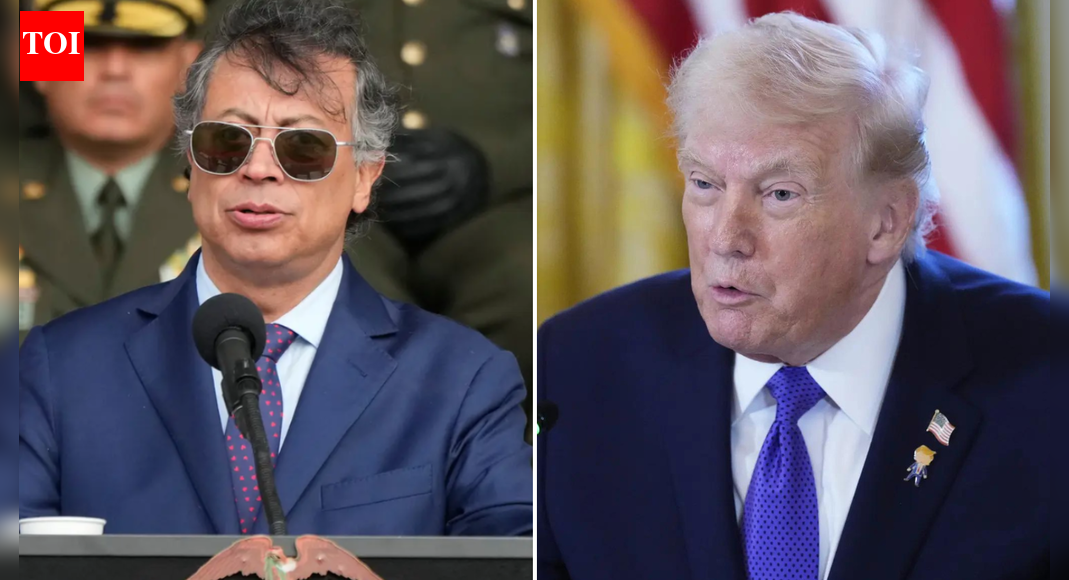
It links the crisis to heightened tensions with Colombia, reporting on President Gustavo Petro’s condemnation of U.S. military actions and his call for a regional response.
Folha does not foreground U.S. intervention rhetoric but instead situates the arrest within an analysis of organized-crime structures, arguing, for example, that the Tren de Aragua did not act as 'Maduro’s direct instrument' but grew through collusion and omission.
The Times of India snippet contains no substantive article text to provide a third reporting angle.
Coverage Differences
Narrative focus
Al-Jazeera (West Asian) foregrounds U.S. interventionist rhetoric and regional political reactions (including Petro’s statements and tensions with Colombia), while Folha de S.Paulo (Latin American) focuses on structural analysis of criminal governance and the limits of how much a single arrest can disrupt networks. Times of India (Asian) provides no text in the supplied snippet, representing an omission in this sample.
Differences in media coverage
Legal specifics reported differ in emphasis: Al-Jazeera lists the charges and courtroom moments and notes immediate political maneuvers, reporting that Vice President Delsi Rodríguez was sworn in as interim president on Jan. 5.
Folha’s reporting, by contrast, frames the arrest as an action led by Washington against organized crime and pivots to empirical research about trafficking governance rather than chronicling legal proceedings.
The Times of India snippet does not supply a substantive account to corroborate or contradict those emphases.
Coverage Differences
Missed information and emphasis
Al-Jazeera (West Asian) provides concrete legal and political details (e.g., the trial in New York and the swearing-in of an interim president) and quotes actors’ accusations; Folha de S.Paulo (Latin American) emphasizes academic/research findings on criminal networks and downplays the immediate practical impact of the arrest. Times of India (Asian) is absent in this dataset and therefore misses these legal details.
Media divergence on trafficking impacts
Where the sources diverge most sharply is on the expected impact on criminal networks and the mechanisms of trafficking.
Folha de S.Paulo presents an analytical account, saying 'Regional cocaine trafficking is organized in an hourglass-shaped governance structure—few powerful actors control the center while many producers and retailers at the ends have little influence.'
The paper also asserts TDA grew via 'collusion with regime military members and Maduro's willful omission.'
Folha concludes the U.S. arrest is 'unlikely to substantially affect the Tren de Aragua (TDA) in the medium term.'
Al-Jazeera, while reporting seizures of Venezuelan tankers and U.S. military deployments, frames the story more around international confrontation and political fallout than granular criminal-network governance.
Coverage Differences
Analytical focus vs. geopolitical framing
Folha de S.Paulo (Latin American) offers a structural, research-based analysis of how cocaine trafficking and the Tren de Aragua function, concluding the arrest is unlikely to have major medium-term effects on those networks. Al-Jazeera (West Asian) centers geopolitical conflict, reporting U.S. operations (seizures and military deployments) and regional political responses. Times of India (Asian) again supplies no substantive reporting in the provided snippet, so it does not contribute to either analytical or geopolitical framing here.
Regional media reactions
Al-Jazeera prominently reports regional political fallout and calls for coordinated responses, quoting President Gustavo Petro urging Latin American nations to form a joint regional army to fight drug traffickers.
Petro accuses the U.S. of using drug trafficking as a pretext for intervention and calls for unity to disarm gangs and defend the region.
Folha's account does not foreground Petro's calls or regional military proposals and instead concentrates on the internal mechanics of trafficking and why a leadership arrest might not dismantle networks.
The Times of India snippet in the provided text is silent on these debates.
Coverage Differences
Focus on regional political responses
Al-Jazeera (West Asian) highlights Petro’s regional proposals and explicit accusations against the U.S.; Folha de S.Paulo (Latin American) focuses on organized-crime analysis and the limited expected effect of an arrest on network operations. Times of India (Asian) provides no substantive text here, an omission in the sample.