Full Analysis Summary
Abu Dhabi peace talks update
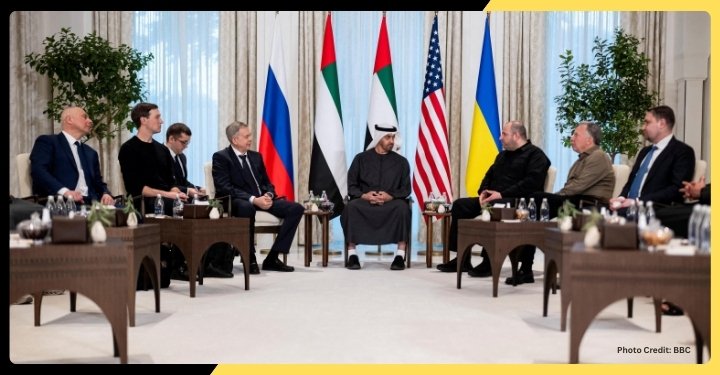
The United States brokered a second round of Russia–Ukraine peace talks in Abu Dhabi on February 4–5, 2026.
Xpert Times described the talks as a trilateral effort to resolve outstanding issues and explore ways to end nearly four years of war amid ongoing fighting and a fragile humanitarian situation.
Xpert Times noted international skepticism after the January 2026 opening round produced no substantive agreements.
Xpert Times reported the talks took place under tight security and high diplomatic attention.
The Economic Times' brief headlines package recorded related developments, including a concise note that Russia demanded troop withdrawals and recognition of territory it has seized.
That note indicates the issue of territorial recognition was visible in other outlets' coverage.
The Associated Press snippet provided here does not include a report on the Abu Dhabi talks and instead requests article text or a URL for summarization.
Coverage Differences
Tone and focus
Xpert Times (Asian) offers a focused diplomatic account emphasizing the talks' timing, humanitarian context, and unresolved nature, while The Economic Times (Western Mainstream) mentions the Russia demand in a roundup of headlines without the same diplomatic detail. The Associated Press (Western Mainstream) snippet in this set does not supply coverage of the talks and instead asks for the article text, showing an absence of reported detail in the provided AP snippet.
Ukraine negotiation priorities
Xpert Times reports that Ukraine's delegation, led by Rustem Umerov, pressed for preservation of Ukrainian sovereignty and for binding international security guarantees as essential to Ukraine's position in the talks.
That report portrays Kyiv as seeking durable, internationally backed assurances rather than territorial compromise.
The Economic Times summary does not expand on Ukraine's negotiating priorities, and the Associated Press text does not include reporting on delegates or positions, underscoring variation in how much detail each source supplies about Kyiv's goals.
Coverage Differences
Missed information / level of detail
Xpert Times (Asian) details Ukraine’s negotiating priorities and leadership (naming Rustem Umerov), while The Economic Times (Western Mainstream) omits those specifics in its headline roundup. The Associated Press (Western Mainstream) snippet here does not present content about delegates or positions, illustrating a lack of coverage in the supplied AP text.
Russian territorial demands
Xpert Times reports that Russia’s negotiating team continued to demand territorial concessions and recognition of areas Moscow has annexed.
The Economic Times similarly records that Russia demanded troop withdrawals and recognition of territory it has seized, corroborating that territorial recognition and troop movements were central Russian demands.
The Associated Press snippet in the provided text does not include reporting that confirms or contradicts those claims.
Thus, among these snippets, corroboration primarily comes from Xpert Times and The Economic Times.
Coverage Differences
Agreement with slight language variation
Both Xpert Times (Asian) and The Economic Times (Western Mainstream) report Russia pressing for territorial recognition, but Xpert Times uses the phrase 'areas Moscow has annexed' while The Economic Times uses 'territory it has seized' — differences in wording reflect similar factual claims with slightly different lexical choices. The Associated Press (Western Mainstream) snippet here does not provide reporting to corroborate or add nuance.
Reporting on unresolved disputes
Xpert Times emphasizes that core disputes over territorial control, security guarantees, and accountability remained unresolved after the second round.
It stresses the broader context of ongoing fighting and a fragile humanitarian situation, signaling a sober, severity-aware tone about the stakes of any diplomacy.
The Economic Times' coverage in this package does not unpack those core disputes in depth, and the provided Associated Press text does not supply a report to compare.
As a result, the most detailed picture of unresolved issues and humanitarian concern in these snippets comes from Xpert Times.
Coverage Differences
Tone and severity
Xpert Times (Asian) uses direct, weighty language — 'ongoing fighting,' 'a fragile humanitarian situation,' and 'core disputes...remain unresolved' — conveying severity and urgency. The Economic Times (Western Mainstream) presents a brief headline noting Russian demands without the same humanitarian framing, and the Associated Press (Western Mainstream) snippet here offers no substantive report to compare, highlighting variation in emphasis across the provided sources.
Media coverage comparison
The supplied sources reflect different coverage patterns.
Xpert Times (Asian) provides the most detailed diplomatic narrative and humanitarian framing.
The Economic Times (Western mainstream) records the core Russian demand within a broader headlines roundup but offers less on Ukraine's security demands or humanitarian context.
The Associated Press (Western mainstream) snippet provided does not include direct reporting on the Abu Dhabi talks and instead asks for the article text or URL for summarization.
Readers should note that Xpert Times contains the most complete account of negotiations and unresolved issues in these excerpts.
The Economic Times corroborates the territorial-demand claim, and the Associated Press supplied text offers no report on the talks.
Coverage Differences
Source-type influence and omission
Xpert Times (Asian) frames the story with diplomatic detail and humanitarian severity; The Economic Times (Western Mainstream) places the Russian demand in a brief roundup alongside unrelated national and market news; the Associated Press (Western Mainstream) snippet here omits substantive coverage. These distinctions show how source type and editorial focus influence what aspects are emphasized or omitted in the available excerpts.