USA30 April, 20263 min read
United States Launches Third Consecutive Night Of Strikes On Iran As Trump Targets Strait Of Hormuz
This article is an automated aggregation of coverage from news outlets. Our editorials offer in-depth analysis curated by the NewsCord team.
U.S. conducts a third consecutive night of strikes against Iran. Trump reinstated the naval blockade of the Strait of Hormuz and proposed shipping fees.
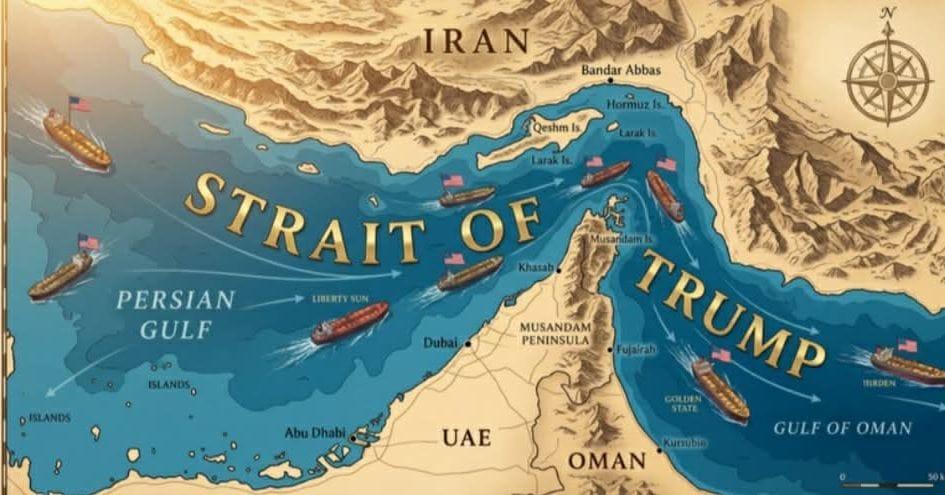
Strikes and blockade restart
The United States launched more strikes on Iran at President Donald Trump’s direction, with U.S. Central Command saying it began a third consecutive night of strikes at 4:45 p.m. ET on Monday.
Trump previewed the attacks in a radio interview, saying, “We’re going to hit them very hard tonight, and we’re going to hit them hard tomorrow,” and later told reporters in the Oval Office that the U.S. would end up controlling the Strait of Hormuz.

Alongside the strikes, U.S. Central Command said it will officially resume its naval blockade of ships going to and from Iranian ports at 4 p.m. ET on Tuesday.
CNN reported Trump characterized the renewed bombing campaign as a “military skirmish,” while also saying, “We’ve cut down their capability very substantially, but they’re going to fight for a while.”
The escalation unfolded as Iranian state media reported explosions in Bandar Abbas and the Hormozgan provincial government said a projectile hit the western part of Bandar Abbas with no casualties immediately reported, according to Fars News Agency.
Tolls, reactions, and legal fight
Trump also said the U.S. would charge other ships for safe passage through the Strait of Hormuz, and U.S. Central Command said the strikes would “continue imposing a heavy cost on Iranian forces and degrade their ability to attack innocent civilians and commercial shipping in the Strait of Hormuz.”
In response, Iran’s Foreign Minister Abbas Araghchi mocked Trump on social media and used his support for tolls to legitimize Iran’s position, writing, “POTUS is absolutely right. Whoever provides secure and safe passage of commercial vessels through the Strait of Hormuz should be compensated for this service.”

The International Maritime Organization said it was waiting to find out more about Trump’s proposal but remained opposed to tolls, stating, “There is no legal basis through which to introduce mandatory tolls simply to transit through a strait,” in a statement.
CBS News reported Trump told Fox News the U.S. was “going to keep the Strait” of Hormuz and declared the U.S. blockade back on while imposing a 20% fee on cargo shipments through the strait.
ABC News added that CENTCOM said it would resume blockading maritime traffic entering and exiting Iranian ports on July 14 at 4 p.m. ET, while continuing to support traffic flow for vessels not violating the blockade.
Regional fallout and next moves
The dispute over the strait and the renewed strikes also drew reactions across the region, with NPR reporting that Iran responded to U.S. attacks by targeting Jordan, Qatar, Kuwait and Oman, and that missile alert sirens sounded in Bahrain, home to the U.S. Navy’s 5th Fleet.
“The U.S. retaliated, striking multiple sites in Iran overnight.”
NPR said U.S. Central Command launched a fresh round of strikes against Iran at 5 p.m. ET on Sunday to continue degrading Iran’s ability to attack civilian mariners and commercial ships freely transiting the Strait of Hormuz.
In the same reporting, U.S. Central Command said, “The Strait of Hormuz is a vital maritime corridor for global trade. Iran does not control it,” while Iran’s navy claimed it fired warning shots that hit a Cyprus-flagged container vessel after ships attempted an unapproved route.
CBS News reported Trump formally notified Congress that “military action” against Iran “commenced on July 7,” and said the notification was provided “as part of my efforts to keep the Congress fully informed, consistent with the War Powers Resolution.”
CNN said rescue and military operations continued to escalate following renewed exchanges of strikes last week, as Iranian state-run agencies reported explosions in Bandar Abbas and U.S. Central Command said it launched a new round of strikes against Iran.