Full Analysis Summary
U.S. operations toward Venezuela
Reuters reporting compiled by multiple outlets says senior U.S. officials told reporters the Trump administration is preparing a new phase of operations aimed at Venezuela’s government.
This phase would include covert CIA activity and a significant military buildup Washington calls "counter-narcotics" missions.
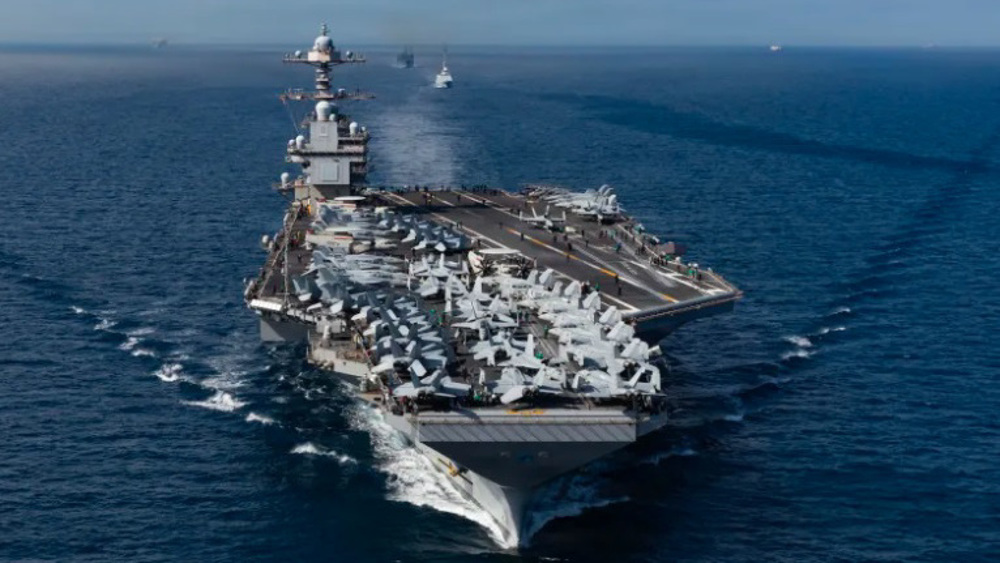
Sources describe deployments around Venezuela such as an aircraft carrier strike group, a nuclear submarine and F-35s.
U.S. officials reportedly view covert actions as an initial phase that could be part of a broader campaign against President Nicolás Maduro.
The CIA declined to comment and the White House would not rule anything out.
Coverage Differences
Narrative focus / emphasis
PressTV (West Asian) emphasizes observers’ and Venezuelan officials’ interpretation that the scale of forces (aircraft carrier, submarine, F‑35s) far exceeds drug‑interdiction needs and could signal plans to overthrow Maduro, whereas livemint (Other) frames the reporting around U.S. officials’ account that covert CIA operations are likely the first phase of a broader campaign and highlights U.S. policy moves like designation of the Cartel de los Soles. PressTV quotes critics and Venezuelan officials; livemint reports U.S. official claims and planned policy steps.
U.S. actions on Venezuela
The U.S. justification presented publicly centers on counter‑narcotics: the administration alleges Maduro and the so‑called Cartel de los Soles are involved in drug trafficking to the United States.
Officials told reporters the U.S. plans to designate the Cartel de los Soles as a foreign terrorist organization, a step they say would broaden legal and military options.
President Trump reportedly suggested such a designation could permit strikes on Venezuelan assets and infrastructure.
At the same time, Maduro denies any links to drug trafficking.
Coverage Differences
Tone / reported claims vs. denials
livemint (Other) reports U.S. officials’ claims linking Maduro and the Cartel de los Soles to drug trafficking and details policy tools (FTO designation) and the administration’s own rationale; PressTV (West Asian) highlights observers’ and Venezuelan officials’ skepticism and frames the U.S. moves as disproportionate, reporting critics who view actions as potentially aimed at regime change. livemint reports Maduro’s denial as part of the piece; PressTV foregrounds external criticism and the scale of force.
U.S.-Venezuela security tensions
Reported U.S. steps include a military buildup in the Caribbean and covert CIA activity, while the FAA warned of a "potentially hazardous situation" over Venezuela that led some airlines to cancel flights.
Human rights groups cited in reports allege that U.S. strikes on vessels suspected of trafficking have killed dozens and may violate international law, raising legal and humanitarian questions about counter‑narcotics conduct.
Venezuela is said to be preparing for "prolonged resistance" and exploring decentralized, asymmetric defenses across hundreds of locations.
Coverage Differences
Focus on consequences / warnings vs. defensive posture
PressTV (West Asian) emphasizes consequences and Venezuelan defensive preparations, quoting human rights groups about alleged lethal strikes and Venezuela’s plans for decentralized resistance; livemint (Other) underscores administrative warnings (FAA) and the military buildup while noting diplomatic engagement—its coverage stresses U.S. procedural steps and the continued public defiance of Maduro.
Legal and policy implications
Reporting raises stark legal and policy implications.
Designating the Cartel de los Soles as a foreign terrorist organization would be an unusual U.S. move with explicit consequences for how Washington could target Venezuelan networks and possibly infrastructure, according to officials cited in reporting.
Human rights groups' claims of lethal strikes on trafficking vessels and potential international law violations add urgency to questions about proportionality and oversight for covert and overt actions.
The CIA's formal silence and the White House's refusal to rule things out leave significant uncertainty about the scope, timing and legality of any operations.
Coverage Differences
Legal emphasis / skepticism
livemint (Other) details the administrative legal tool (FTO designation) and its practical effects as reported by U.S. officials; PressTV (West Asian) foregrounds human rights groups’ allegations and warns of regional destabilization and excessive use of force. Both sources report official claims and denials, but PressTV gives more weight to critics and the risks of escalation.
U.S. operations near Venezuela
Reporting establishes that U.S. officials have discussed covert CIA operations and a sizable military presence near Venezuela that Washington calls counter-narcotics.
Critics and Venezuelan officials argue the scale and posture suggest broader aims, potentially including regime change.
The available reporting shows competing narratives—official U.S. rationale and policy options on one hand, and warnings about legality, humanitarian impact, and regional destabilization on the other.
Core uncertainties remain about intent, specific plans, and timeline because the CIA declined to comment and the White House did not confirm specific courses of action.
Coverage Differences
Uncertainty / contested intent
Both sources report U.S. officials’ statements and denials, but PressTV (West Asian) stresses critics’ interpretation that the moves exceed narcotics enforcement and could be aimed at overthrowing Maduro, whereas livemint (Other) focuses on officials’ accounts of phases and policy instruments (FTO designation) and notes ongoing limited talks between Washington and Caracas. The divergence is between a narrative of likely regime‑change intent (as presented via quoted observers and Venezuelan officials in PressTV) and a narrative centered on official rationale and policy mechanics (livemint).