United States Pushes UN Resolution to Control Gaza Amid Israel’s Genocide

United States Pushes UN Resolution to Control Gaza Amid Israel’s Genocide

04 November, 202525 sources compared
War on Gaza

Key Points from 25 News Sources

  1. 1

    The US circulated a UN draft resolution to establish a two-year international stabilization force in Gaza.

  2. 2

    The force will have enforcement authority to secure borders, protect civilians, and disarm Hamas.

  3. 3

    Israel opposes Turkish involvement due to Turkey’s support for Hamas, complicating multinational force formation.

Full Analysis Summary

UN Security Plan for Gaza

The United States is pushing a draft UN Security Council resolution to install a two-year International Stabilization/Security Force (ISF) in Gaza alongside a transitional governance body dubbed the “Board of Peace.”

This body would have the authority to use force, secure Gaza’s borders with Israel and Egypt, protect civilians and humanitarian corridors, and work to disarm armed groups.

Multiple outlets say the effort aligns with Donald Trump’s 20‑point Gaza plan and seeks World Bank-backed reconstruction funding through at least 2027.

The mission is described as robust peace enforcement that could later transition to a UN-led civilian effort.

Support from the US, UK, and France is reported, while the text is described as circulated or informally shared but not yet formally introduced for negotiations or a vote.

Coverage Differences

narrative

AP News (Western Mainstream) frames the initiative within “President Donald Trump’s plan” and calls it part of resolving an “ongoing two-year conflict,” whereas The Straits Times (Asian) emphasizes it aligns with “former President Donald Trump’s 20-point Gaza plan” and details a first-phase ceasefire/hostage release. thenationalnews (Western Alternative) highlights US-UK-France backing and casts the mission as a robust peace enforcement operation that could later transition to a UN-led civilian mission. Al-Jazeera Net (West Asian) instead describes a “peace council” as a transitional authority working with Egypt and Israel and specifies a World Bank fund through 2027.

missed information

The Daily Star (Western Tabloid) stresses the draft is “not yet formally circulated,” while EconoTimes (Local Western) says it has been “shared with select countries but not yet formally introduced at the U.N.” By contrast, JFeed (Other) says it is “soon to be debated by the UN Security Council,” indicating differing depictions of procedural status.

Troop Contributions and Mission Oversight

The composition of the force and the terms of participation remain disputed.

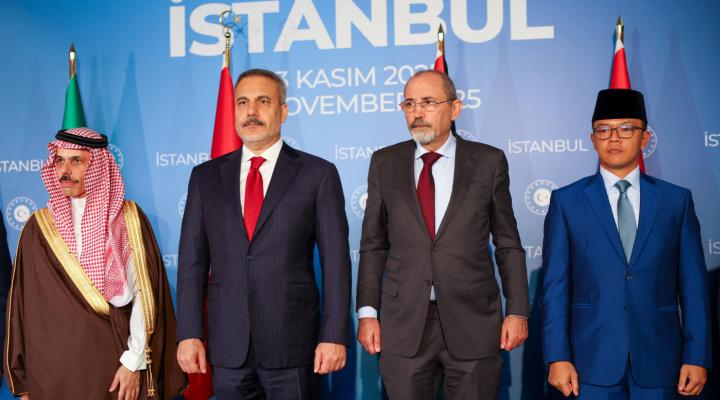
Several countries with majority Muslim populations have been approached for troop contributions, including Indonesia, Egypt, Azerbaijan, Turkey, the UAE, and Qatar.

The United States requires that participants be acceptable to Israel, which has openly opposed Turkey's involvement.

Turkey has expressed readiness to participate but demands clear and high-quality agreements before committing.

Egypt has indicated willingness to contribute under a United Nations mandate focused on peacekeeping and training Palestinian police.

Analysts caution that China, Russia, and Algeria may seek to maintain UN Security Council control over the mission’s authorization and oversight.
Coverage Differences

tone

Algemeiner (Local Western) centers Israel’s security lens, saying Israel opposes Turkey because of Ankara’s support for Hamas, while The Straits Times (Asian) and ThePrint (Asian) catalog broader diplomatic shopping for troop contributors and note Israel’s opposition more matter-of-factly. CNN (Western Mainstream) emphasizes Turkish uncertainty due to Israel’s opposition and adds that Israel initially resisted a UN mandate but shifted after US involvement. thenationalnews (Western Alternative) details conditions set by Turkey and Jordan and the US insistence that participants be acceptable to Israel.

narrative

thenationalnews (Western Alternative) underscores potential pushback by China, Russia, and Algeria to keep UNSC control, while ThePrint (Asian) and EconoTimes (Local Western) focus on the practical hurdles — the US not sending its own troops and uncertainty over force pledges from targeted countries.

Gaza Security and Policing Plans

The mandate is expansive, including securing Gaza’s borders with Israel and Egypt, protecting civilians and humanitarian zones, supporting and training a new Palestinian police force, and dismantling the military infrastructure of Hamas through disarmament and decommissioning.

Several outlets describe a unified or coordinated command that works with Israel and Egypt.

One Israeli outlet claims the ISF would be the sole military presence and even proposes a buffer along a “yellow line” to separate Israeli forces and Hamas fighters and allow a “safe exit” for militants, which is a starkly different operational vision.

Others cast the force as an enforcement mission rather than traditional peacekeeping, with the “Board of Peace” steering governance during the transition.

Coverage Differences

contradiction

Israel Hayom (Israeli) claims the ISF would be “the sole military presence in Gaza” and posits a new “yellow line” buffer and “safe exit” for terrorists, while The Australian (Western Mainstream) says the force will “operate temporarily… and will coordinate closely with Egypt and Israel,” and ThePrint (Asian) describes a “unified command” agreed by the Board of Peace, Israel, and Egypt — implying continued security roles for neighbors rather than an ISF-only configuration.

narrative

The Diplomatic Insight (Other) characterizes the mission as an enforcement force led by a Board of Peace “chaired by US President Donald Trump,” contrasting with thenationalnews (Western Alternative), which frames it as robust peace enforcement that could shift into a UN-led civilian reconstruction/governance mission, and The Australian (Western Mainstream), which emphasizes dismantling Hamas infrastructure and supporting vetted Palestinian police.

UN Security Council Actions

Process and timelines also diverge across reports.

Some describe imminent Council action, including expectations of debate soon, an anticipated vote in roughly two weeks, and deployment as early as January.

Others stress that the text remains informally shared and not yet formally on the UNSC’s agenda.

Several outlets also flag the vote math and veto risks, noting that US-UK-France support could meet resistance from Russia, China, and Algeria.

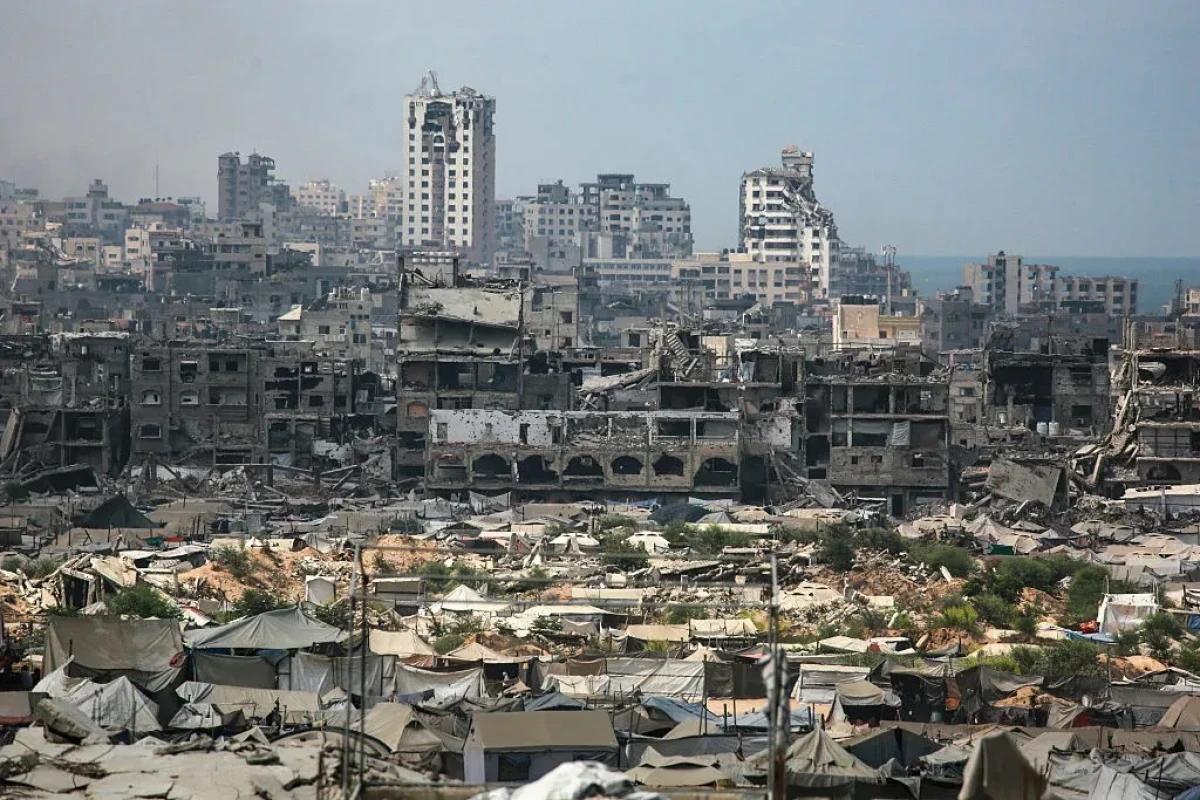
One mainstream outlet includes the ceasefire and exchange of remains—Israel returning Palestinian bodies and militants returning Israeli soldiers—as part of the wider effort to stabilize the situation.
Coverage Differences

timeline/ambiguity

JFeed (Other) says the resolution is “soon to be debated,” Israel Hayom (Israeli) expects a vote “in two weeks,” World Israel News (Other) says the US aims to deploy “as early as January,” while EconoTimes (Local Western) and ThePrint (Asian) say it has not yet been formally introduced or submitted for negotiation or a vote.

narrative

thenationalnews (Western Alternative) highlights geopolitical headwinds — potential insistence by China, Russia, and Algeria on UNSC control — while The Australian (Western Mainstream) pairs the ISF plan with on-the-ground developments, reporting Israel returned 45 Palestinian bodies and that 270 have been returned since a ceasefire, plus the return of three Israeli soldiers’ remains, framing these as part of stabilizing efforts.

Disputes Over Peace Plan Involvement

Israeli involvement and acceptance are also disputed.

One outlet reports Israel’s Security Cabinet hasn’t even reviewed the US-drafted text, fueling concerns Israel is being sidelined; another asserts the draft was created jointly by the US, Israel, and Egypt.

Meanwhile, US officials and regional media repeatedly stress that any participating countries must be acceptable to Israel, even as Jordan and others show reluctance to send troops to fight Hamas.

Several sources describe the governance track — a Board of Peace or similar peace council — that would steer reconstruction and evaluate Palestinian Authority reforms with World Bank support.

Notably, the provided sources do not describe Israeli actions in Gaza as "genocide"; most frame the situation around ceasefire, demilitarization, or "conflict" language, even while reporting that Israel returned Palestinian bodies during the ceasefire period.
Coverage Differences

contradiction

JFeed (Other) says Israel’s Security Cabinet “has yet to see the draft,” while Israel Hayom (Israeli) claims the draft was “created by the US, Israel, and Egypt,” implying active Israeli co-authorship. CNN (Western Mainstream) adds that Israel initially resisted a UN mandate but agreed after US involvement, contrasting with narratives of either exclusion or deep co-design.

tone

Al-Jazeera Net (West Asian) speaks of a “peace council” and World Bank fund through 2027, The Australian (Western Mainstream) emphasizes Board of Peace oversight and on-the-ground body exchanges during a ceasefire, while AP News (Western Mainstream) centers the initiative within Trump’s plan and describes it as addressing an “ongoing two-year conflict.” None of these sources use the term “genocide.”

narrative

World Israel News (Other) reports reluctance from Jordan and diplomats to commit troops to combat Hamas, while ThePrint (Asian) and The Straits Times (Asian) underscore that the US will not deploy its own troops and is seeking contributions, with Israel opposing Turkish involvement.

All 25 Sources Compared

Al-Jazeera Net

Washington officially distributes a draft resolution on Gaza to the Security Council

Read Original

Algemeiner

US Proposes International Gaza Force to UN as Turkey Pushes for Role Amid Concerns Over Hamas Support

Read Original

AP News

US proposes that the UN authorize a Gaza stabilization force for 2 years

Read Original

Apa.az

U.S. seeks UN approval for Gaza security force with broad two-year mandate

Read Original

Bangladesh Post

US seeks UN mandate for Gaza stabilization force with two-year mandate

Read Original

CNN

Trump administration advancing UN resolution for Gaza security force, source says

Read Original

Devdiscourse

Trump's Peace Plan for Gaza Faces U.N. Security Council Vote

Read Original

EconoTimes

U.S. Drafts U.N. Resolution for Gaza Transitional Governance and Stabilization Force

Read Original

Evrim Ağacı

US Pushes UN Plan For Gaza Security Force Mandate

Read Original

Firstpost

'Sensitive but not classified': US seeks 2-year UNSC mandate for Gaza security force

Read Original

Gazeta Express

US seeks UN approval to deploy international forces in Gaza

Read Original

Hindustan Times

Trump’s ‘Secret’ Gaza Plan: UN Draft Reveals Washington Wants Full Control For Two Years | Details | Hindustan Times

Read Original

Hürriyet Daily News

US draft resolution opens critical debate on Gaza security force

Read Original

JFeed

Is Israel Being Shut Out? US Draft Resolution on Gaza Future Leaves Cabi

Read Original

KSAT

US proposes that the UN authorize a Gaza stabilization force for 2 years

Read Original

Tempo.co English

Indonesia Receives 'Draft Zero' of Gaza International Force Mandate, Says Minister

Read Original

The Australian

US seeks two-year mandate with UN for Gaza security force

Read Original

The Daily Star

US may seek UN Gaza force for two years

Read Original

The Diplomatic Insight

US Seeks UN Approval for Gaza Security Force with 2-Year Mandate

Read Original

The Indian Express

US reportedly seeking two-year UN mandate for International Security Force in Gaza

Read Original

The Straits Times

US may ask UN to mandate international force in Gaza for two years, document shows

Read Original

thenationalnews

US drafting UN resolution for international force for Gaza

Read Original

ThePrint

US may ask UN to mandate international force in Gaza for two years, document shows

Read Original

World Israel News

Sa’ar: Hamas disarmament ‘at heart’ of Gaza peace plan, Israel won’t compromise

Read Original

www.israelhayom

UN Security Council Gaza resolution 2025: Trump plan

Read Original