Gaza Genocide15 November, 20252 min read
United States Pushes U.N. to Back Trump Gaza Ceasefire Blueprint
United States urged the UN Security Council to endorse Trump's Gaza ceasefire plan Russia and China circulated a rival UN draft opposing U.S. 'Board of Peace' provision

27 outlets told this the same way.
Outlets did split on Israel Marks Oct. 7 Anniversary With Strikes on Gaza, Netanyahu Faces Election After Nova Tribute →
U.N. Gaza resolution fight
The United States is pressing the U.N. Security Council to adopt a U.S.-drafted resolution endorsing former President Donald Trump’s 20-point Gaza plan.
“The U.S. pushed Friday for U.N. consensus behind its draft resolution on Gaza as Russia circulated a rival text that removes a reference to a transitional authority reportedly meant to be headed by President Donald Trump...”
The draft seeks to establish a transitional "Board of Peace" and authorizes an international stabilization force to secure Gaza during a proposed two-year transition.

Washington and regional partners have urged swift adoption of the American text while warning the ceasefire is fragile and could collapse without Security Council backing.
Russia has circulated a rival text that removes the Board of Peace reference and asks the U.N. secretary-general to outline options for an international force, creating a high-stakes competition at the Council over Gaza’s immediate future.
US proposal for Gaza
The American proposal envisions a temporary governing body — the Board of Peace — that would oversee Gaza through 2027. It also calls for an International Stabilisation Force initially sized in the hundreds with potential to grow to roughly 20,000 troops. That force would decommission weapons, secure borders, protect civilians and keep humanitarian corridors open.
The U.S. has discussed troop contributions with states including Indonesia, the UAE, Egypt, Qatar, Türkiye and Azerbaijan. President Trump has publicly ruled out deploying U.S. forces. Washington’s draft ties longer-term Palestinian statehood prospects to Palestinian Authority reforms and an Israel–Palestine dialogue it would lead.

Gaza humanitarian and conflict impacts
West Asian outlets and humanitarian-focused reports highlight the human toll that underpins the urgency and controversy over the U.S. plan.
“Shifting US military proposals have undermined confidence in Washington’s commitment to the Trump-backed political settlement for Gaza... Mediators warn Gaza now risks a dangerous limbo — 'not war but not peace'...”
They report a staggering Palestinian death toll since Oct. 7, 2023, and say Israeli forces repeatedly violated the ceasefire with near-daily attacks that have killed hundreds of Palestinians.
Some pieces describe Israel's campaign in Gaza using terms such as "extermination."
Aid groups and mediators warn Gaza risks being left in a 'not war but not peace' limbo without a credible peacekeeping presence, an Israeli withdrawal, or large-scale reconstruction financing.
Diplomatic debate over Gaza plan
Several Security Council diplomats and humanitarian agencies have raised practical and political objections. They say the U.S. text lacks a UN monitoring mechanism, leaves the Palestinian Authority's role undefined, and contains unclear limits on the proposed ISF's mandate. Some council members warned that opposing the U.S. draft could risk a return to war.
Others said they were wary of endorsing a draft that effectively places Gaza under a temporary technocratic authority without clear accountability or funding for reconstruction. Russia's counter-text, which it describes as 'inspired by the US draft', drops the Board of Peace and asks the secretary-general to present options, reflecting broad diplomatic disagreement about how to stabilize Gaza.
Gaza post-conflict scenarios
Analysts and media warn that if the Council fails to produce credible, adequately funded peacekeeping and reconstruction plans, Gaza could remain under repeated Israeli military control with limited Palestinian self-rule, constrained rebuilding, and a permanent international security presence in parts of the enclave. Multiple outlets describe this possible outcome as "not war but not peace."
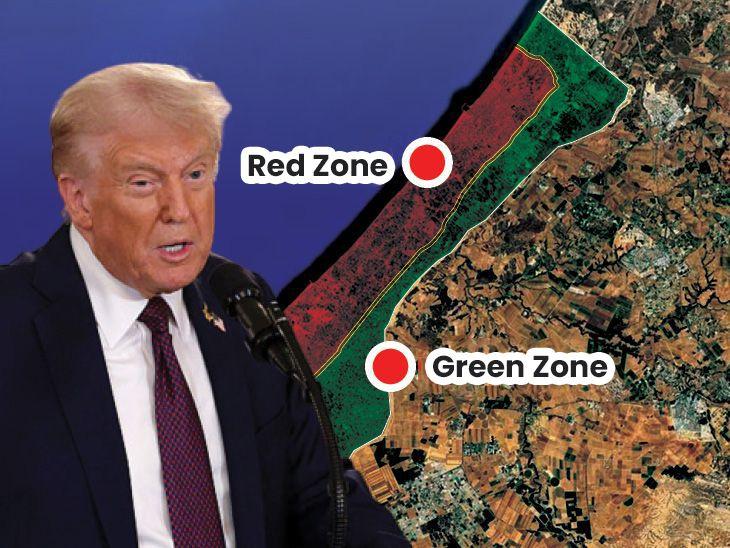
“US military planning documents reportedly envision dividing Gaza into a controlled 'green zone' — a strip in eastern Gaza under Israeli and international military control where reconstruction would begin — and a largely devastated 'red zone' left as is.”
Leaked planning reported by several outlets envisions splitting Gaza into an Israeli-and-internationally controlled "green zone" for reconstruction and a largely devastated "red zone" left without rebuilding. Critics say such a map would institutionalize occupation and deny Palestinians full self-determination.