Full Analysis Summary
Sanctions on ICC judges
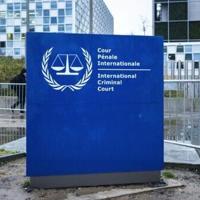
The United States imposed a new round of sanctions on two International Criminal Court judges, Gocha Lordkipanidze of Georgia and Erdenebalsuren Damdin of Mongolia, after they joined an ICC decision on Dec. 15 related to an investigation of alleged war crimes in Gaza, according to reporting.
U.S. officials said the measures bar the judges from entering the United States and block transactions with them, and Secretary of State Rubio argued the judges 'directly engaged' in efforts to investigate, arrest, or prosecute Israeli nationals without Israel’s consent, calling the court’s actions an overreach.
The Hague-based ICC strongly rejected the U.S. move as an attack on judicial independence.
Coverage Differences
Tone and framing
Al Jazeera (West Asian) emphasizes a broader pattern of U.S. pressure on the ICC and frames the Gaza investigation in the context of alleged genocidal actions and prior Trump‑era sanctions; Fairfield Sun Times (Local Western) focuses on the immediate legal development — the upholding of arrest warrants for Benjamin Netanyahu and Yoav Gallant — and reports customary U.S. criticisms and Israeli praise. Fairfield frames the sanctions as measures that bar entry and block transactions, while Al Jazeera situates them in a larger narrative of U.S. hostility toward ICC investigations.
Narrative focus
Fairfield Sun Times highlights the specific defendants named in the ICC process (Netanyahu and former defense minister Yoav Gallant) and notes the legal mechanics of the sanctions, while Al Jazeera foregrounds the political context — U.S. allyship with Israel, previous sanctions on ICC staff and NGOs, and critics’ warnings that the measures could chill international investigations.
ICC and US sanctions
The ICC publicly condemned U.S. sanctions as a flagrant attack on the independence of an impartial judicial institution, describing the measures as a direct institutional clash between the court's effort to preserve judicial independence and the United States' view that the court overreached by pursuing cases involving Israeli officials.
Al Jazeera reports the ICC rejected the move and warned that U.S. actions follow a pattern of targeting ICC personnel and NGOs tied to probes of U.S. or Israeli personnel.
Fairfield Sun Times similarly reported the Hague-based court's strong rejection and placed the episode in the wider context of states that do not accept the court's jurisdiction.
Coverage Differences
Tone severity
Al Jazeera uses stronger, politicized language and highlights the U.S.’s prior sanctions on NGOs and ICC staff and explicitly calls the Gaza war 'genocidal' in its coverage, increasing the severity of its critique of U.S. actions; Fairfield Sun Times reports institutional positions (ICC rejection, U.S. non‑acceptance of jurisdiction by several states) in a more procedural tone without the 'genocidal' descriptor.
Contrast in Gaza coverage
The two sources diverge sharply in how they position the Gaza investigation and U.S. actions against the ICC.
Al Jazeera explicitly contextualizes the sanctions within U.S. support for Israel and describes the Gaza war as 'genocidal'.
It says the U.S., described as Israel’s ally, has continued to supply Israel with billions in aid during the Gaza war that the article refers to as 'genocidal'.
Fairfield Sun Times, by contrast, focuses on the legal mechanics and the identities of the Israeli officials implicated by the ICC warrants.
It reports Senator Marco Rubio’s criticism and Israel’s praise for the sanctions without adopting the 'genocidal' language.
Coverage Differences
Contradiction / Tone
Al Jazeera (West Asian) characterizes the Gaza war as 'genocidal' and highlights U.S. aid to Israel during that war, casting the sanctions as part of a political defense of Israel; Fairfield Sun Times (Local Western) reports the legal steps — the upholding of arrest warrants for Israeli leaders and the U.S. sanctions — without labeling the Gaza war as genocide, and emphasizes critiques like Rubio’s that describe the ICC actions as overreach.
U.S. sanctions impact
Legal analysts and human rights proponents quoted or summarized in available reporting warn that U.S. sanctions could chill international investigations.
They say the measures could also deter prosecutors or witnesses and set a precedent that dissuades impartial judicial fact-finding.
Fairfield Sun Times quantifies the widening scope of U.S. measures, noting the expansion brings sanctioned judges to at least eight and prosecutors to at least three, including chief prosecutor Karim Khan, and it contextualizes the episode within states that reject ICC jurisdiction such as the United States, Israel and Russia.
Coverage Differences
Missed information / Emphasis
Al Jazeera emphasizes the broader human rights and civil society dimension — noting NGOs previously sanctioned and warning about chilling effects — whereas Fairfield Sun Times emphasizes the count of sanctioned officials and parallel cases (such as the ICC arrest warrant for Vladimir Putin), giving a more procedural and jurisdictional emphasis.
Sanctions reporting and responses
Limits and ambiguities remain in the reporting.
Both sources document the sanctions, the U.S. rationale and the ICC's condemnation.
They leave open how the measures will ultimately affect ICC proceedings, whether they will deter further investigations, and how other states will respond.
Importantly, the two sources differ on severity and moral framing.
Al Jazeera uses the term 'genocidal' to describe the Gaza war and emphasizes U.S. complicity in supplying aid during that period.
Fairfield Sun Times does not adopt that characterization and stresses legal specifics and institutional reactions.
Because only these two article snippets were provided, broader international reactions and longer-term legal consequences are not documented here and remain unclear from the available reporting.
Coverage Differences
Ambiguity / Missing wider context
Both sources report core facts but do not provide decisive evidence about the sanctions’ long‑term impact; Al Jazeera adds a stronger moral judgment (labeling the Gaza war 'genocidal'), while Fairfield Sun Times sticks to legal detail and institutional responses. The absence of additional international sources in the supplied material limits the ability to compare more perspectives.