Europe15 February, 20262 min read
United States Secretary of State Marco Rubio Urges Europe to Choose Between Liberal Values and Joining US 'New Western Century' Defending Western Civilisation
This article is an automated aggregation of coverage from news outlets. Our editorials offer in-depth analysis curated by the NewsCord team.
Urged Europe to join a U.S.-led 'new Western century' defending Western civilisation Reassured Europe that the U.S. prefers transatlantic unity, saying the sides 'belong together'.

31 outlets told this the same way.
Outlets did split on France’s Debt Snowball Effect Overwhelms Macron as Curfews Follow Student Protests →
Sen. Marco Rubio's speech
Sen. Marco Rubio used a high-profile Munich Security Conference speech to urge European governments to join the United States in building what he called a 'new Western century.'
“At the Munich Security Conference, US Secretary of State Marco Rubio urged European governments to join the United States in building a ‘new Western century,’ framing US‑Europe ties as a single ‘Western civilisation.’”
He framed the transatlantic relationship as a defence of a single 'Western civilisation' and argued that post–Cold War assumptions about borderless liberalism are dangerous.
Rubio called for Europe to abandon what the administration calls 'liberalist' policies.
He urged Europe to curb mass migration and rebuild supply chains to reduce dependence on China.
He insisted the post–Cold War belief in a borderless, universally liberal future was 'a dangerous delusion.'
His remarks were presented as an olive branch, saying the U.S. prefers to act with allies.
They were also a conditional appeal that Europe reshape itself to meet what he described as civilisational threats.
Rubio's policy priorities
Rubio outlined concrete policy priorities: reshaping supply chains to reduce dependence on China, rolling back what he called 'liberalist' policies, tightening migration controls, and questioning climate policies that he argued harm energy affordability. Multiple outlets recorded his direct attacks on post-Cold War globalisation and migration, noting he blamed 'decades of unrestricted free trade' and warned large-scale migration 'threatens social cohesion, culture and the continent’s future.' Some coverage emphasized practical elements such as critical minerals, AI and space industrial policy, while other coverage foregrounded cultural language about civilisation and sovereignty.
EU reactions to Rubio speech
European leaders reacted unevenly. Several EU figures welcomed the call for unity while avoiding endorsement of Rubio’s criticisms of migration and liberal values. Reports say Ursula von der Leyen found his tone 'reassuring'.
“EU Commission President Ursula von der Leyen called his remarks reassuring. British Prime Minister Keir Starmer also warned against complacency and urged closer defense ties.”
Keir Starmer warned against complacency and urged closer defence ties. Estonian Prime Minister Kaja Kallas rejected 'Europe bashing' and insisted Europe must reclaim agency on defence.
French and German leaders cautioned against becoming subordinate to U.S. demands and stressed European strategic autonomy. Coverage highlights both applause from parts of the audience and guarded, critical responses from key EU capitals.
Media reaction to Rubio
Multiple outlets placed the speech in the context of a broader Trump-era foreign policy shift.
Several reported that Rubio’s rhetoric echoed President Trump and Vice‑President J.D. Vance and that the address revives MAGA-era themes such as tight borders, scepticism toward climate policy, and prioritising unilateral U.S. action when multilateralism fails.
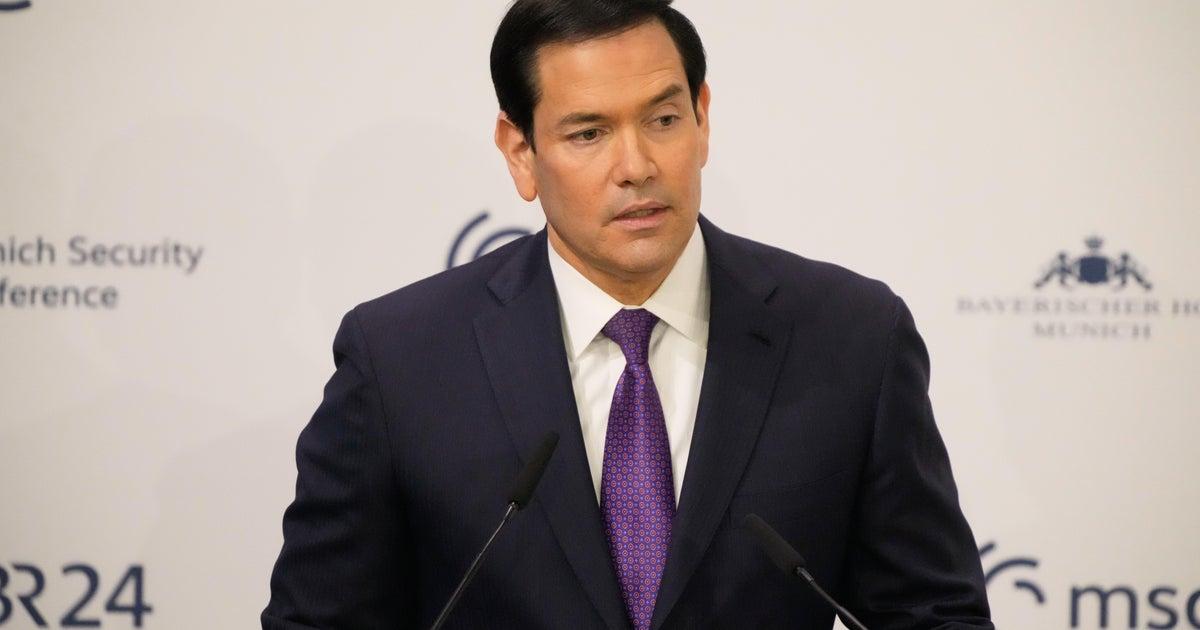
Asian and other outlets warned the proposal could 'impose US-defined terms on Europe' and revive a more domineering Western posture.
Some West Asian and mainstream outlets portrayed the speech as a pragmatic attempt to rebuild ties.
Debate over Rubio's vision
The implications Rubio set out are uncertain and contested: some analysts and leaders welcomed a push for European rearmament and closer industrial alignment with the U.S. Others warned that adopting U.S. framing on migration, sovereignty and climate risks pressuring European autonomy and inflaming far-right politics already reshaping the continent. Coverage across West Asian, Western Mainstream and Asian outlets flagged this political tension, pointing to an ongoing debate over whether Europe will accept a U.S.-led 'new Western century' or insist on strategic autonomy and different policy priorities.
“Those political shifts and growing transatlantic infighting risk drowning out Kyiv’s needs, forcing Ukraine to compete for attention rather than secure sustained aid.”