Iran20 April, 20267 min read
United States Seizes Iranian-Flagged Cargo Ship Near Strait of Hormuz, Oil Prices Jump
U.S. Navy seized Iranian-flagged cargo ship attempting to bypass blockade near Strait of Hormuz. Oil prices jumped following the seizure and escalating U.S.-Iran tensions at Strait of Hormuz.
Ship Seizure, Oil Spike
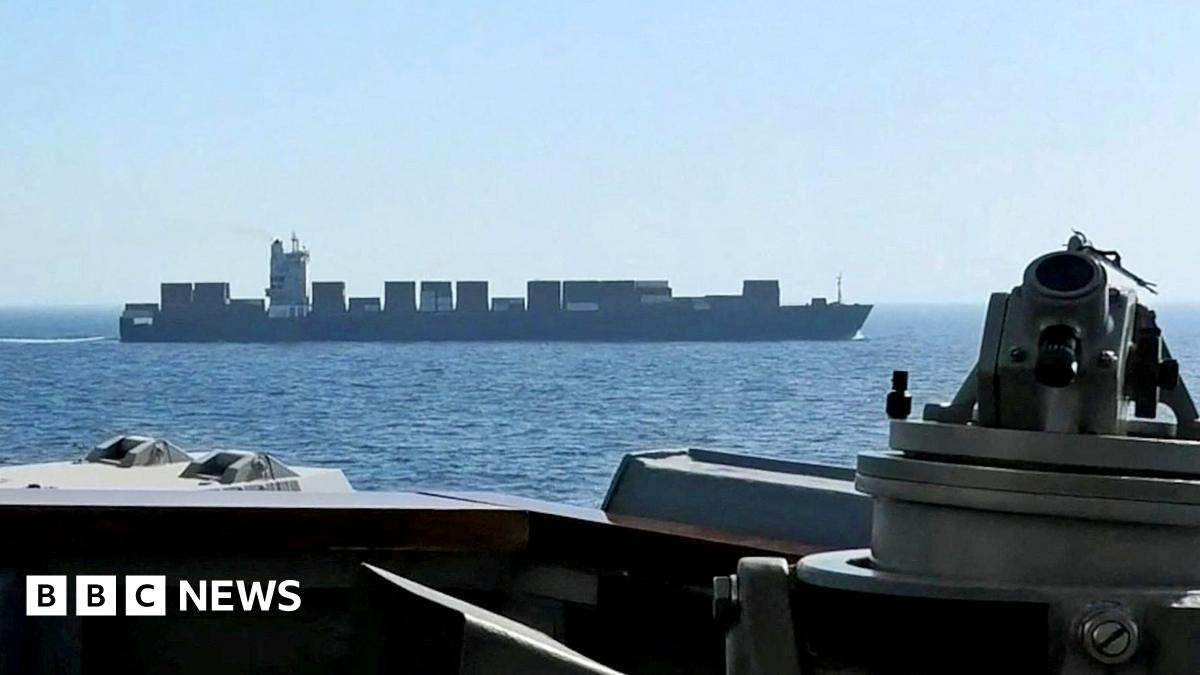
The United States seized an Iranian-flagged cargo ship after it tried to bypass an American naval blockade near the Strait of Hormuz, a move President Donald Trump said came as the U.S.-Iran conflict escalated over the weekend.
Oil prices jumped after the seizure and after the Strait of Hormuz setbacks, with Axios saying “Oil prices are up around 6% Sunday evening” and Brent rising to “$95.42” while WTI reached “$89.77.”
Reuters’ framing is echoed across outlets: Axios said the seizure was “the first seizure and the first ship fired upon since the U.S. blockade went into effect last Sunday,” and CNN said the U.S. Navy fired on and seized an Iranian cargo ship “once the safety of the families and crew of the vessel” is ensured.
The BBC described the sequence as the shrinking of any chance of a breakthrough in talks, noting Iran accused Washington of breaching the ceasefire with its naval blockade of “all Iran’s Gulf ports” and then “maritime piracy after US forces fired on and impounded the Iranian-flagged MV Touska.”
Multiple outlets tied the seizure to the timing of a fragile ceasefire, with CNN saying the ceasefire “expires on Wednesday” and Axios saying the ceasefire was scheduled to end “on Tuesday night.”
In the background of the seizure, the Strait of Hormuz itself became a moving target: Axios said Iran said on Saturday that the Strait was “again closed to traffic” after threats if the U.S. continued its blockade, while CNBC said Tehran reversed course after Friday’s reopening announcement and said the strait would remain closed until the blockade is lifted.
Talks in Islamabad, No Agreement
As the seizure and Strait-of-Hormuz volatility fed into negotiations, U.S. officials said Vice President JD Vance would lead a delegation for another round of talks with Iran in Islamabad, but Iran’s position on participation remained uncertain or negative. Axios reported that “Vice President JD Vance will lead a U.S. delegation for another round of talks with Iran in Islamabad before the ceasefire is scheduled to end on Tuesday night,” while CNN said the seizure “cast doubt on a second round of negotiations planned for this week in Pakistan” and that Iran’s foreign ministry insisted there were “no plans for talks.” The New York Times likewise said Iran’s foreign ministry spokesman Esmail Baghaei told Iranian state news agency IRNA that there were “no plans” in place for the next round of peace talks in Pakistan, even as President Trump said American negotiators would arrive in the country in the evening for a second round.
The BBC described the diplomatic atmosphere as deteriorating further after Iran accused Washington of breaching the ceasefire, with Frank Gardner writing that “Whatever slivers of hope there were in Islamabad eight days ago have shrunk further.” Financial Post, citing Bloomberg, said Iran “has no plans to attend the potential negotiations though a final decision hasn’t been made,” and it quoted Baghaei saying “There are various indications that there is no seriousness on the US side in advancing diplomacy.” The Guardian added that Iran’s foreign ministry spokesperson Esmail Baghaei said Iran “has no plans for a new round of talks with the US,” and it quoted him saying Washington had violated the agreement “from its implementation.”
Retaliation Threats and Sticking Points
Iran and the United States traded accusations and threats as the seizure unfolded, with Iran vowing retaliation and the U.S. reiterating threats against Iranian infrastructure. CNN reported that “Tehran vowed to retaliate after the US Navy fired on and seized an Iranian cargo ship” and that the vow was tied to the condition that “once the safety of the families and crew of the vessel” is ensured, according to state media. The New York Times said Iran’s armed forces warned they would soon retaliate for what they called “armed piracy,” according to Tasnim, a semiofficial Iranian news agency, and it described Iran’s foreign ministry spokesman Esmail Baghaei accusing the United States of actions that in “no way demonstrate seriousness in pursuing a diplomatic process,” according to IRNA.
The Guardian quoted Baghaei insisting that “Iran will continue defending its national interests,” and it also said Tehran does not believe in ultimatums while calling U.S. proposals “unserious” and demands “unrealistic.” On the U.S. side, Trump threatened broad strikes, with Financial Post quoting him saying, “if they don’t, the United States is going to knock out every single Power Plant, and every single Bridge, in Iran,” and the Guardian quoting him telling Fox News that the U.S. deal would involve reopening the strait of Hormuz and ensuring Iran does not have enriched uranium, and that unless Iran accepts he vowed to knock out “every single Power Plant” and “every single Bridge.” Beyond threats, the sticking points in negotiations were repeatedly framed around nuclear enrichment and control of the strait: CNN said “The talks face key sticking points, including control of Iran’s uranium stockpiles and the reopening of the Strait of Hormuz,” while the BBC said Trump’s aim was to squeeze Tehran on “the nuclear issue and on the Strait of Hormuz.”
Ceasefire Expiry and Market Fallout
The seizure and the shifting status of the Strait of Hormuz fed directly into market moves and broader economic concerns, with multiple outlets linking oil price swings to the uncertainty over whether shipping would resume. Axios said the jump in oil prices “reverses a large chunk of the sharp decline Friday,” when Trump and Iran’s foreign minister claimed the Strait of Hormuz was opening to tanker traffic, and it warned that “The longer oil transit remains throttled, the longer crude prices will remain high.” It also tied the disruption to U.S. consumers, saying “That affects U.S. drivers” and quoting Energy Secretary Chris Wright that “U.S. average gasoline prices may not return to pre-Iran war levels under $3-per-gallon until next year.”
Axios provided specific gasoline figures, saying prices reached “$4.16 per gallon earlier this month and now are at $4.05,” and it said Wright argued prices “have likely peaked” and would start going down “certainly with a resolution of this conflict.” CNBC similarly described whipsawing oil markets and said “Oil prices are being whipsawed by developments in the Middle East once again,” with WTI futures for May delivery rising to “$89.53 per barrel” and Brent futures for June delivery advancing to “$96.05.” The ceasefire deadline remained a recurring anchor for the risk picture: CNN said it “expires on Wednesday,” AP said it “is due to expire by Wednesday,” and The Guardian said “ceasefire under pressure” while Iran said it had “no plans for talks” after the seizure.

Shipping Disruption and Wider Signals
Beyond the ship seizure itself, the sources describe a broader disruption to navigation through the Strait of Hormuz and a widening set of signals that complicate any attempt to stabilize the situation. CNN said the strait was “virtually empty for the third consecutive day” and described MarineTraffic and Windward data, including that “13 vessels turned round” after Iran’s Islamic Revolutionary Guards Corps (IRGC) declared the Strait was closed again, and that “no tankers were recorded transiting the Strait on Sunday.” It also included a shipping advisory warning from Ambrey that “vessels are advised to abort a planned Strait of Hormuz transit by returning to the point of origin as soon as threatened over VHF (radio).”
The Guardian added that the internet blackout in Iran had entered its “52nd day,” citing NetBlocks and saying “Iran’s internet shutdown has entered its 52nd day after 1224 hours,” while it also reported China’s foreign ministry spokesperson Guo Jiakun expressing concern over “forcible interception” of the Iranian-flagged Touska ship. The AP report said the U.S. attack and seizure “marks a ceasefire violation” according to Iran’s military headquarters, and it described Iran’s foreign minister Abbas Aragchi making remarks to Pakistan’s foreign minister Ishaq Dar about “clear signs” of America’s “disingenuousness.” The Al-Sharq (الشرق) report, citing Bloomberg, said commercial shipping through the Strait of Hormuz had been “nearly halted on Monday” after it was briefly reopened over the weekend, and it said the U.S. detained an Iranian merchant vessel “in waters off Jask Port in the Gulf of Oman.”
