USA21 December, 20252 min read
United States Seizes Second Oil Tanker Off Venezuela, Enforces Trump-Ordered Blockade
This article is an automated aggregation of coverage from news outlets. Our editorials offer in-depth analysis curated by the NewsCord team.
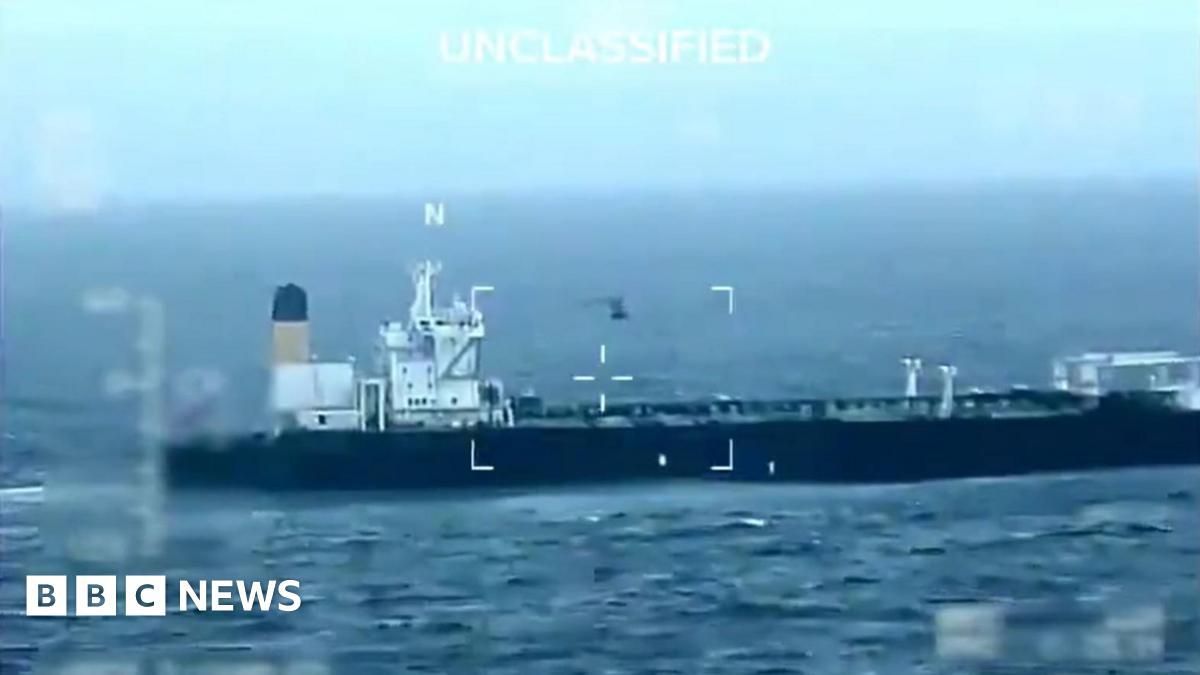
U.S. forces seized a second oil tanker, the Panama-flagged Centuries, in international waters off Venezuela U.S. Coast Guard boarded the tanker supported by military helicopters in a pre-dawn operation
44 outlets told this the same way.
Outlets did split on Trump Interrupted by Protesters at San Antonio Rally for Ken Paxton →
U.S. tanker interdiction off Venezuela
On Dec. 20, U.S. forces carried out a second interdiction of an oil tanker in international waters off Venezuela.
“U.S. forces seized a Panamanian‑flagged tanker carrying Venezuelan oil in international waters off Venezuela; the crew did not resist and the ship — reportedly bound for Asia — was not under U.S. sanctions.”
Washington said the action enforces former President Donald Trump's Dec. 16 order of a total and complete blockade on sanctioned tankers to and from Venezuela.
Homeland Security Secretary Kristi Noem posted video of a pre-dawn U.S. Coast Guard boarding and seizure, and multiple outlets identified the vessel as the Panama-flagged Centuries, which had previously sailed under other flags.
U.S. officials described the operation as part of an intensified campaign to stop illicit oil shipments they say finance narco-terrorism.
Venezuela protests U.S. boarding
The seizure prompted immediate and sharp condemnations from Caracas, which called the interception "theft and hijacking".
In multiple statements, Caracas denounced it as international piracy and said it would bring complaints to the U.N. Security Council.

Venezuelan officials alleged the crew had been forcibly disappeared.
Venezuelan statements and West Asian reporting stressed the diplomatic and legal challenge Caracas intends to mount against Washington's actions.
At the same time, U.S. authorities and some local reporters described the operation as a "consented" or non‑violent boarding carried out by the Coast Guard with military support.
U.S. maritime interdictions
U.S. officials and allied statements have tied the interdictions to a broader campaign of maritime strikes and interdictions they say target drug‑trafficking and sanction‑evasion networks. Several outlets reported an uptick in strikes on small vessels since September and attributed roughly 100–104 deaths to the campaign.
“U.S. forces have stepped up operations in the Caribbean, carrying out maritime strikes on vessels the U.S. says were involved in Venezuelan drug-smuggling that reportedly killed about 100 people, though the Pentagon has not publicly shown evidence that the boats carried drugs.”
That death figure was repeated in Western mainstream reporting and in alternative outlets, while critics and some legal experts have called the strikes and seizures extrajudicial and legally problematic. The Trump administration frames the actions as aimed at cutting off revenue streams for Maduro and associated criminal networks.
Venezuelan crude shadow fleet
Reporting on the seized ship’s cargo and identity highlights a complex shadow fleet and concealment practices that have enabled Venezuelan crude to reach buyers despite sanctions. Multiple outlets using ship-tracking data and internal PDVSA documents identify the Centuries, also reported as using the alias Crag, as carrying about 1.8 million barrels of Merey crude destined for China.
TankerTrackers and other analysts say dozens of tankers in Venezuelan waters operate under aliases or otherwise obscure their activity. Some maritime publications note the Centuries does not appear on official sanctions lists, complicating the legal justification for its seizure.
Mercosur split and export disruption
The interdictions have sparked regional diplomatic fallout and market-watching. At the Mercosur summit a sharp clash broke out: Brazilian President Luiz Inácio Lula da Silva warned that armed intervention would create a 'humanitarian catastrophe,' while Argentina's Javier Milei supported tougher measures - a split that left no joint declaration.
“The row left Mercosur without a joint declaration, exposing a widening regional split over how to respond to Venezuela.”
Analysts and shipping firms say many loaded tankers have idled in Venezuelan waters or entered a 'shadow fleet,' sharply reducing exports and raising the prospect of higher prices if an effective embargo persists. Commentators and legislators in the U.S. warned the actions risk escalation; diplomats in several capitals are reportedly assessing legal and humanitarian implications.